
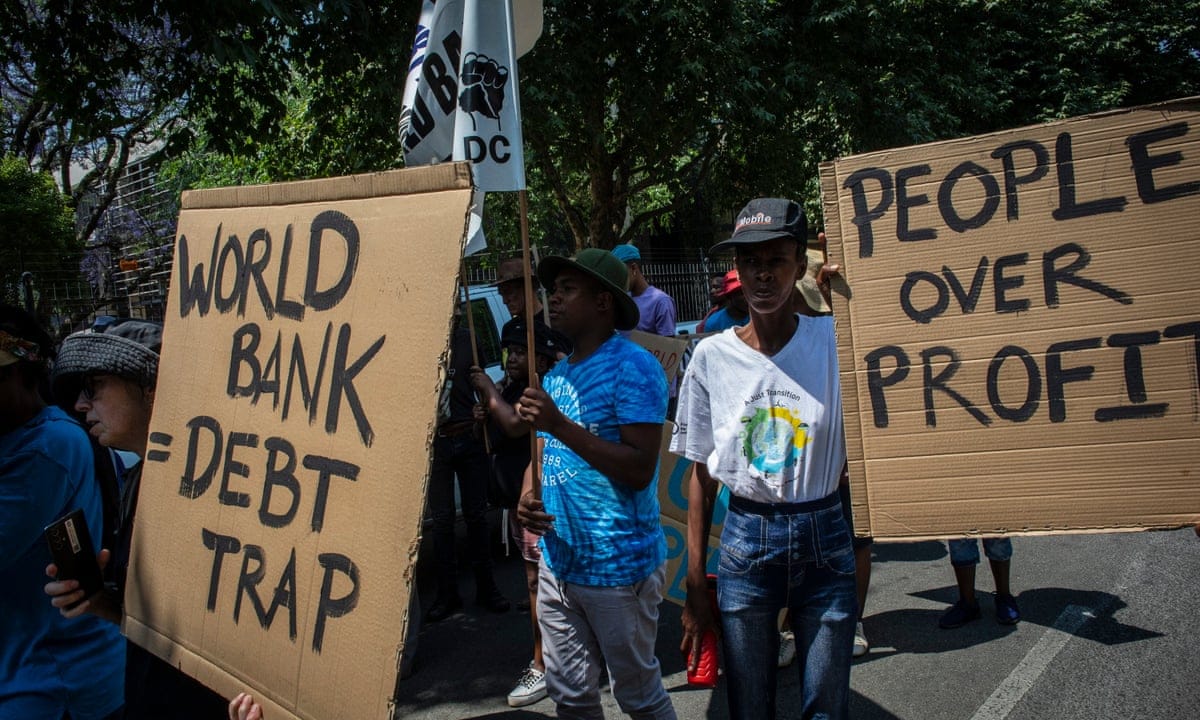
A significant debt burden is impacting developing countries, causing them to allocate nearly half of their budgets towards repayments to creditors according to a recent study.
The report from Debt Relief International for Norwegian Church Aid highlights that over 100 nations are grappling with the challenge of managing debts, which is forcing them to reduce investments in areas such as healthcare, education, social welfare, and climate change initiatives.
Currently, servicing debts consumes approximately 42% of budget revenues, 41.6% of government spending, and nearly 8% of GDP on average across 144 developing nations as per the study's findings.
The report emphasizes that without immediate action, these issues may persist well into the next decade, surpassing earlier debt crises experienced in Latin America during the early '80s and Africa in the late '90s when relief measures were introduced under initiatives such as HIPC.
The 2020 Common Framework established by G20 countries aims to expedite and simplify the process of obtaining debt relief; however, progress has been slow due to much poorer nations owing significant debts to China and private bondholders. The report criticizes the framework for falling short on its goals concerning timeliness, creditor involvement, and the extent of assistance provided.
In light of these challenges, the study suggests that debt relief should be accessible to countries at all income levels and regions while tailoring solutions based on individual needs. The report proposes making debt service less than 15% of a country's budget revenue as one measure. It also emphasizes the need for prompt intervention by providing temporary payment standsstills upon applying for relief, involving all creditors, protecting countries legally against holdouts and lawsuits in financial hubs globally, and preventing vulture funds from exploiting legal systems to pursue debt collection.
Matthew Martin, one of the report's authors, urges the new government to pass laws that discourage commercial creditors from seeking profits through litigation against poorer nations. He also suggests that the UK government should participate in a global review of the Common Framework and advocate for debt cancellation as an immediate measure for Caribbean islanders recovering from Hurricane Beryl.
Dagfinn Høybråten, Norwegian Church Aid's secretary general, emphasizes that excessive debt burdens hinder a country's growth and prioritize repayment over social welfare projects. He warns of the potential human suffering if this new crisis is not addressed promptly as it has been in previous instances such as the 1982 Latin American debt crisis.
The report concludes that addressing the current debt situation is essential to allow countries to focus on improving their economies and providing better opportunities for citizens.
Read next

Ukrainian combat troops gain restricted access to Starlink satellite internet
Ukrainian soldiers experienced a sudden disruption in their access to Starlink satellite internet terminals amid increased pressure from the Trump administration for Ukraine to cease long-range attacks on Russia’s oil infrastructure. These terminals, managed by Elon Musk’s SpaceX, are vital for Ukraine's military operations. The

Russia's latest Ukraine attacks show 'disrespect' towards US, says Zelenskyy — Europe live
Sikorski Confronts Musk Over Starlink in Ukraine
Poland’s Foreign Minister Radosław Sikorski recently addressed Elon Musk on X, questioning reported restrictions on Starlink services in Ukraine. Poland contributes significantly to Ukraine’s funding of Starlink, which is crucial for maintaining internet connectivity in Kyiv and its military operations, with

"Breaking Stigma: Nikita Jager's Triumph in Civil Rape Case Against Conor McGregor"
Nikita Hand faced a challenging decision when considering a civil case against Conor McGregor following a 2018 assault. Despite her personal reservations about being an "imperfect victim" due to alcohol and drug use on the night of the incident, she chose to proceed. This decision stemmed from her