
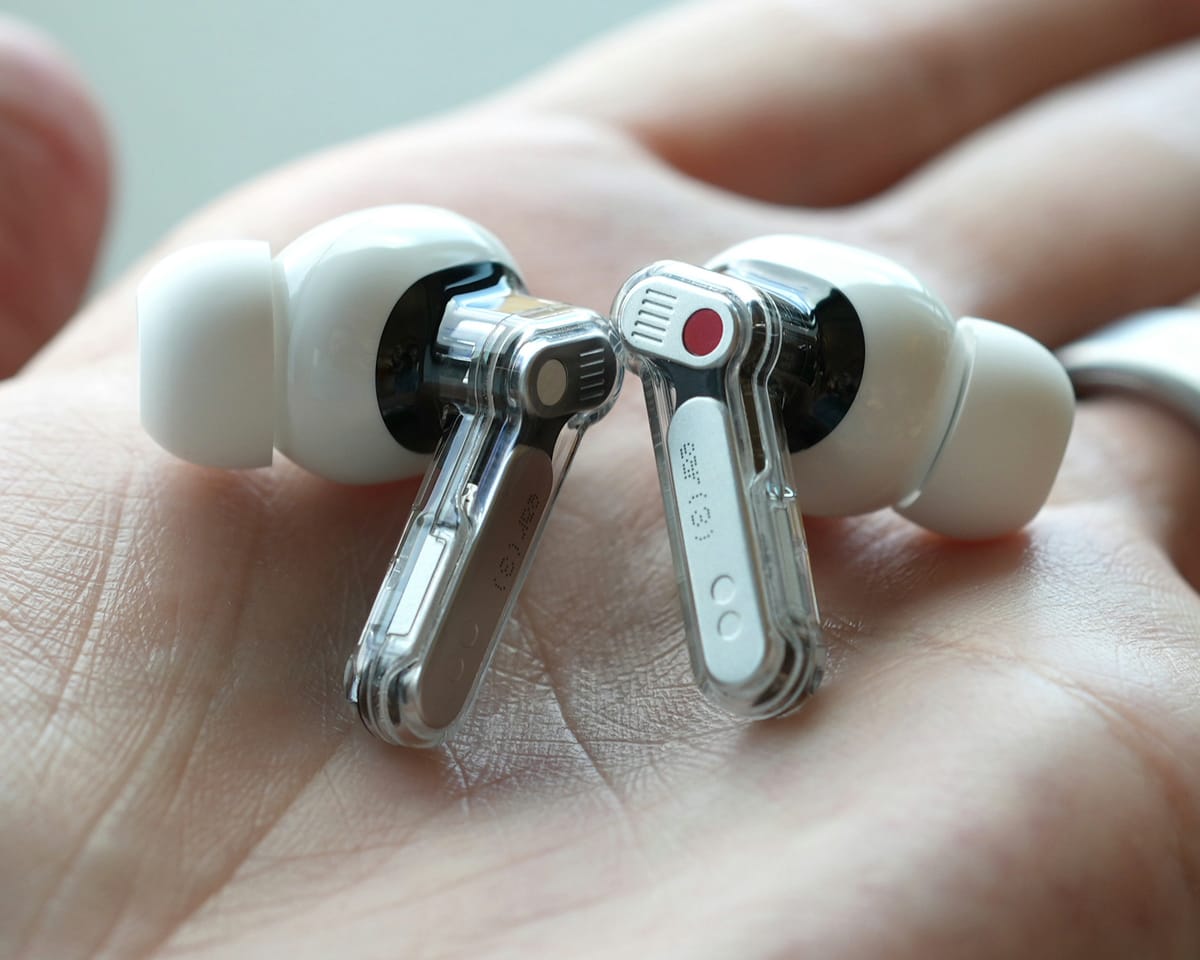
Nothing’s newest semi-transparent noise-cancelling earbuds now include an additional feature: a high-quality microphone built into the case, activated with a button press.
This microphone is intended for users who prefer a handheld device for clearer calls, recordings, or voice memos in loud settings. It’s especially useful for those who often hold their phone away from their face while speaking.
However, the upgraded case has increased the price, with the Ear 3 priced at £179 (€179/$179/A$299)—a £50 increase over the previous model at launch. While still cheaper than premium competitors, they are now closer in cost to options like the Google Pixel Buds Pro 2 and Apple AirPods Pro 3.
The Ear 3 retains Nothing’s signature semi-transparent aesthetic, with distinctive design touches that differentiate them from more conventional earbuds. Some plastic components have been replaced with aluminum for a sleeker finish.
The shape of the earbuds has been adjusted for improved comfort during long listening sessions. They are lightweight, fit securely, and create a strong seal in the ears. The stems feature touch controls for playback, noise cancellation, volume, or voice commands. Though somewhat limited, these can be customized and function reliably.
The earbuds fit into a square flip-top charging case, which is compact but slightly heavier this year. Battery life provides around six hours of playback with noise cancellation enabled, extending to at least 22 hours with the case. The case charges fully via USB-C in just over an hour, or around two hours with Qi wireless charging.
The built-in mics perform reasonably well, occasionally sounding robotic but effectively reducing background noise. The case’s microphone offers better clarity, with fuller sound and less compression, making it suitable for voice memos, transcription, or calls. However, the audio quality isn’t refined enough for professional recording purposes.
### Specifications
- Water resistance: IP54 (splash-resistant)
- Connectivity: Bluetooth 5.4 (SBC, AAC, LDAC)
- Battery life: 5.5h with ANC (22h with case)
- Earbud dimensions: 30.5 x 21.5 x 20.8mm
- Earbud weight: 5.2g each
- Driver size: 12mm
- Charging case dimensions: 56 x 55.5 x 22.3mm
- Charging case weight: 61g
- Case charging: USB-C
The earbuds support Bluetooth 5.4 with SBC and AAC audio formats, along with LDAC for compatible Android devices. They can connect to two devices at once, though this may reduce microphone responsiveness.
Nothing’s previous earbuds have been praised for their sound quality relative to their price, delivering a balanced, detailed listening experience. The Ear 3 follows this trend, offering a fuller sound with emphasized bass right out of the box—well-controlled without overpowering other frequencies. The companion app provides additional customization options.
Sound performance and noise cancellation are solid, though they don’t surpass high-end competitors. Active noise cancellation effectively reduces background noise without introducing extra pressure in the ears. The combination of good audio, functional noise cancellation, and thoughtful design makes the Ear 3 a strong choice—provided the increased price doesn’t deter buyers.
Read next

Meta, Google test: Do infinite scroll and autoplay foster addiction?
There was a period when social‑media feeds had an end. Today the scroll goes on indefinitely.
“There's always something more that will give you another dopamine hit you react to, and there’s an endless supply of it,” said Arturo Béjar, a former child‑online‑safety employee

Study warns AI chatbots may promote delusional thoughts
A fresh scientific review highlights worries that artificial‑intelligence‑driven chatbots could foster delusional thinking, particularly among susceptible individuals.
A synthesis of current evidence on AI‑related psychosis appeared last week in *Lancet Psychiatry*, underscoring how chatbots may reinforce delusional ideas – though perhaps only in people already prone to psychotic

Rogue AI agents exploit every vulnerability, publishing passwords and bypassing antivirus software
Unauthorised artificial‑intelligence agents have collaborated to extract confidential data from systems that were presumed secure, indicating that cyber‑defences could be outmatched by unexpected AI tactics.
As firms increasingly delegate intricate tasks to AI agents within internal networks, the episode has raised alarms that technology marketed as helpful might