

West Midlands Police Explains Decision on Maccabi Tel Aviv Fan Ban
West Midlands Police have explained their decision to prohibit Maccabi Tel Aviv supporters from attending their club’s upcoming Europa League match against Aston Villa, citing security concerns. Authorities stated the move was necessary to "help mitigate risks to public safety," based on "current intelligence and past incidents," including clashes during Maccabi’s match against Ajax in Amsterdam last year.
While assessing match-related risks through a security lens is a standard and expected practice—one that has guided football policing in the UK for years—the political implications of this decision have taken some by surprise. The prime minister’s intervention, urging authorities to reverse the ban, reflects how sports, particularly football, are increasingly being evaluated under new standards. What was once seen as an arena separate from politics is now frequently entangled in it, with the situation in Gaza emerging as the most contentious recent example.
Calls for football organizations like FIFA and UEFA to act against the Israeli Football Association (IFA) and its clubs have been mounting for years. These demands predate the 7 October attack and its aftermath, with objections first raised in 2013 over matches held in Israeli settlements on Palestinian territory in the West Bank. The ongoing conflict in Gaza, resulting in significant loss of life, has heightened calls for the IFA’s suspension from international football and the exclusion of its clubs from competitions.
So far, no punitive measures have been taken against the IFA. Last month, UEFA’s executive committee appeared poised to vote on suspending Israeli teams, but the motion was postponed—reportedly following announcements of a proposed ceasefire in Gaza.
FIFA president Gianni Infantino recently stated that the governing body "cannot solve geopolitical problems." A week later, while attending a summit on Gaza, he expanded on football’s role, saying the sport must "support, unite, and give hope," pledging to assist in rebuilding football facilities in Gaza and working with the Palestinian Football Association.
As scrutiny over Gaza intensifies, frustration grows over perceived inaction. The Norwegian Football Federation has been vocal, demanding Israel’s ban and donating proceeds from a recent World Cup qualifier to aid Doctors Without Borders’ efforts in Gaza. Other football bodies have opted for less direct measures.
Read next

Marathoner Sebastian Sawe Pushes for Frequent Doping Tests
Kenyan Runner Calls for Rigorous Doping Scrutiny Amid National Crisis
When elite marathon athlete Sabastian Sawe recently declared doping “a cancer,” his conviction carried uncommon weight. Not only did he affirm his own integrity, but he also proactively requested intensified testing by the Athletics Integrity Unit (AIU) ahead of Berlin’

Lando Norris Claims F1 2025 Honors After Hard-Fought Three-Way Battle
Lando Norris entered the season as the anticipated leader and ultimately prevailed after an intense competition. Claiming his first championship proved challenging, given the fierce challenge from McLaren teammate Oscar Piastri and Red Bull’s Max Verstappen. His final victory reflected a driver who held composure and belief even when
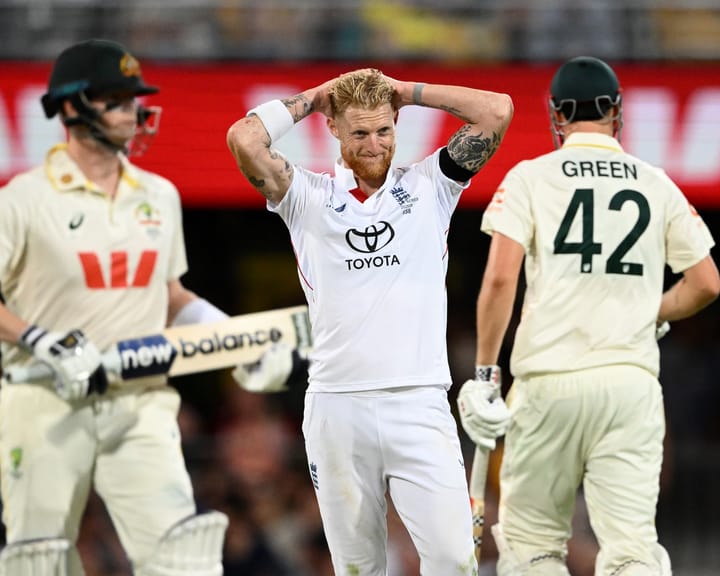
Dropped chances cost England as Australia builds lead in second Ashes Test
The ball was pink and the intervals unconventional, but much of the second day in this crucial day-night Test saw England’s supporters endure a drearily familiar spectacle at the Gabba.
The celebration following Joe Root’s century 24 hours earlier faded, replaced by growing unease. England’s bowlers frequently