

Pressure mounts on UK's Reform Party for evidence supporting authenticity of their general election candidates amid concerns over lack of information provided by hopefuls. Questions arise after several individuals stand without submitting photos, biographies, or contact details prior to the recent election.
Reform counters claims with assurance that all 609 of its candidates on July 4th were genuine while recognizing some as "minimal involvement" candidates who did not conduct active campaigning but contributed to raising party's vote count.
The Liberal Democrats urge Reform Party for transparency, advocating the need for evidence supporting candidate legitimacy in a democratic context.
An investigation reveals that some of Reform's candidates are listed on the website with limited information, showing only name and constituency without additional details or contact information apart from a regional email address. Their absence at electoral counts further adds to concerns surrounding their authenticity.
Reform insists its listings adhere to electoral rules, requiring full names and residential areas for candidates while mandating an agent's involvement and support by ten local voters. However, the party faces scrutiny over whether these individuals are present on the electoral register in their respective constituencies, with some having residences hundreds of miles away.
In one case, a person sharing similar name and residence to a Reform candidate denied association, raising questions about authenticity. While there is no concrete evidence pointing to falseness among candidates, failure to provide legitimate identification would constitute an electoral offence if proven true.
Reform maintains all its candidates are real, with some initially serving as "paper candidates" who did not engage in active campaigning but ultimately contributed to the party's overall vote tally. One candidate, James McMurdock of South Basildon and East Thurrock, transitioned from being a paper candidate to winning his seat.
Amidst concerns over one candidate's authenticity due to an unconventional election photograph, Mark Matlock insists on the reality of his existence while explaining the alterations made for the image. Despite missing the election count, citing pneumonia as the reason, he confirms undertaking a leaflet drop and acknowledges the challenges faced during the campaign period.
Additionally, it comes to light that Reform Party amassed significant funding in their final week of campaigning, with Zia Yusuf being one of the notable donors who contributed substantially. The party also received financial support from other sources like Jeremy Hosking and Andrew Bridgen, adding further complexity to ongoing discussions around transparency within political parties.
Read next

USS Lincoln Carrier Completes Record-Breaking Deployment, Heading Back to San Diego
USS Abraham Lincoln's Return After Record Deployment
The USS Abraham Lincoln is set to return to San Diego today after a record-breaking 265-day deployment, during which it supported military operations in the Middle East. The deployment, which lasted 265 uninterrupted days at sea, has sparked concerns
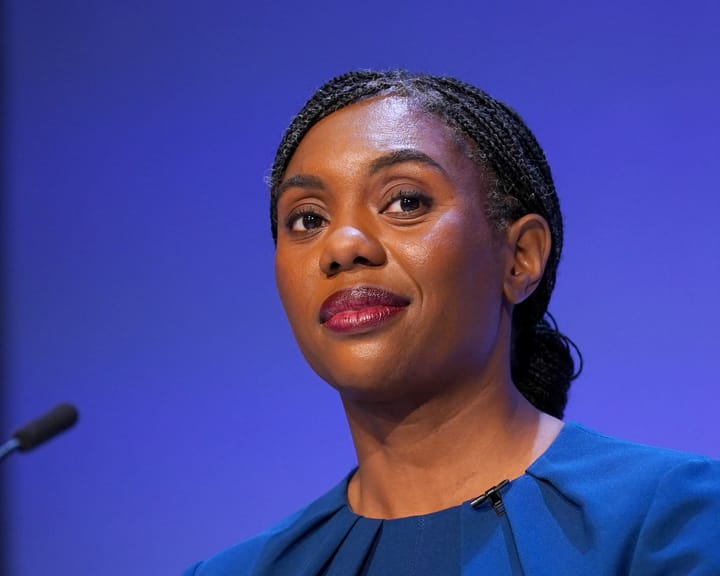
"Kemi Badenoch reshapes Tories, invoking a mix of admiration and fear"
Kemi Badenoch has been emphasizing that the Conservatives have new leadership. In a TV interview marking the end of a party conference where she was a central figure, she expanded on this notion. “Your viewers will know that sometimes you have a disappointing football team,” the Conservative leader told GB
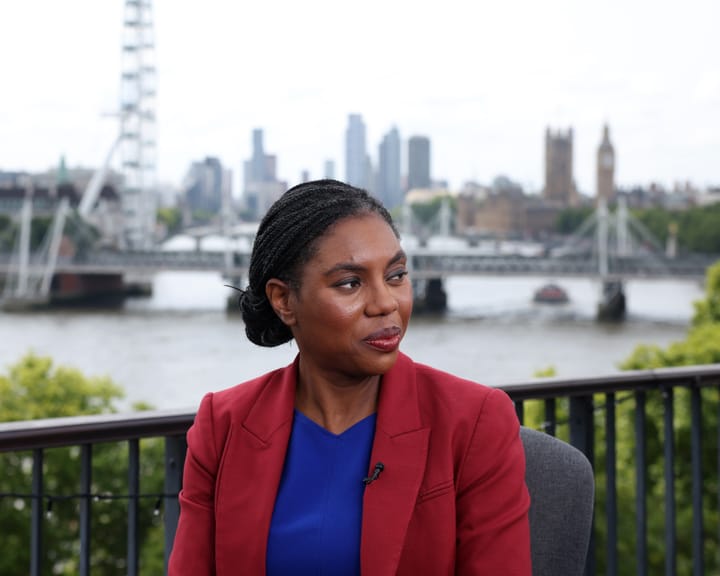
Badenoch returns to Conservative conference, markedly stronger than a year ago
A year ago, Tory MPs feared a fresh leadership revolt against Kemi Badenoch as Tories hit historic 14-16% support; November, after 12 months, was hushed: decisive challenge month. Yet, despite poor polls, “Keminisation” saw her impose style and authority.
More in Common’s Luke Tryl, director, said Badenoch holds