

A British entrepreneur specializing in quantum computing has seen the value of his stake in the company he founded rise to $2bn (£1.5bn), following a recent funding round that valued the business at $10bn.
Ilyas Khan, 63, established Quantinuum, a UK-US firm, which reported raising $600m on Thursday as investment in advanced quantum technology grows.
Khan launched the company's precursor, Cambridge Quantum, in 2014 before it merged with Honeywell Quantum Solutions in 2021.
Former owner of the Accrington Stanley football club, Khan now serves as chief product officer and has retained his shares since the company's inception over ten years ago. He holds roughly 20% of the business, while the US corporation Honeywell owns 54%. Recent investors in the funding round comprise Nvidia and the venture capital firm QED.
Interest in quantum computing has intensified due to technological advancements, with the UK aiming to develop quantum systems that surpass traditional supercomputers by 2035.
Quantum computing could revolutionize fields such as pharmaceuticals and artificial intelligence by performing calculations beyond the scope of conventional systems. However, experts warn that its ability to break high-level encryption has led to calls for quantum-resistant security measures.
The technology is still evolving and requires greater stability before achieving major breakthroughs.
Traditional computers process data in binary bits (0s and 1s), which form the basis of digital communication. Quantum computers, however, use quantum bits (qubits), which can exist in multiple states simultaneously—a principle known as superposition.
Qubits, composed of particles like electrons or photons, enable complex computations but require precise conditions to function effectively, such as shielding from electromagnetic interference.
Rajeeb Hazra, Quantinuum's chief executive, stated that the new funds would "support the broader quantum ecosystem."
The company develops a full suite of quantum technologies, from hardware to software, serving government entities and private-sector clients, including major banks like JP Morgan and HSBC. With HSBC, it tackles complex financial challenges.
Read next
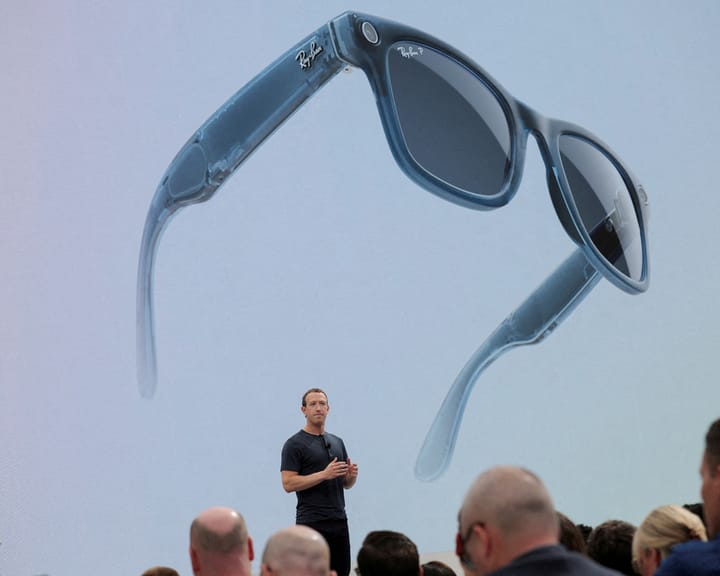
US officers worry Meta smart glasses could covertly record them
In January, the NYPD’s counterterrorism unit warned officers about a new security threat: Ray-Ban Meta glasses. A memo directed officers to “conduct thorough inspections of all eyewear permitted within inmate cells,” cautioning that recently arrested individuals could use the devices’ small cameras and microphones to record inside police
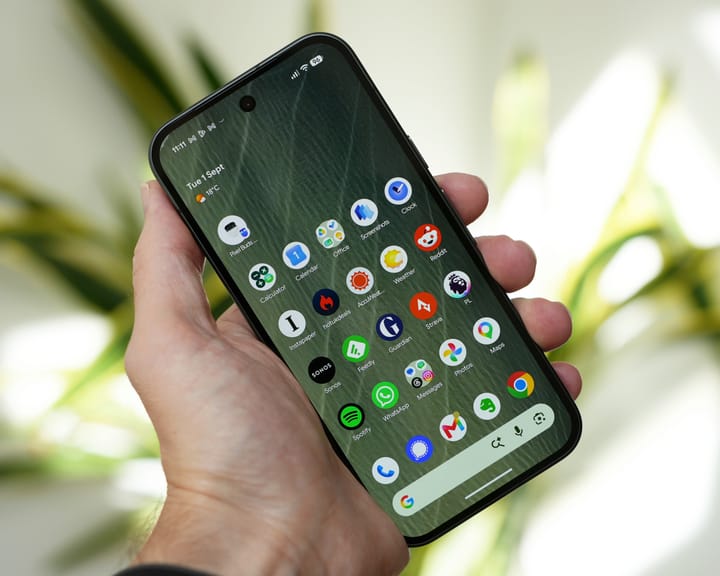
Google's Pixel 11 sets new standard for flagship phones, review finds
Google’s Pixel 11 continues to define what a base flagship phone should deliver, with leading cameras, extended software support and nearly all the features of its pricier siblings.
The standard Pixel 11 is priced at £879 (€999/$899/A$1,499), £80 higher than its previous version, reflecting ongoing

AI Expert Father of Three Shares Essential Insights for Parents on Artificial Intelligence
A father once promised his child they would write a story together called "The Day Nobody Went to Disneyland." The plot imagined a perfect day when the entire world avoided the park, expecting crowds, leaving it completely empty for a father and child to enjoy alone. Three decades