
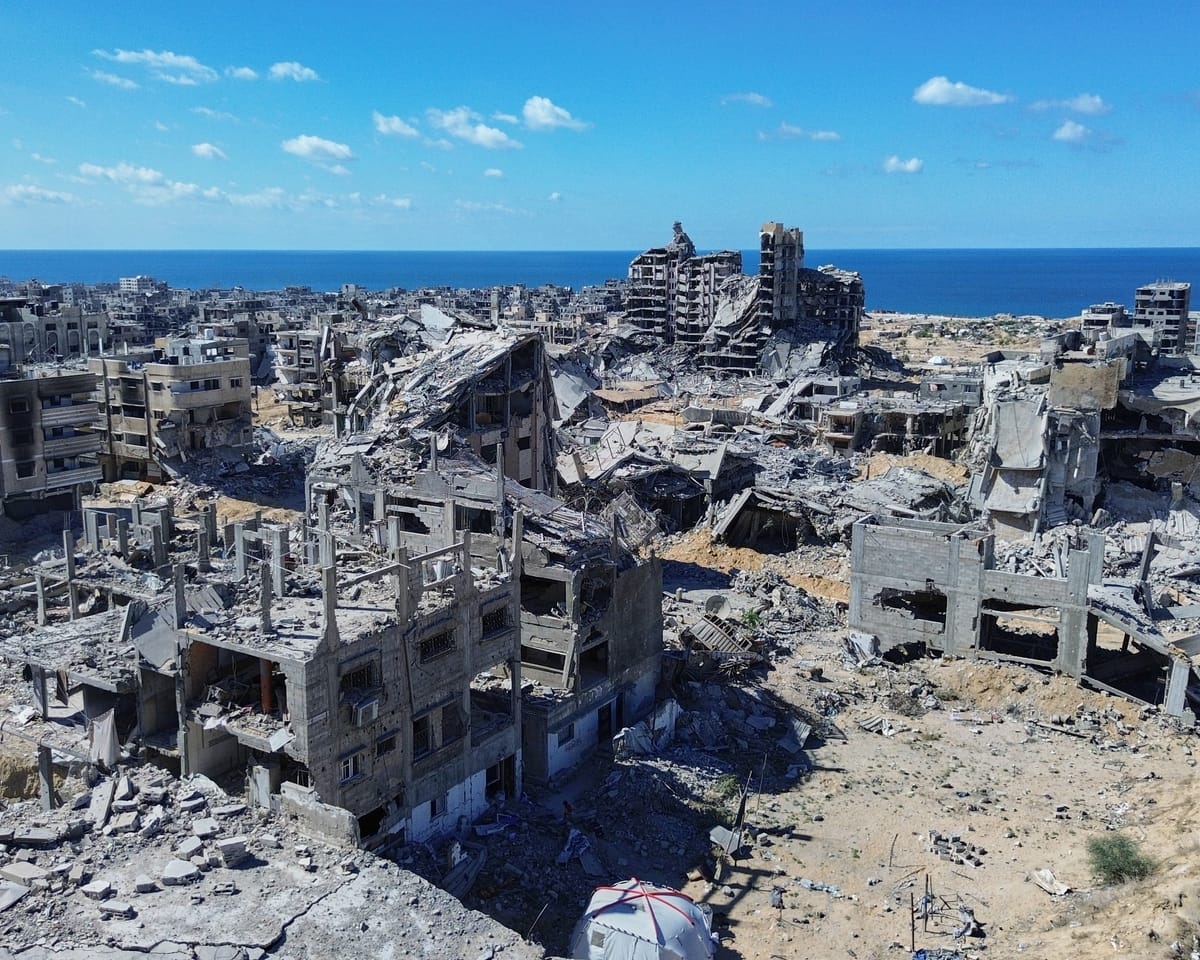
When the ceasefire in Gaza came into effect a week ago, thousands of Palestinians began making their way from crowded southern shelters back to their homes in Gaza City and nearby areas.
For many, the journey ended in anguish.
A month after Israeli forces had ordered their evacuation, Palestinians crowded onto the coastal road heading north. The path quickly became a steady stream of people, most walking on foot, carrying what little they had saved through repeated displacements.
What awaited them was utter devastation. Vast sections of the north had been reduced to rubble. Homes and neighborhoods were unrecognizable. Entire communities had vanished.
The extent of the destruction forced families into a grim choice: stay and seek shelter in the ruins of their homes or return to the overcrowded shelters in the south, where they might at least find food and water. Hanging over that decision was the uncertainty of how long the truce would last—and whether it would ever become a lasting peace.
“I hoped to come back and find my home standing, but instead, I found nothing. I couldn’t even recognize the area. Everything was flattened,” said Suhair al-Absi, a 50-year-old mother of seven, upon arriving in the Sheikh Radwan district of northern Gaza City. “I couldn’t tell where my house had been because all the debris is mixed together. The scale of destruction is beyond anything I could have imagined.”
The family had stayed in their home as long as possible while Israeli forces advanced through Gaza City in September, aiming to remove Hamas. “We left when the tanks reached our street. We saw them from our window,” Absi recalled.
The threat wasn’t just from tanks. The family witnessed houses being demolished by remote-controlled armored vehicles loaded with explosives—tactics used by the Israeli military to reduce their own casualties in urban combat.
“We kept moving from one place to another in northern Gaza,” Absi said. “But as the shelling grew worse, along with the ground invasion, we couldn’t take it anymore. In the last week of the war, we fled to the south for safety.”
“We returned to see what was left, only to find our home destroyed. The moment I saw the rubble, I collapsed in tears with my children beside me. Everything—40 years of memories, good and bad, moments with my children—was gone.”
“There’s no repairing the house. Nothing is left standing. Not a single wall remains, and even the stones are shattered into tiny pieces. What shocked me most was realizing that the destruction wasn’t just my home—it was the whole neighborhood. I’ve never seen anything like it.”
Read next
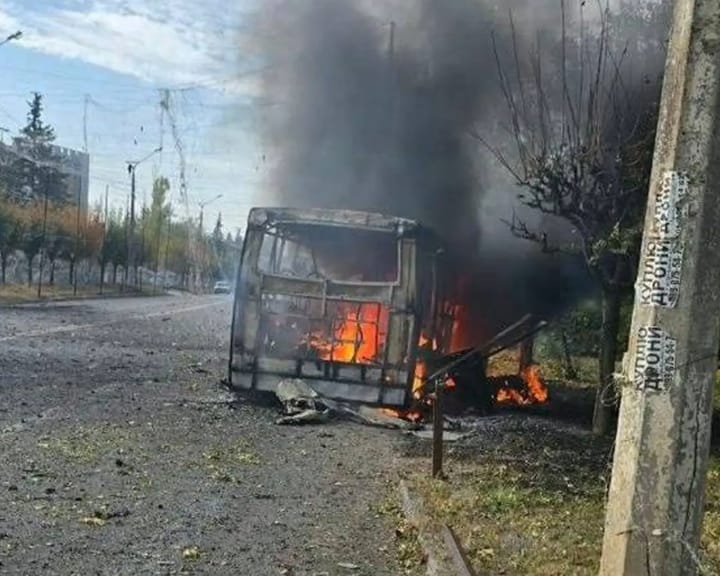
Russian Assault on Buses Near Ukraine Border Results in 30 Deaths
Thirty people have been killed and eighteen injured following an attack by Russia on two passenger buses in Kramatorsk, near the frontline in eastern Ukraine, according to local authorities.
The Donetsk regional prosecutor's office reported that the death toll from the morning attack on the buses had reached

Ethiopia Conducts Drone Strike on Eritrean Forces in Tigray Region
Eritrean forces reportedly crossed into Ethiopia's Tigray region and faced drone attacks from Ethiopian government forces, raising concerns about the potential for a broader regional conflict between the two neighboring countries.
Military vehicles transporting soldiers crossed the southern border of Eritrea into Tigray on Wednesday, reaching Adigrat, approximately

Israel Advances Film Resembling NAZA Documentary
The Israeli government is promoting an online film project designed to counter the findings of the award-winning documentary NAZA, which details Israel’s mass killings of civilians in Gaza. NAZA, directed by Oscar-winning filmmakers Yuval Abraham and Rachel Szor, is currently in cinemas and will be shown in