
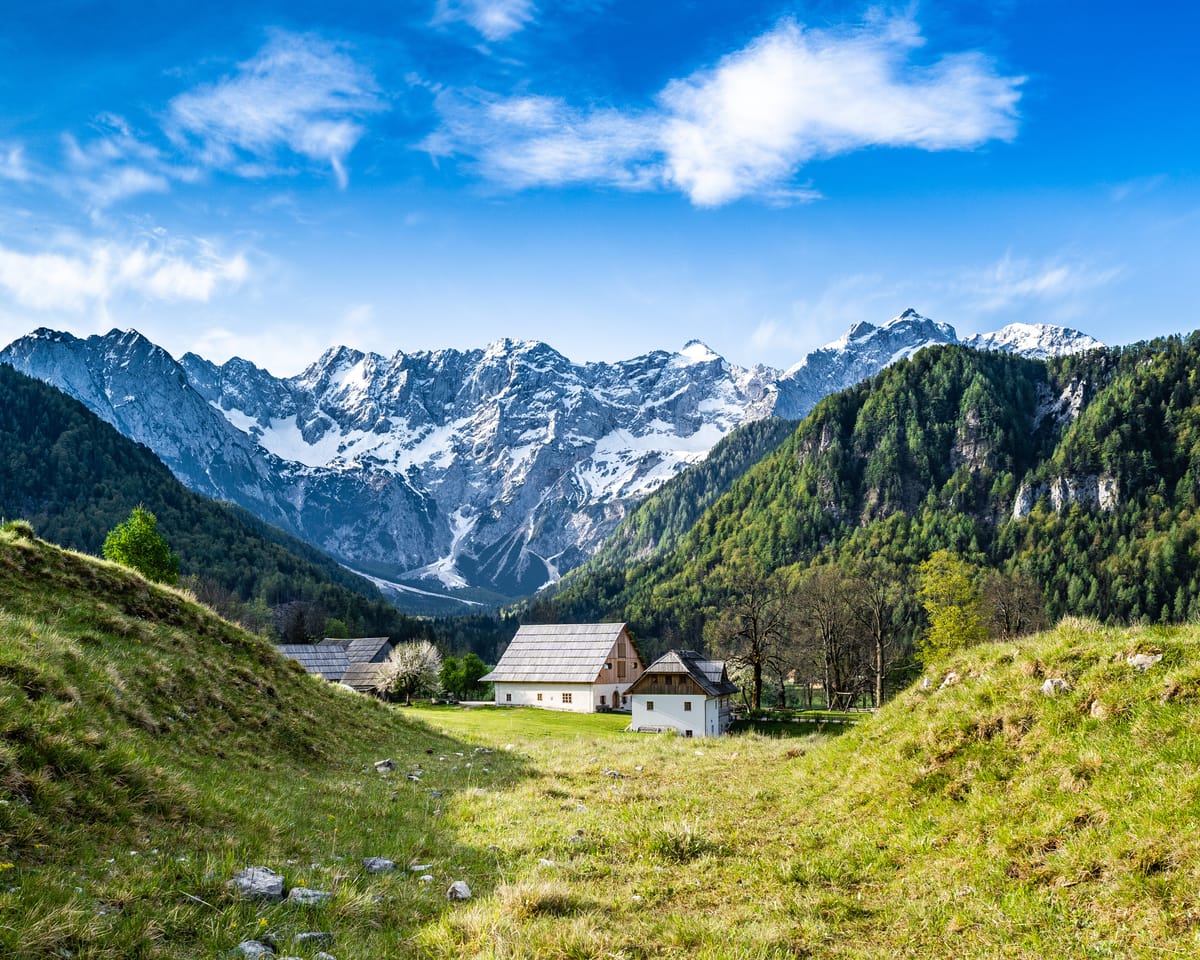
I wake to the sound of church bells as sunlight fills my room and step onto the balcony to gaze at Mount Storžič. My stay, Senkova Domačija, a family-run organic farm just outside the village of Jezersko, is so charming it could be a dream—an old farmhouse with lovely wooden structures, cows grazing in lush fields, rows of organic vegetables, and towering mountains in the distance. Though the Slovenian capital Ljubljana is less than an hour away, the Jezersko valley, just 3 miles from the Austrian border, feels like a world apart.
Surrounded by the Kamnik-Savinja Alps to the east and the Karavanke range to the west, with a peaceful green lake at the valley’s heart, there’s a strong sense of remoteness—a perfect retreat.
Before being taken over by the authorities in 1947, the farm had belonged to the same family for over five centuries. It was returned in 2005 and passed down to the current owner, Polona, by her grandmother. Today, three generations live here, maintaining both a working farm and guest accommodations. In summer, visitors can camp under ash trees in the meadow (tents must be brought), park caravans, or stay in simple rooms and self-catering apartments within the farm buildings. Mine, tucked in the attic of the old farmhouse, has been renovated using reclaimed wood. Free-roaming goats, dogs, cats, and chickens wander freely, while Jezersko–Solčava sheep graze in the pastures—though in summer they’re led up to alpine meadows.
Sustainability is a priority here. Water comes from a glacier, heating is fueled by wood chips from local forests, and all food is organic and grown on-site (three polytunnels allow for year-round harvests). With new solar panels installed, the farm aims to be fully self-sufficient by next year.
Volunteers return often to help in exchange for meals and lodging. Peggy and Pat Rebol, visiting from the U.S. for the third time, tell me, “This place is magical—not just the lake and valley, but the people too. This family won our hearts, and we just want to keep coming back.”
I came for hiking, so after a breakfast of local meats, cheeses, homemade yogurt, and fresh eggs, I set off with Drejc Karničar, Polona’s husband (who is also the mayor of Jezersko’s 700 residents). As we walk through the forest toward the mountains, Drejc points out a rare “golden shoes” orchid at the edge of the trees. Though I’m no botanist, the flower lives up to its name—each golden blossom resembles a delicate slipper. “They bloom for only 14 days,” Drejc says, “you’re lucky.”
We hike up to Češka koča (the Czech hut), a mountain lodge named Slovenia’s “hut of the year” in 2024. Visitors can spend the night or stop for a hearty meal while climbing.
Read next

Let Your Mind Roam, Skip Retirement, and Quit Fretting: Unexpected Strategies to Shield Your Brain from Cognitive Decline
How can thinking about brain change rather than cognitive decline alter the way we think and remember?
Dr Norman Swan: There are three things you need to know which are not widely known.
Think cognitive change not cognitive decline: one way people think about our cognitive function is by comparing
Panic Attack on Public Transport Unveiled a Shocking Secret That Transformed My Life
In 2000, the writer had been living in London for just over a decade and working at EMI Records for five years. Having moved to Brixton from Surrey in the late 1980s, they noticed a growing sense of anxiety and claustrophobia, particularly on public transport.
The situation worsened, leading to
Michelin Chef Opens Overseas Eateries to Counter UK Tax Pressures
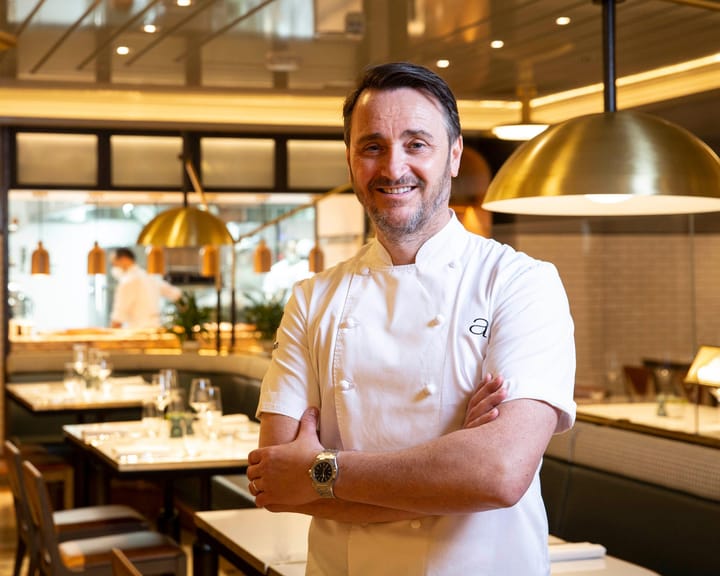
A British Michelin‑starred chef says he is opening restaurants abroad to help subsidise his UK venues amid high taxes and a troubled hospitality sector.
Jason Atherton is currently in Forte dei Marmi on the Tuscan coast, where he is readying his newest venture, Maria’s, located in the Principessa