
A Small Spanish Town’s Call to Support Undocumented Migrants
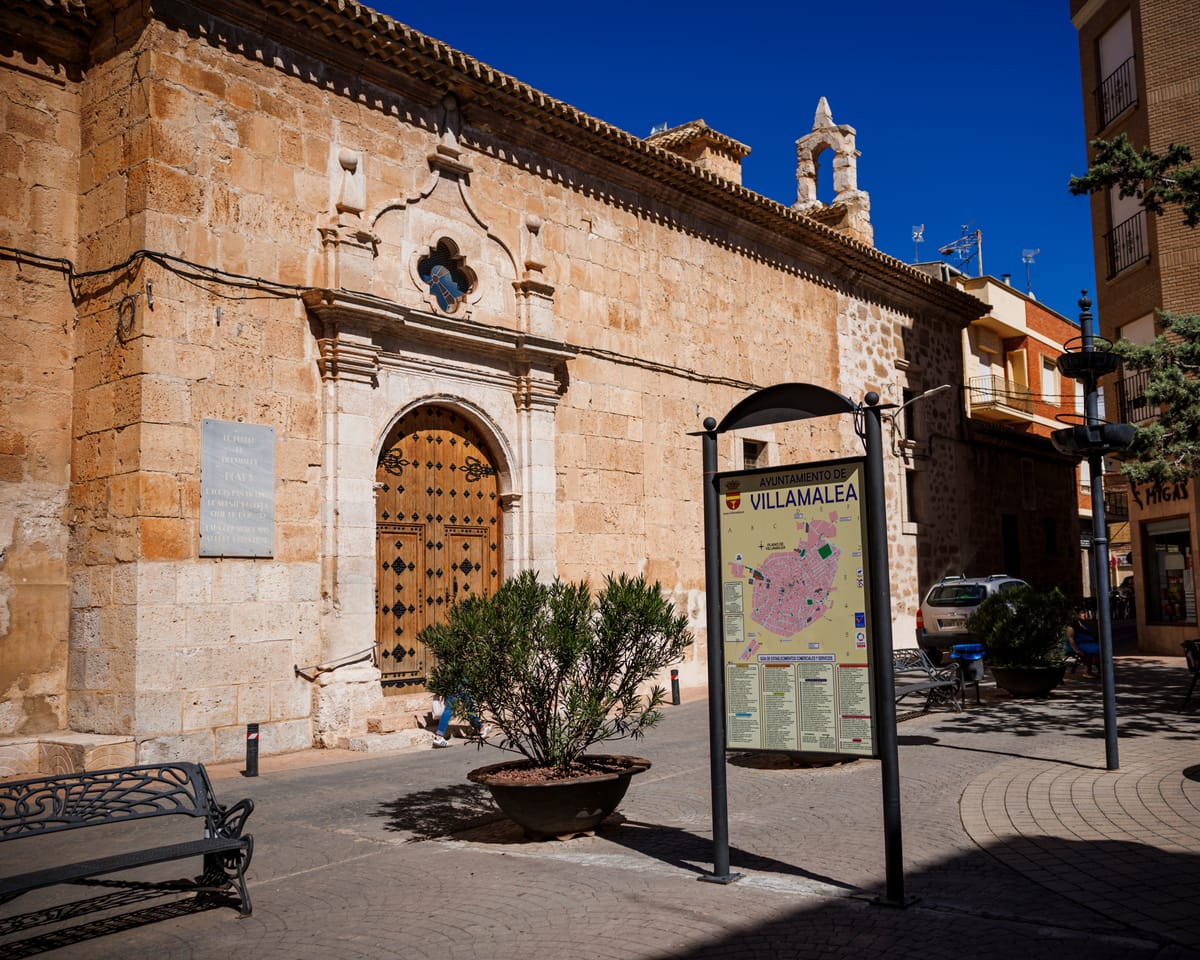
Surrounded by farmlands and nestled in the valleys of central Spain, the quiet town of Villamalea, home to 4,200 people, became an unexpected focus in national news this summer.
"I’ve never had so much media interest in my life," said José Núñez Pérez, the town's mayor, who represents a conservative party. "It made me wonder—what exactly did we do to deserve this attention?"
Reporters were all asking about the same thing: a unanimous decision by the town council urging the national government to move forward with a stalled plan to provide legal status for undocumented migrants.
"To us, it was the most logical step," explained Núñez Pérez, stopping to chat with locals in the central plaza. Over the years, Villamalea has drawn workers from around the world, filling essential jobs in the area.
This steady labor supply has helped establish the town as a key agricultural hub—roughly 70% of mushrooms sold in Spain come from here—while also shaping a diverse community with roots in 32 different countries.
For the 11 council members who supported the motion—spanning conservative, socialist, and left-wing parties—this reality outweighed political divisions.
"There wasn’t even a debate; we all agreed immediately," said Núñez Pérez. "There’s a lot of work here, and businesses struggle to find enough people to fill jobs."
With local employers considering hiring temporary foreign workers, it seemed only fair to provide undocumented residents already living there a chance to stay legally. "It’s not just about economics, it’s a matter of basic dignity," the mayor added.
Recent data supports this perspective. In late August, the president of the European Central Bank noted that foreign labor had been crucial for economic growth, citing that Germany's GDP in 2019 would have been 6% lower without migrant workers. Similar trends were seen across the eurozone, where foreign workers, though making up only 9% of the labor force in 2022, contributed to half of its recent growth.
Spain, where migration has been framed as an opportunity, has seen its economy benefit from an increase in arrivals, standing out in a slow-growing Europe. Even some long-time opponents of immigration have acknowledged its necessity. Italy’s leader, previously an outspoken critic of unauthorized migration, recently announced plans to issue nearly 500,000 work visas for non-EU nationals in the coming years.
While programs to legalize migrant workers have been used across the EU for decades, with 43 such initiatives between 1996 and 2008, Villamalea’s council saw no reason to delay a decision that seemed both practical and just.
Read next

Russian Assault on Buses Near Ukraine Border Results in 30 Deaths
Thirty people have been killed and eighteen injured following an attack by Russia on two passenger buses in Kramatorsk, near the frontline in eastern Ukraine, according to local authorities.
The Donetsk regional prosecutor's office reported that the death toll from the morning attack on the buses had reached

Ethiopia Conducts Drone Strike on Eritrean Forces in Tigray Region
Eritrean forces reportedly crossed into Ethiopia's Tigray region and faced drone attacks from Ethiopian government forces, raising concerns about the potential for a broader regional conflict between the two neighboring countries.
Military vehicles transporting soldiers crossed the southern border of Eritrea into Tigray on Wednesday, reaching Adigrat, approximately

Israel Advances Film Resembling NAZA Documentary
The Israeli government is promoting an online film project designed to counter the findings of the award-winning documentary NAZA, which details Israel’s mass killings of civilians in Gaza. NAZA, directed by Oscar-winning filmmakers Yuval Abraham and Rachel Szor, is currently in cinemas and will be shown in