
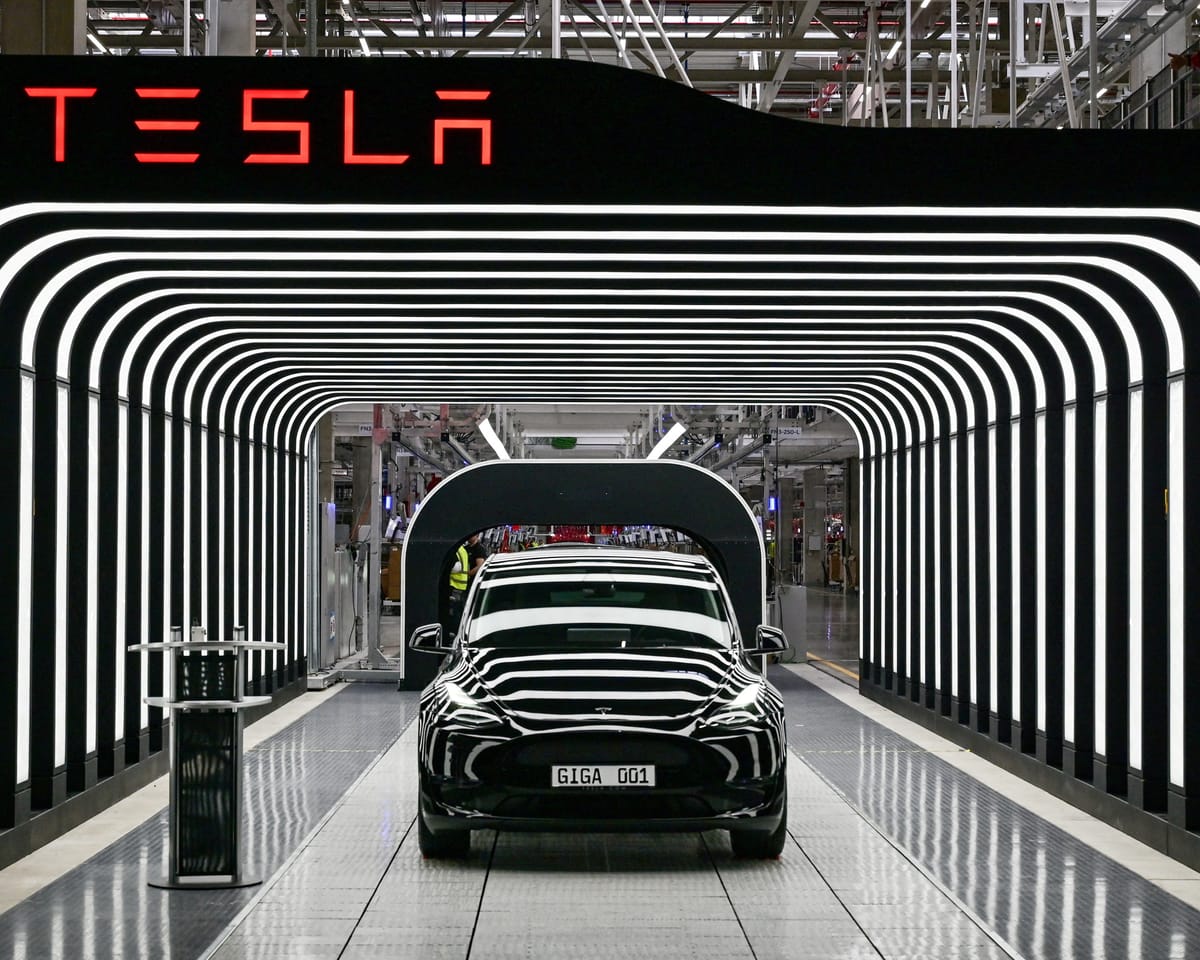
Tesla Faces Sales Decline in Europe, Struggles Amid Market Challenges
Tesla’s sales in Europe have dropped by a third this year, according to recent data, following CEO Elon Musk’s warning that the company could encounter difficulties in the coming quarters.
Figures released by the European Automobile Manufacturers Association (ACEA) show that Tesla delivered 110,000 vehicles in the first half of 2025, down from 165,000 during the same period in 2024. The decline suggests the automaker is still grappling with weak demand in the region, despite introducing an updated version of its popular Model Y. Other carmakers have also faced challenges, with overall new car sales in the EU falling by 7% in June.
Tesla’s struggles are compounded by specific issues. Musk, whose ownership stake has made him one of the world’s wealthiest individuals, has drawn criticism for supporting far-right political groups in Europe and briefly aligning with former U.S. President Donald Trump, who remains widely unpopular across the continent.
That alliance has since unraveled, while Tesla has also faced pressure in the U.S. due to policies unfavorable to electric vehicles. In June, Tesla’s sales across Europe—including the EU, UK, Norway, and Switzerland—fell by more than 20% compared to the previous year, totaling 35,000 units.
Tesla shares dropped 6% in pre-market trading ahead of Thursday’s opening on Wall Street after Musk warned late Wednesday that the company might experience challenges in upcoming quarters. He partly attributed declining earnings to reductions in incentives for electric vehicle manufacturers under Trump’s policies.
The former president’s budgetary measures included restrictions on emissions credit sales—previously a major revenue source for Tesla. The company reported a 12% drop in second-quarter revenue compared to last year, totaling $22.5 billion, below market expectations. Operating income also fell sharply, down 42% to $900 million.
The UK has been one of the few positive markets for Tesla in Europe, with sales declining only 1.3% year-on-year in the first half of 2025, according to British industry data. However, the broader EU market has been more concerning, with Tesla sales plummeting 40% in June and 44% over the first six months of the year.
Tesla’s share of the overall European auto market has slipped from 2.4% in 2024 to 1.6% in 2025, though it may rebound slightly if demand for the updated Model Y strengthens.
Rather than focusing on enhancing consumer offerings, Musk has emphasized future revenue from autonomous taxis operated by artificial intelligence. A pilot program is underway in Austin, Texas, which Musk has repeatedly highlighted as a key opportunity for the company.
Read next

US officers worry Meta smart glasses could covertly record them
In January, the NYPD’s counterterrorism unit warned officers about a new security threat: Ray-Ban Meta glasses. A memo directed officers to “conduct thorough inspections of all eyewear permitted within inmate cells,” cautioning that recently arrested individuals could use the devices’ small cameras and microphones to record inside police

Google's Pixel 11 sets new standard for flagship phones, review finds
Google’s Pixel 11 continues to define what a base flagship phone should deliver, with leading cameras, extended software support and nearly all the features of its pricier siblings.
The standard Pixel 11 is priced at £879 (€999/$899/A$1,499), £80 higher than its previous version, reflecting ongoing

AI Expert Father of Three Shares Essential Insights for Parents on Artificial Intelligence
A father once promised his child they would write a story together called "The Day Nobody Went to Disneyland." The plot imagined a perfect day when the entire world avoided the park, expecting crowds, leaving it completely empty for a father and child to enjoy alone. Three decades