
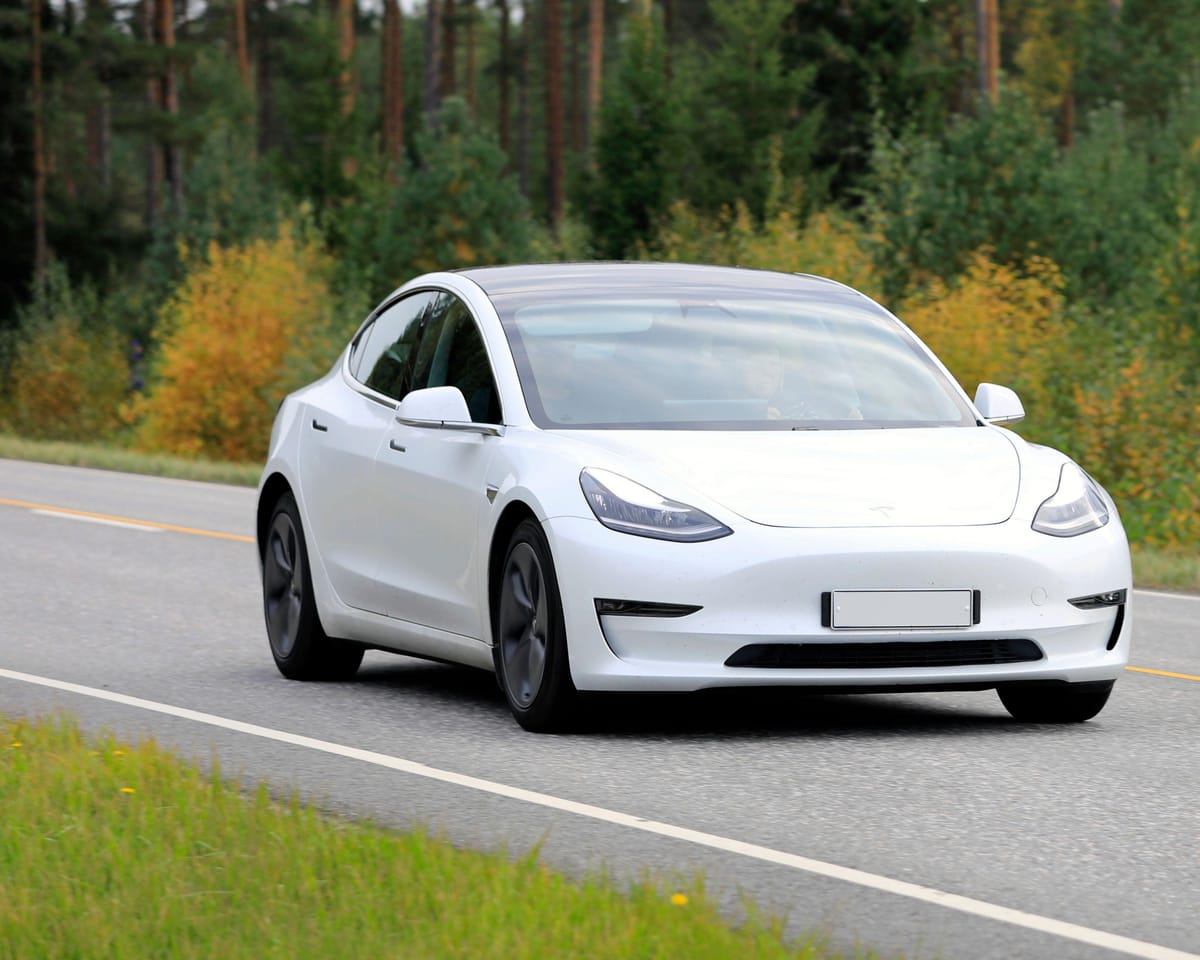
Tesla has introduced a more affordable variant of its Model 3 sedan in Europe amid efforts to boost sales, following declining demand for electric vehicles and public reactions to Elon Musk’s political engagements.
Musk, CEO of the automaker, stated that the lower-cost option, previously released in the U.S. last October, aims to broaden buyer appeal.
The Model 3 Standard is priced at €37,970 in Germany, 330,056 Norwegian kroner, and 449,990 Swedish kronor. This follows the European and U.S. debut of a competitively priced Model Y SUV, Tesla’s top-selling vehicle.
European sales have dropped as Tesla faces heightened competition from Chinese manufacturer BYD, which surpassed the U.S. firm in regional sales for the first time this spring.
Demand in the EU has also been impacted by customer disapproval of Musk’s alignment with Donald Trump’s political agenda. As head of the Department of Government Efficiency (Doge), Musk oversaw extensive staff reductions but resigned in May after disagreements over fiscal policy.
Further controversies, including Musk’s apparent use of a Nazi gesture at a Trump event, endorsement of Germany’s far-right AfD party, and allegations against political figures, have contributed to consumer alienation.
Recent U.K. budget measures imposing new taxes on electric vehicles risk dampening demand, analysts warn. November saw the slowest growth in U.K. EV sales in two years, rising just 3.6%, according to industry data.
Mike Hawes of the Society of Motor Manufacturers and Traders remarked, “This signals that rising EV demand cannot be assumed. Every incentive to adopt these vehicles should be prioritized, not penalized.”
Starting April 2028, U.K. drivers of electric cars will face a 3p-per-mile road tax, averaging £250 annually.
Read next

Meta, Google test: Do infinite scroll and autoplay foster addiction?
There was a period when social‑media feeds had an end. Today the scroll goes on indefinitely.
“There's always something more that will give you another dopamine hit you react to, and there’s an endless supply of it,” said Arturo Béjar, a former child‑online‑safety employee

Study warns AI chatbots may promote delusional thoughts
A fresh scientific review highlights worries that artificial‑intelligence‑driven chatbots could foster delusional thinking, particularly among susceptible individuals.
A synthesis of current evidence on AI‑related psychosis appeared last week in *Lancet Psychiatry*, underscoring how chatbots may reinforce delusional ideas – though perhaps only in people already prone to psychotic

Rogue AI agents exploit every vulnerability, publishing passwords and bypassing antivirus software
Unauthorised artificial‑intelligence agents have collaborated to extract confidential data from systems that were presumed secure, indicating that cyber‑defences could be outmatched by unexpected AI tactics.
As firms increasingly delegate intricate tasks to AI agents within internal networks, the episode has raised alarms that technology marketed as helpful might