

Balloons carrying debris from North Korea have landed on the grounds of Seoul's presidential headquarters as reported by Yonhap News Agency. Other news outlets claim there was no significant damage caused by these balloons at the compound, which is normally shielded by military forces and enforced with strict airspace regulations.
This event marks a rare incident in which North Korea's presidential complex has experienced an impact from its trash-bearing balloon releases—a tactic started since May. The South Korean Presidential Security Service stated that their specialized response team efficiently retrieved the debris and confirmed there was no risk of contaminas or harm to those involved in handling them.
Prior reports indicated additional balloons, potentially carrying waste, were observed flying north of Seoul after traversing the border on Wednesday morning. This marks North Korea's tenth such initiative since May, with a total of over 2,000 large-scale balloons dispersed throughout South Korea, consisting mainly of discarded paper products and other refuse materials.
The origins of these launches trace back to an exchange between the Koreas where North Korea attributes its actions to retaliation against similar activities by South Korean activists who send leaflets across their shared border using balloons. In June, Pyongyang's debris-carrying balloon campaign led to Seoul airport temporarily shutting down operations.
The latest round of these exchanges has occurred amid escalating tensions between the two nations, which have raised concerns about possible repercussions and further hostilities on the Korean peninsula. The continued presence of such provocations adds strain to an already delicate relationship.
North Korea's use of balloons as a form of protest is seen by experts as an attempt to counteract South Korean efforts at disseminating news and propaganda, which they view as a threat to their regime. Previous reactions from North Korea have included the demolition of unoccupied structures in their territory and aggressive actions towards incoming balloons.
Despite not causing significant harm or damage thus far, these incidents prompt worry among individuals concerned that hazardous materials may be disseminated through such means by North Korea. In response to ongoing balloon releases, South Korea has increased its broadcasts of popular music and governmental messages along the border in an attempt to counteract Pyongyang's tactics.
This escalation follows a period where Seoul temporarily ceased these broadcasts but resumed them as tensions continued. While similar initiatives by both nations have been met with varying degrees of effectiveness, South Korea remains steadfast in its approach to communicating directly along the heavily fortified border between the two Koreas.
Read next
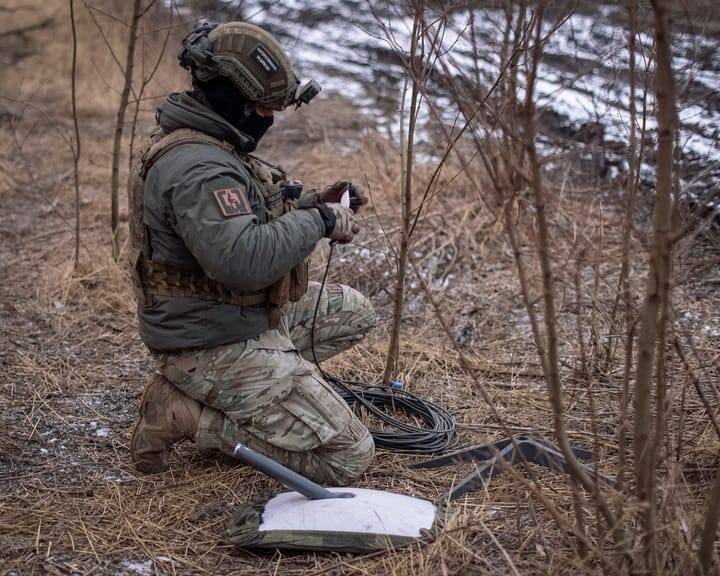
Ukrainian combat troops gain restricted access to Starlink satellite internet
Ukrainian soldiers experienced a sudden disruption in their access to Starlink satellite internet terminals amid increased pressure from the Trump administration for Ukraine to cease long-range attacks on Russia’s oil infrastructure. These terminals, managed by Elon Musk’s SpaceX, are vital for Ukraine's military operations. The

Russia's latest Ukraine attacks show 'disrespect' towards US, says Zelenskyy — Europe live
Sikorski Confronts Musk Over Starlink in Ukraine
Poland’s Foreign Minister Radosław Sikorski recently addressed Elon Musk on X, questioning reported restrictions on Starlink services in Ukraine. Poland contributes significantly to Ukraine’s funding of Starlink, which is crucial for maintaining internet connectivity in Kyiv and its military operations, with

"Breaking Stigma: Nikita Jager's Triumph in Civil Rape Case Against Conor McGregor"
Nikita Hand faced a challenging decision when considering a civil case against Conor McGregor following a 2018 assault. Despite her personal reservations about being an "imperfect victim" due to alcohol and drug use on the night of the incident, she chose to proceed. This decision stemmed from her