
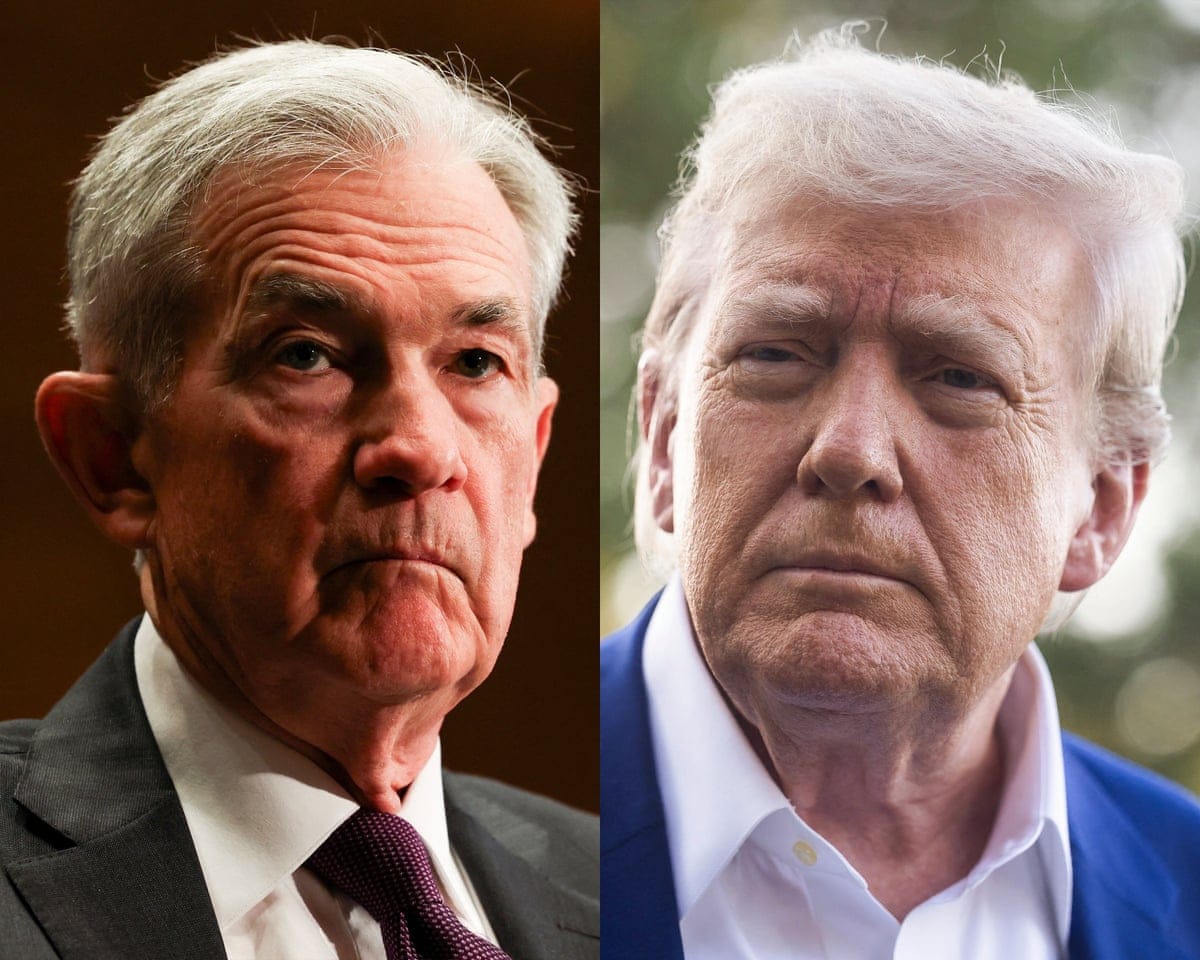
For months, Donald Trump has repeatedly criticized the Federal Reserve and its chair, Jerome Powell, on social media, even threatening to remove him from his position. Recently, he adopted a new approach: a handwritten message.
“You have cost the USA a fortune and continue to do so. You should lower the rate – by a lot!” Trump wrote to Powell, whom he mockingly referred to as “Too Late.”
Trump’s focus on the Fed is unsurprising. Amid his trade disputes, businesses and consumers have voiced concerns about economic stability. Stocks fell sharply in April when he announced new tariffs, recovering only after he scaled back most of the measures.
The Fed influences the economy by adjusting interest rates. Higher rates, as seen in recent years, increase borrowing costs for mortgages, loans, and credit cards. This discourages spending and investment, slowing economic activity. A rate cut could boost markets, but long-term consequences may follow.
But how much influence does Trump truly have over the Fed?
Though his direct confrontations with Powell mark a shift from typical presidential-Fed relations, economists note the central bank’s structure limits Trump’s immediate authority.
The Fed has long operated as an independent, nonpartisan institution. Research shows that nations without autonomous central banks often suffer from high inflation and unemployment.
“Central bank independence is one of the few economic policies with clear benefits and no real downside,” said Jason Furman, a former economic adviser to Barack Obama. “When leaders exert excessive control, like in Turkey, inflation can spiral, leading to severe economic crises.”
In late June, Trump mentioned considering “three or four people” to replace Powell. When asked if he would accept the position, Scott Bessent, a rumored candidate, stated, “I will follow the president’s wishes.”
Discussions about replacing Powell nearly a year before his term ends have raised concerns that a new appointee might act as a “shadow chair,” influencing Powell’s decisions before his departure.
However, experts familiar with the Fed’s structure say such intervention is unlikely, as decision-making relies on consensus among its leadership.
The Fed chair does not set rates unilaterally. They are one of 12 members of the Federal Open Market Committee (FOMC), where collective deliberation determines policy shifts.
Read next
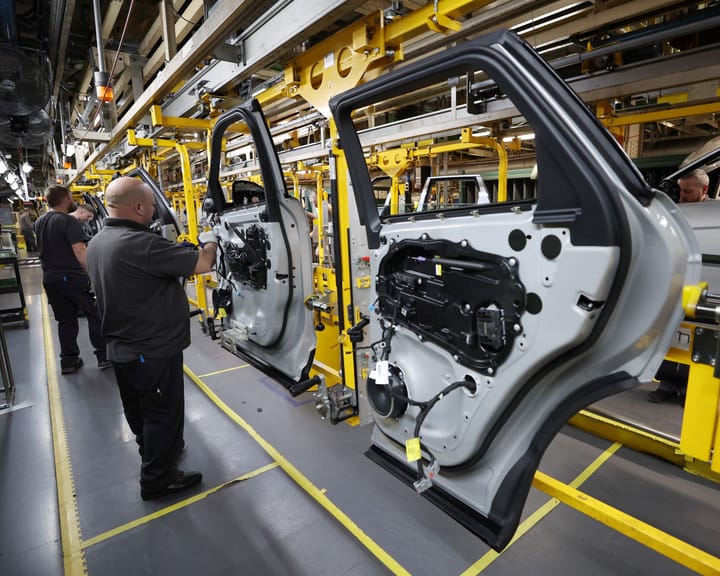
Jaguar Land Rover suppliers voice ‘everything is against us’ amid cutbacks
David Roberts, chair of Coventry-based Evtec, says the outlook for Britain’s automotive sector is grim, with “everything against us.” Evtec is a tier 1 supplier to Jaguar Land Rover, which this week announced 4,000 job cuts over two years despite chancellor John Healey’s attempt to talk

Europe’s fighter jet plans in disarray: what comes next?
When former ECB president and Italian PM Mario Draghi urged Europe to catch up economically with the US and China, defence collaboration was prescribed. No more should each nation build independent boats, tanks or jets; allies should share costs and technologies.
Europe stumbled at the first hurdle. German Chancellor Friedrich
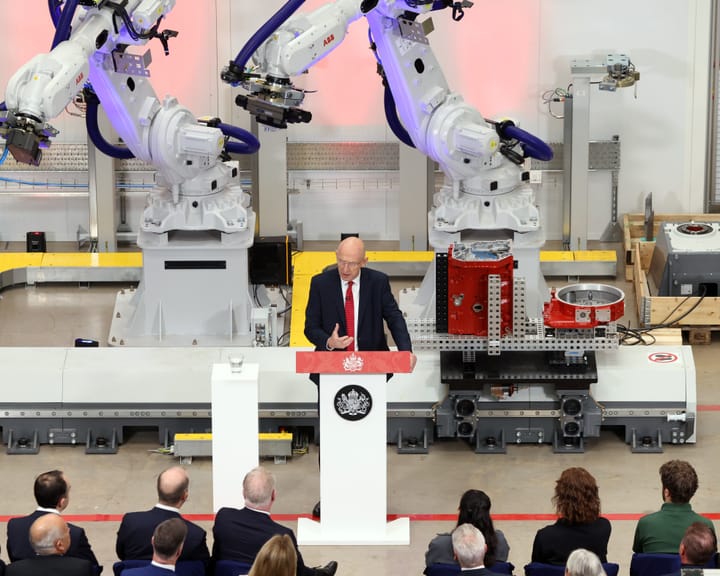
John Healey supports growth but insists Labour must be truthful about spending
John Healey has stated that his primary goal as chancellor will be to boost economic growth, while acknowledging that Labour must be straightforward about controlling public spending at next month's budget.
In his first major address since assuming the role in July, Healey said the leading focus of