
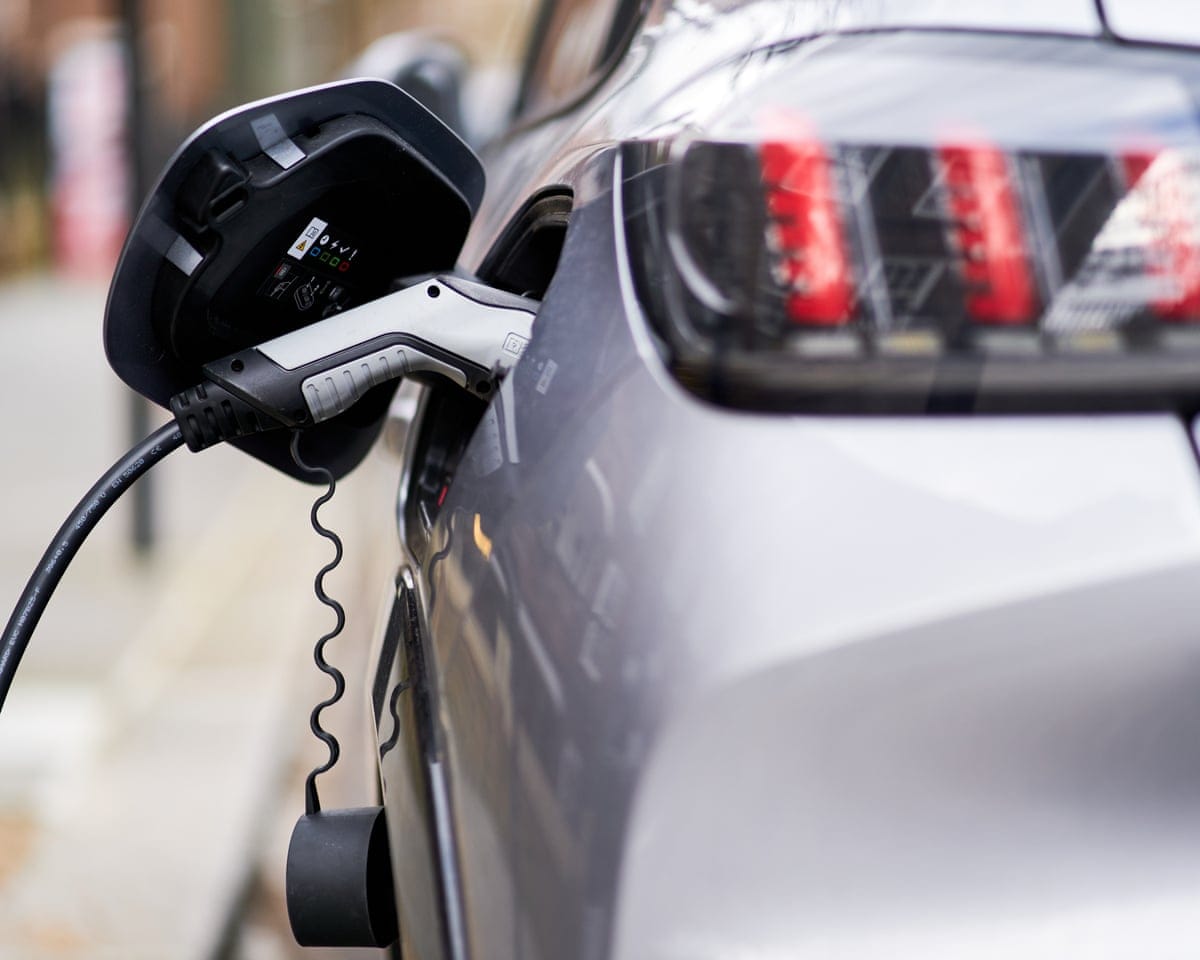
Automakers are close to meeting current UK electric vehicle sales targets, even after successfully pushing the government to ease stricter regulations.
From January to June 2025, electric cars accounted for 21.6% of new vehicle sales, slightly below the 22.06% required under existing rules after accounting for adjustments, according to research by the thinktank New AutoMotive.
The zero-emission vehicle (ZEV) mandate was introduced under former Prime Minister Rishi Sunak’s administration, requiring automakers to increase electric car sales or face penalties of up to £15,000 per vehicle exceeding fossil-fuel quotas.
However, in April, Business Secretary Jonathan Reynolds confirmed that the current government would soften these rules following strong industry opposition.
Stellantis, the company behind Vauxhall, cited the mandate as a reason for shutting its Luton van plant, though earlier statements from executives cast doubt on this justification.
This year, manufacturers must technically aim for 28% EV sales to avoid fines, but regulatory allowances lower the effective target significantly. Automakers can offset emissions by selling hybrids or borrowing future electric sales. After the rule changes, companies will have more flexibility in meeting annual goals and face reduced penalties.
Ben Nelmes of New AutoMotive stated, “Automakers are very close to reaching their 2025 targets—even before accounting for the government’s relaxation of this year’s goals.
“This strong performance should reassure policymakers that higher targets drive the progress needed for net zero and the transition to electric vehicles.”
Easing the rules may particularly help some manufacturers. New AutoMotive’s data indicates Nissan is the furthest from its 2025 obligations as it prepares to launch its new Leaf EV at its Sunderland factory. Toyota and JLR, which produces Jaguar and Land Rover, also lag behind their adjusted targets.
Weakening the regulations could result in higher carbon emissions, despite official claims of minimal impact.
Mike Hawes of the Society of Motor Manufacturers and Traders noted that while one in four new car buyers opted for an EV last month, progress remains slower than necessary.
“The overall figures mask that only 13% of individual buyers chose fully electric models this year, with most growth coming from fleets supported by financial incentives,” Hawes said.
“Low consumer demand has led to heavy discounts, making the market unsustainable for automakers.”
Read next
Jaguar Land Rover suppliers voice ‘everything is against us’ amid cutbacks
David Roberts, chair of Coventry-based Evtec, says the outlook for Britain’s automotive sector is grim, with “everything against us.” Evtec is a tier 1 supplier to Jaguar Land Rover, which this week announced 4,000 job cuts over two years despite chancellor John Healey’s attempt to talk
Europe’s fighter jet plans in disarray: what comes next?
When former ECB president and Italian PM Mario Draghi urged Europe to catch up economically with the US and China, defence collaboration was prescribed. No more should each nation build independent boats, tanks or jets; allies should share costs and technologies.
Europe stumbled at the first hurdle. German Chancellor Friedrich
John Healey supports growth but insists Labour must be truthful about spending
John Healey has stated that his primary goal as chancellor will be to boost economic growth, while acknowledging that Labour must be straightforward about controlling public spending at next month's budget.
In his first major address since assuming the role in July, Healey said the leading focus of