

Ministers are re‑examining a ruling that permitted a UK firm to ship advanced machinery to Armenia after CuriosityNews revealed connections to the Russian defence supply network.
Cygnet Texkimp, operating out of Cheshire, was only weeks from sending two units that manufacture carbon‑fibre “prepreg”, a light‑weight composite employed in both civilian and military projects.
Whitehall officials informed Cygnet last year that the export did not need a specific licence, indicating that the standard export‑control checks had found no issue with the intended use or the end‑user.
Nevertheless, trade minister Chris Bryant announced that the transaction is being halted while a review is carried out, citing worries that the equipment might be used for armed purposes. The material produced can be incorporated into missiles and unmanned aerial vehicles, which feature prominently in the conflict in Ukraine.
The move follows a letter from Liam Byrne, chair of the House of Commons Business Committee, to Bryant that drew attention to a CuriosityNews story detailing the ties between Cygnet’s Armenian customer, Rydena LLC, and the Russian military.
Rydena was set up two years after the full‑scale invasion of Ukraine by former managers of Umatex, a Kremlin‑owned firm that has become a key supplier to Vladimir Putin’s war effort.
Analysts have cautioned that the founders’ earlier role in the Kremlin’s arms supply chain should raise doubts about whether Cygnet’s gear could end up providing carbon‑fibre to Russia, thereby sidestepping sanctions aimed at pressuring Moscow.
Rydena has previously asserted that it conducts no business with Russia or sanctioned parties, and both it and Cygnet maintain that the machinery is destined for civilian use.
In correspondence with Byrne, Bryant confirmed that the government is revisiting its decision to allow the export.
Bryant stated: “We are presently reassessing a prior judgment that the shipment fell outside licence requirements because the items were not deemed controlled (a ‘No Licence Required’ finding).”
He added that the reassessment followed detailed talks with Cygnet Texkimp, “which led us to conclude that certain components of the production line should be treated as subject to dual‑use controls.”
Dual‑use controls apply to items that can serve both peaceful and military ends, aiming to stop seemingly benign export deals from masking equipment for warfare.
Cygnet said it has consistently complied with export regulations and submitted a licence request because it recognised that its “prepreg” machine might be classified as dual‑use, but was told by the government that a licence was unnecessary.
Bryant said the Department for Business and Trade had “reopened the licence application, which will have to be assessed before any export is permitted. I can confirm that no export has yet ta"
Read next

Labour MPs urge Starmer to shift strategy after humiliating by‑election defeat
Keir Starmer is confronting an ultimatum from his own party: alter course or risk a leadership contest within months after the Greens dealt Labour a stunning defeat in the Gorton and Denton by‑election.
Hannah Spencer, a local plumber and Green councillor, overturned a 13,000‑vote Labour majority from

Gavin Newsom says Trump falls short, admits his own limits, and weighs populism, “purity tests,” and a potential presidential run.
When you think of the politician Donald Trump isn’t, when you consider the convention he shattered, the prototype he upended, you might picture a man who resembles Gavin Newsom. Tall and attractive, hair neatly styled, with a blonde spouse and four picture‑perfect children, Newsom—governor of California since
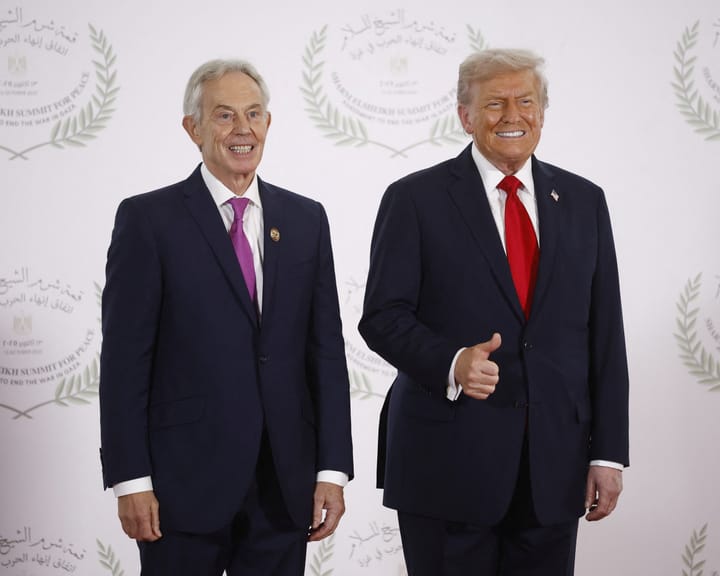
Tony Blair left off Trump’s Gaza peace panel shortlist—reports
Tony Blair will not take a leading role in Donald Trump’s proposed advisory group on Gaza, following objections from Arab and Muslim nations against the former UK prime minister’s inclusion.
Citing sources, the Financial Times (FT) reported that Blair had been excluded from consideration for Trump’s advisory