
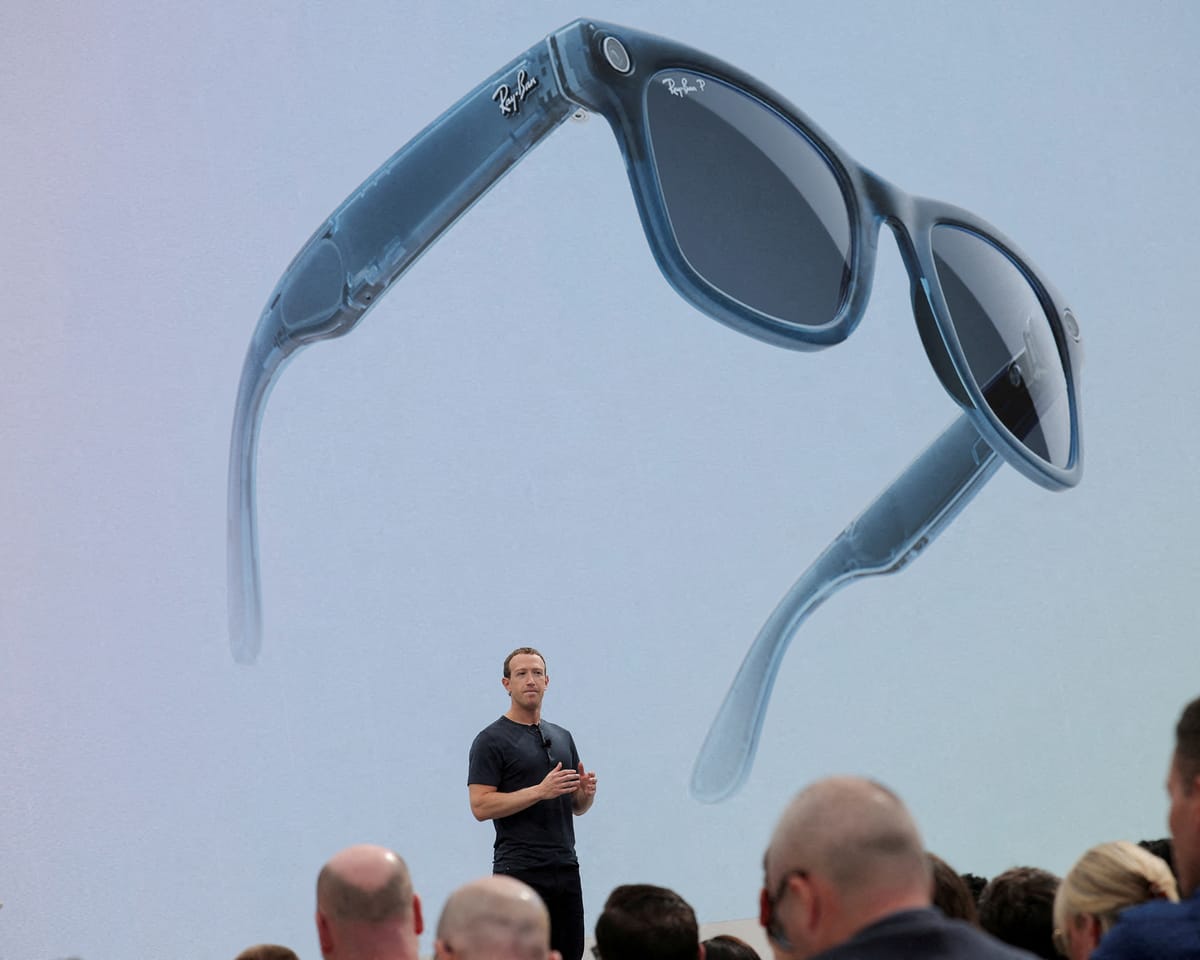
In January, the NYPD’s counterterrorism unit warned officers about a new security threat: Ray-Ban Meta glasses. A memo directed officers to “conduct thorough inspections of all eyewear permitted within inmate cells,” cautioning that recently arrested individuals could use the devices’ small cameras and microphones to record inside police facilities. The directive cited two social media videos as examples.
The memo warned that “the ability to covertly record inside a law enforcement or detention facility could result in a security risk if proprietary information about cell layouts, camera placements, or officer patrol routines were released.”
The NYPD memo is among a dozen previously unreported messages, reviewed by CuriosityNews, showing law enforcement agencies across the United States are increasingly concerned about smart glasses being used against them. Officers from Maine to California fear the technology will be used to secretly record officers and facilities or to aid in criminal and terrorist acts.
A TikTok video posted in July 2025 offered a rare look inside a South Carolina detention center under federal investigation for unsafe conditions. Footage captured with smart glasses showed a detainee saying, “Everyone here is trying to figure out what’s going on with my glasses, why my light is blinking,” while noting, “People don’t know about Meta glasses.” The clip filmed a dingy shower, holding cells, an overcrowded cafeteria, and sleeping detainees, all seemingly unaware of being recorded.
Facilities typically confiscate recording devices, but Meta smart glasses often go unnoticed. The devices are discreet and can pass as regular Ray-Bans or Oakleys. Their primary distinguishing feature is a small blinking light in the frame corner that activates when recording.
The covert recordings prompted the NYPD’s intelligence and counterterrorism bureau—working with the FBI—to circulate the January memo to other departments, noting the glasses “may appear as ordinary prescription eyewear.”
Concern over Meta’s smart glasses is not limited to law enforcement. The public and privacy experts, who have widely dubbed the devices “pervert glasses,” have grown equally wary. The technology enables wearers to record people without consent and has been used to harass individuals.
Documents obtained by Property of the People, a transparency-focused non-profit, show that law enforcement agencies share these anxieties. Ryan Shapiro, the group’s executive director, stated the records reveal that police want the exclusive right to use surveillance technology without those cameras being turned back on them.
“These agencies surveil the public incessantly, but the moment we can watch them back, it’s deemed a security threat,” Shapiro said. “When only the government is allowed to hold the camera, that’s not security. It’s impunity.”
A memo distributed in June 2026 by Maine’s fusion center warned that smart glasses used by the public to conduct surveillance have introduced additional risks in Department of Corrections and law enforcement facilities. Some models can leverage AI software including facial recognition, which could lead to doxing of publicly available information or connections to law enforcement officers.
Other concerns originated from the DHS’s joint counterterrorism assessment team and fusion centers nationwide, including those in San Diego, California; Tennessee; Virginia; Maine; and New York.
Fears prompted federal agencies to bar employees from using the devices in the workplace. In August, ICE declared that smart glasses qualify as body-worn cameras, prohibiting them in the “federal workspace,” according to a memo the New York Times obtained. The memo, written by ICE acting director David Venturella, warned that the “use of Meta Glasses or similar devices could unintentionally capture, record or transmit sensitive information.”
Meta maintains its glasses “are designed to be noticed.” Every pair includes a bright white LED that blinks when a photo or video is taken for the gallery, cannot be turned off, and covering or tampering with the LED disables the camera, said spokesperson Dina El-Kassaby.
Beyond non-consensual recording, agencies caution the glasses may aid in planning or “reconnaissance” for violent acts of terrorism or “hostile pre-operational surveillance.” A January 2025 NYPD memo cited the New Year’s Day terror attack in New Orleans, when a man drove a truck into a crowd on Bourbon Street, killing 14 and wounding 35. The FBI had alerted local agencies like the NYPD that the attacker biked around Bourbon Street twice at the end of 2024 wearing smart glasses. The FBI alleges the perpetrator conducted “pre-attack target reconnaissance.” The memo advises officers to be aware of and report individuals “acting in a suspicious manner observed wearing what may be smart glasses.”
Evan Greer, executive director of the digital advocacy non-profit Fight for the Future, said they are not surprised police are concerned about the technology being used against them or to cause harm. “Surveillance makes all of us less safe,” Greer stated. “There’s no such thing as Meta glasses that are only for the good guys.”
A Meta spokesperson noted the French Quarter is a highly trafficked tourist area, arguing the perpetrator could have filmed it with any other recording device, including a phone.
The concern over Meta’s smart glasses forms part of a broader law enforcement worry about the proliferation of artificial intelligence-backed technology and its impact on police activity. Agencies are simultaneously exploring ways to use AI for investigative purposes while warning against public opposition to its use.
In an August 2025 document, the NYPD wrote that while new AI technology could “significantly transform day-to-day police operations,” the department must also address public fears about advanced tech in policing. The memo was a response to “AI 2027,” a paper by a former OpenAI researcher and other industry experts outlining the future of AI development and its societal effects. The paper warns that AI opposition could result in “anti-tech violent extremist activity” and civil unrest over job losses, deepfake technology, and loss of trust in government and tech.
“Anti-tech violent extremist activity” is not a formal DHS terrorism category but has recently appeared in law enforcement messaging about a broad spectrum of extremist opposition to AI. Experts worry it could criminalize all anti-tech opposition and the constitutionally protected right to protest.
Read next
Google's Pixel 11 sets new standard for flagship phones, review finds
Google’s Pixel 11 continues to define what a base flagship phone should deliver, with leading cameras, extended software support and nearly all the features of its pricier siblings.
The standard Pixel 11 is priced at £879 (€999/$899/A$1,499), £80 higher than its previous version, reflecting ongoing

AI Expert Father of Three Shares Essential Insights for Parents on Artificial Intelligence
A father once promised his child they would write a story together called "The Day Nobody Went to Disneyland." The plot imagined a perfect day when the entire world avoided the park, expecting crowds, leaving it completely empty for a father and child to enjoy alone. Three decades

AI: Are Warnings of Uncontrollable Artificial Intelligence Becoming Reality? "We're plausibly close to crossing the line"
Imagine humanity in a boat being swept down a raging river, hoping there is no Niagara Falls ahead. Or picture standing with the pioneering physicists in 1942 before they triggered the first self-sustaining nuclear fission chain reaction beneath a Chicago stadium.
These were two of the analogies used this