

The Trump administration’s effort to block a UN resolution urging nations to act on the climate emergency has forced cuts to the text but has not fully eliminated it, according to the small Pacific island state leading the initiative.
Washington has pressed Vanuatu, a southern‑Pacific archipelago, to withdraw its UN draft resolution that urges the world to apply a landmark International Court of Justice (ICJ) ruling from last year, which says countries could be liable for reparations if they fail to curb the climate crisis.
Vanuatu, one of several island nations that view the climate emergency as an existential threat despite contributing little to it, said it had to excise portions of its proposed resolution in the hope that a slimmer version could be passed at the UN vote scheduled for later this month.
“Having the Trump administration actively intervening in the market to stop the phase‑out of fossil fuels is very frustrating; it exceeds what one would expect a government to do,” said Ralph Regenvanu, Vanuatu’s minister for climate‑change adaptation.
“It will have a massive detrimental impact on the planet and future generations.”
The resolution to implement the ICJ opinion is non‑binding but, according to the Trump administration, “could pose a major threat to US industry,” guidance to American embassies and consulates said last month.
“President Trump has sent a very clear signal: the UN and many nations have gone wildly off course, inflating climate change into the world’s greatest threat,” a US State Department cable added.
This resistance, together with opposition from other major fossil‑fuel producers such as Saudi Arabia and Russia, has led to the proposed UN resolution being diluted.
The original draft called for nations to submit a registry of the “loss and damage” they experience from a warming planet—events such as storms, floods and droughts. The United States, the world’s second‑largest carbon emitter, strongly opposed that accounting, fearing legal liability for its emissions, and the clause has now been removed.
Nevertheless, a revised draft circulated for discussion this week still states that UN member states must “fully comply with their obligations under international law as they relate to climate change,” in line with the ICJ ruling, and work to limit global warming to 1.5 °C above pre‑industrial levels through “a rapid, just and quantified phase‑out of fossil‑fuel production and use.”
Regenvanu said: “The US asked us to withdraw the resolution, which is disappointing, and pushed back on the language.”
He added: “We hope the compromise on the loss‑and‑damage registry will allow some of the other wording to remain. It is concerning, but we do not think it will completely derail the resolution, and I hope it will pass with more than a simple majority.”
Read next
Live Middle East crisis: Iran promises retaliation for security chief's death; Israel hints at imminent strike on Beirut
Iran’s armed forces pledged retaliation for the death of security chief Ali Larijani in an Israeli strike, with the army commander warning of a “decisive and regrettable” response.
Tehran also verified that Basij commander Gholamreza Soleimani was killed, after Israel had earlier asserted that its forces carried out the
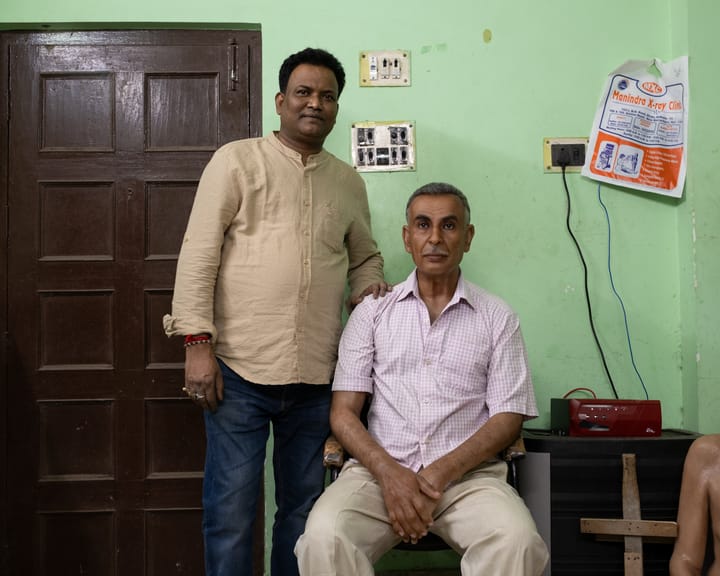
‘Almost human’: life-size replicas of the dead aid broken hearts in India
In northern Kolkata, close to Dum Dum Junction, Subimal Das and a team of about 80 operate out of an aging factory‑warehouse. With clay, fiberglass and silicone they produce life‑size copies of religious deities, cultural personalities, cricketers and film actors.
The workshop also offers a growing service: bespoke
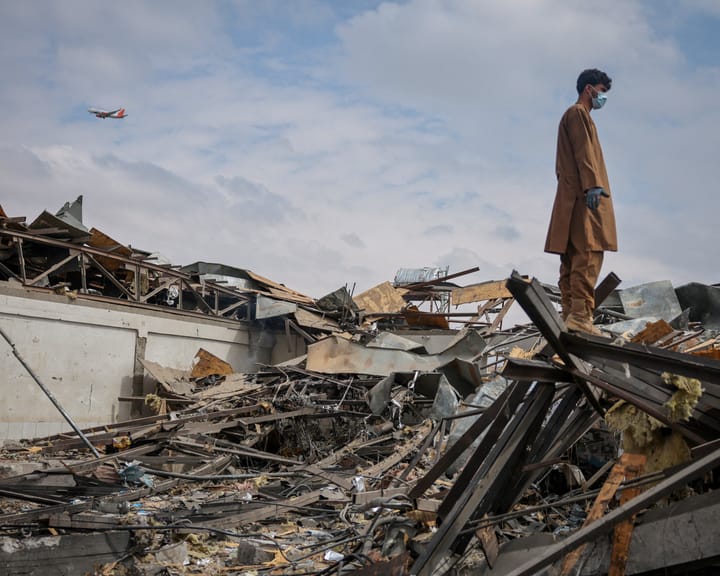
Witnesses say “Everything and people were burning” after strike on Kabul drug rehab centre.
Eyewitnesses and survivors have recounted the dreadful aftermath of a Pakistani air strike that struck a drug‑rehabilitation centre in Kabul, leaving more than 400 people dead, many of whom burned in their beds or were crushed as the structure collapsed.
Afghan rescue teams continued to pull bodies from the