
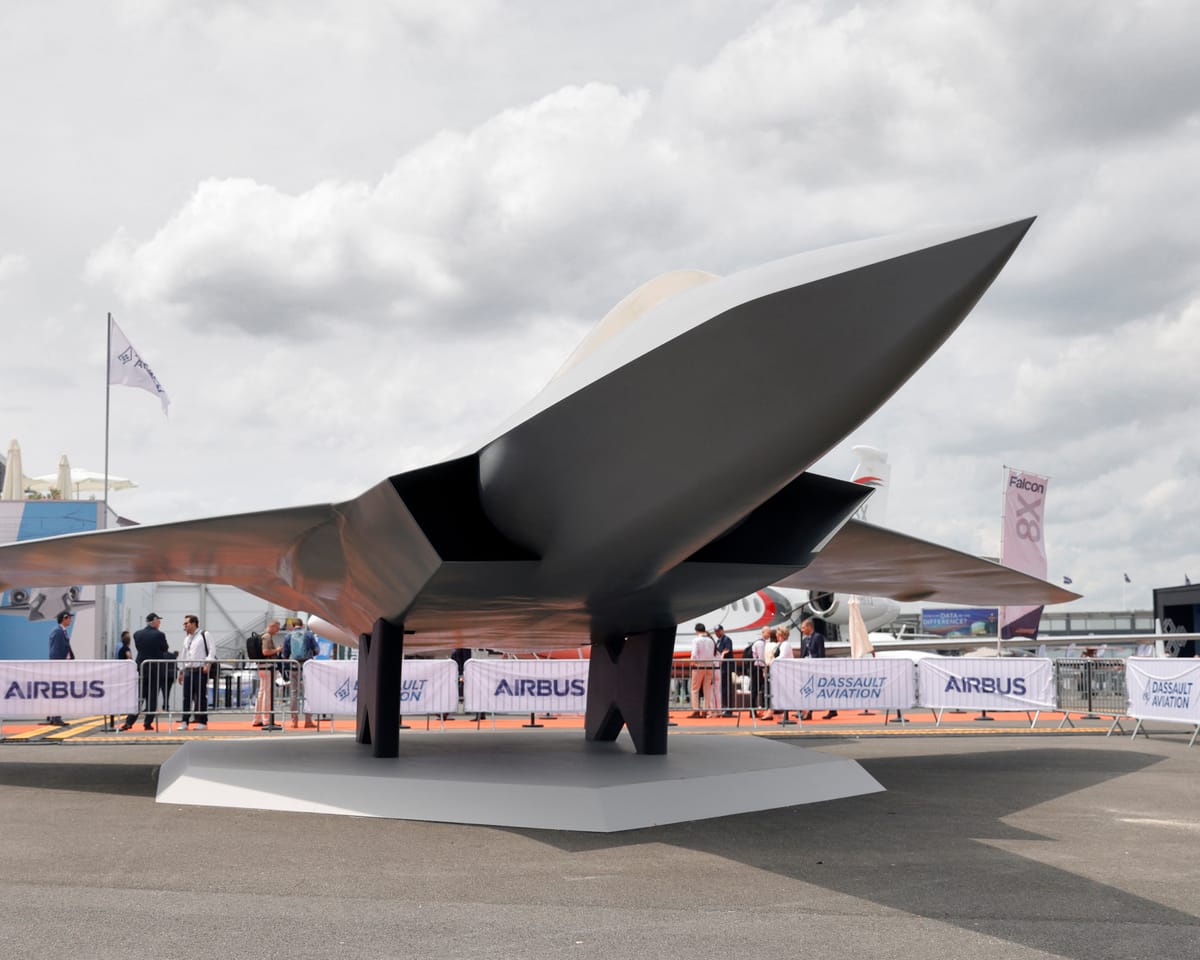
France and Germany’s next‑generation fighter programme may soon be “dead”, one of the two firms charged with delivering it warned, as a deepening corporate split over construction responsibilities widens.
Dassault Aviation, France’s premier combat‑aircraft builder, said Airbus Defence – representing Germany and Spain – must cooperate on the €100 billion scheme or it will fall apart.
“Airbus does not want to work with Dassault, period. I note that. I never claimed I was unwilling to work with Airbus or the Germans,” said Éric Trappier, Dassault’s chief executive, through an interpreter while unveiling the group’s financial results on Wednesday.
“If Airbus keeps its stance of refusing to work with Dassault, the project is finished,” he added.
The two firms have been embroiled in a quarrel over the division of work on the jet element of the Future Combat Air System (FCAS), with Dassault insisting it should lead while Airbus should play a secondary role.
The broad‑scope programme, which also covers autonomous drones and a futuristic “combat communications cloud”, was launched almost nine years ago but has since become a symbol of Europe’s difficulty in coordinating defence projects as the continent moves to rearm.
Trappier said: “Dassault was appointed the leader … I realise Airbus is unhappy with that choice but we are ensuring we honour the contract.”
He also rejected the claim made by German chancellor Friedrich Merz that the envisaged fighter does not meet Germany’s requirements. Merz argued last month that the German armed forces do not need a nuclear‑capable aircraft, whereas France does, stressing the issue was “technical, not political”.
Trappier replied: “I have heard the chancellor’s remarks. He is now speaking of having two aircraft instead of one, which can be explained by differing operational needs between the two nations.
“My senior officials in France say our operational needs are similar and that there is consensus at the operational level.”
Last month, Guillaume Faury, Airbus’s chief executive, also floated the idea of splitting the effort into two separate fighters to keep the remaining components alive.
France, Germany and Spain are expected shortly to decide whether to advance to the next phase of the programme, abandon the jet and press on with the other elements, or drop the whole effort.
There have also been suggestions that Germany could quit the project in favour of Britain’s rival Global Combat Aircraft programme (GCAP), known as Tempest. That fighter, being developed with Italy and Japan, is slated to fly five years earlier than the FCAS, in 2035.
Read next

US officers worry Meta smart glasses could covertly record them
In January, the NYPD’s counterterrorism unit warned officers about a new security threat: Ray-Ban Meta glasses. A memo directed officers to “conduct thorough inspections of all eyewear permitted within inmate cells,” cautioning that recently arrested individuals could use the devices’ small cameras and microphones to record inside police

Google's Pixel 11 sets new standard for flagship phones, review finds
Google’s Pixel 11 continues to define what a base flagship phone should deliver, with leading cameras, extended software support and nearly all the features of its pricier siblings.
The standard Pixel 11 is priced at £879 (€999/$899/A$1,499), £80 higher than its previous version, reflecting ongoing

AI Expert Father of Three Shares Essential Insights for Parents on Artificial Intelligence
A father once promised his child they would write a story together called "The Day Nobody Went to Disneyland." The plot imagined a perfect day when the entire world avoided the park, expecting crowds, leaving it completely empty for a father and child to enjoy alone. Three decades