
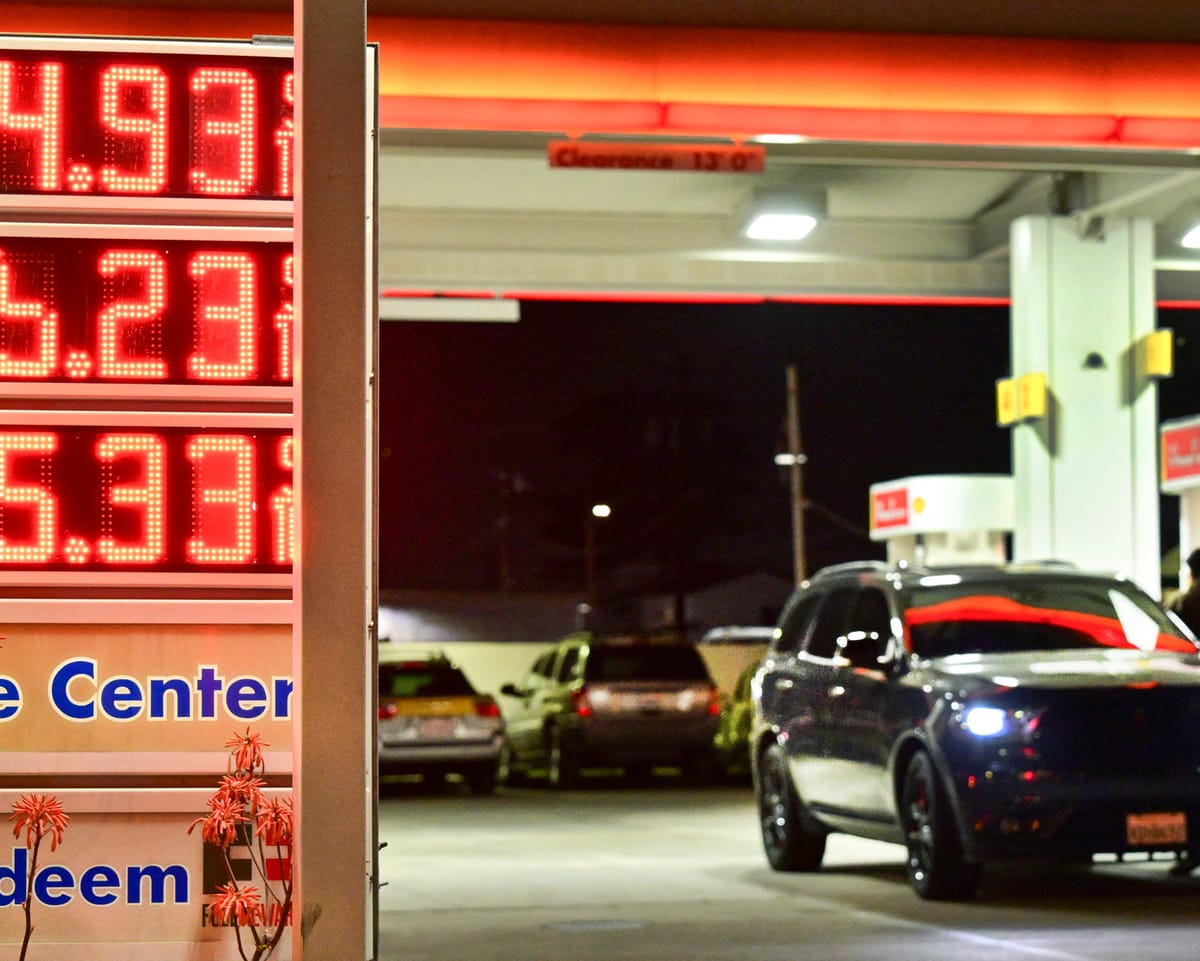
Across the United States, the typical price for a gallon of regular gasoline rose by almost 27 cents in a single week, reaching $3.25, and shoppers are preparing for further pump price increases as the US‑Israel clash with Iran threatens to disturb the world oil market.
The concern has reached the White House, where former President Donald Trump’s chief of staff, Susie Wiles, is said to be seeking ways to reduce gasoline costs, and staff members are reportedly being reprimanded to deliver positive updates, according to Politico.
Conflicts in oil‑rich regions once sparked alarm at American pumps. Those anxieties have eased a bit now that the United States ranks as the globe’s top crude oil producer. Even with this week’s price rise, U.S. buyers retain a degree of protection from the worldwide energy shock. The buffer is not unlimited, but it is sizable: domestic producers can boost output swiftly if elevated oil prices persist, and the administration faces strong pressure to hold prices down as the hostilities go on.
The Energy Information Administration projects the United States will extract a near‑record 13.6 million barrels of crude daily in 2026. Saudi Arabia follows as the second‑largest producer with 9.87 million barrels, per the International Energy Agency, while Iran accounts for roughly 3 % of worldwide oil output.
Robust domestic output suggests U.S. consumers enjoy partial shielding from energy shocks, though they remain vulnerable.
Crude oil trades on a worldwide market, with prices reacting to international developments. Following the US‑Israel attacks, Iran effectively halted traffic in the Strait of Hormuz, a vital conduit for energy shipments to Europe and Asia that carries roughly 20 % of global oil and natural‑gas flows.
When Trump declared on Tuesday that the United States would offer insurance guarantees and naval escorts for tankers navigating the strait, oil prices retreated from their highs. They climbed again on Friday, with Brent crude—the international benchmark—surpassing $90 after Trump warned there would be “no deal with Iran except UNCONDITIONAL SURRENDER!”
Rising U.S. crude costs have already filtered through to pump prices. Even if oil prices hold steady, Patrick De Haan, head of petroleum analysis at Gas Buddy, forecasts retail rates could climb another 20‑25 cents per gallon, lifting the national average to about $3.40.
While that burden is tough for American motorists, Joseph Brusuelas, chief economist at RSM—a mid‑market assurance, tax and consulting firm—argues that the U.S. economy’s robustness means oil would have to reach $125 per barrel, or $4.25 per gallon of gasoline, before causing serious economic harm.
“The U.S. economy is a dynamic, resilient $30 trillion entity. It has considerable capacity to absorb shocks from oil prices and energy‑market volatility,” Brusuelas said. “Nevertheless, even a $30 trillion beast has its weak spots.”
Read next

Live Middle East crisis: Mojtaba Khamenei appointed Iran’s new supreme leader; oil prices surge past $100 a barrel
Trump says decision on ending war will be ‘mutual’ with Netanyahu
Donald Trump told the Times of Israel that the timing of a cease‑fire with Iran will be decided jointly with Israeli Prime Minister Benjamin Netanyahu.
In a brief phone interview on Sunday, Trump added that Iran would have

Japan's partially deserted island at the center of tensions with China
His island residence is cloaked in mist, yet his Union‑Jack knit cap makes Hideya Yagi easy to spot as he welcomes the incoming boat. The 80‑year‑old former construction‑company president is glad to see the handful of passengers step ashore, largely because he is one of only

German state vote serves as a trial for Chancellor Friedrich Merz
Friedrich Merz’s centre‑right CDU approaches a regional ballot on Sunday, the first of several contests this year in which it seeks to curb the advance of the far‑right Alternative für Deutschland (AfD).
Electors will cast their votes in Baden‑Württemberg, a wealthy centre of Germany’s automobile