
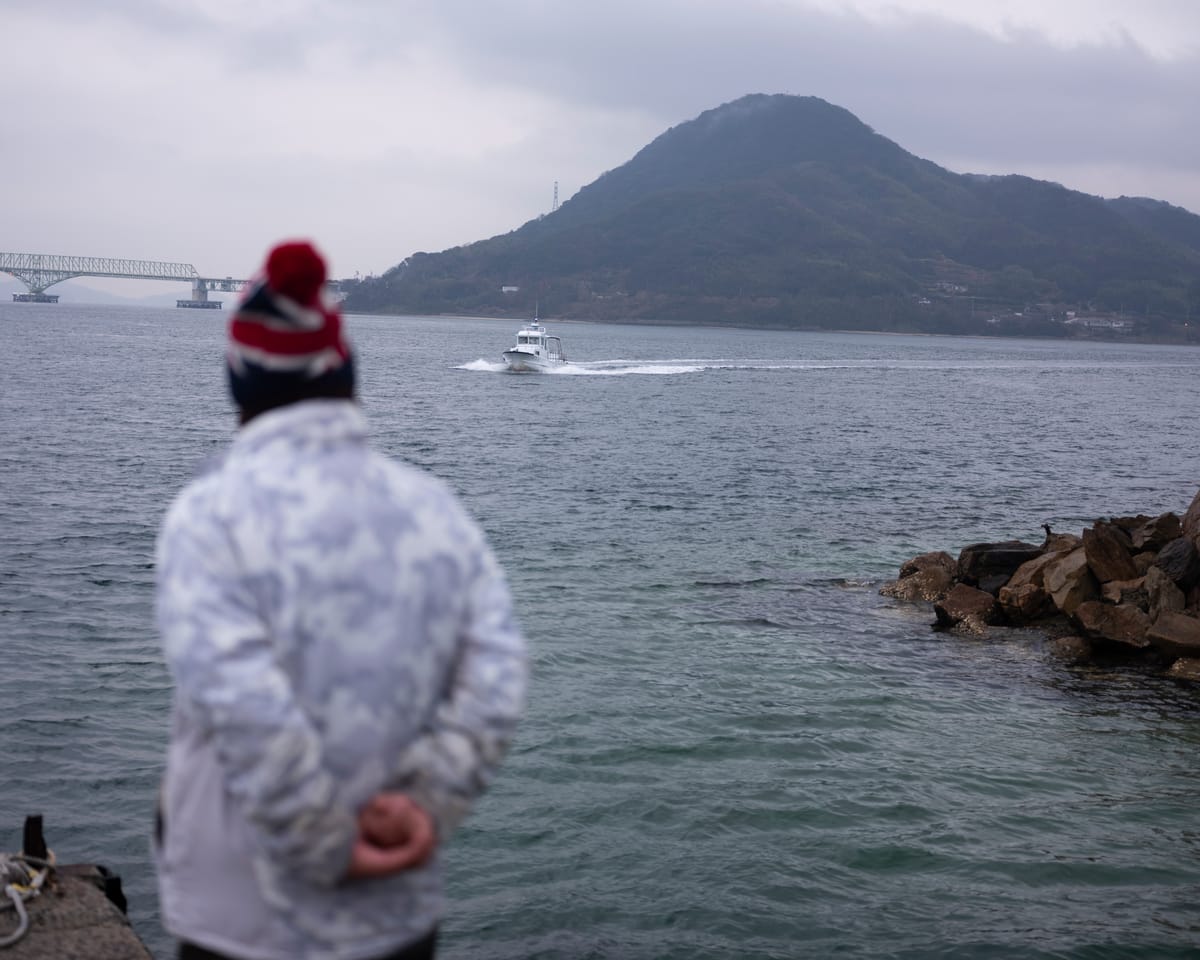
His island residence is cloaked in mist, yet his Union‑Jack knit cap makes Hideya Yagi easy to spot as he welcomes the incoming boat. The 80‑year‑old former construction‑company president is glad to see the handful of passengers step ashore, largely because he is one of only seven registered inhabitants of Kasasa Island.
Kasasa, often called the “Hawaii” of Japan’s inland sea, is famed for its mild weather and attractive shoreline. Yagi and his wife, Mihoko, lead a tranquil life there with just one other couple and an elderly woman; the remaining two residents are rarely present.
“You can stand on the pier and simply pull the fish in,” he says while standing on the modest quay, his thoughts drifting to the pastime that brought him to the island 25 years ago. “And you can eat what you catch right away.”
The island’s secluded charm is appealing for additional reasons. It occupies a strategically sensitive position, near two major military installations: the Iwakuni U.S. Marine Corps airbase, 20 km away, and a Japanese Maritime Self‑Defense Force base 50 km to the north in Kure.
When it became known that affluent Chinese developers had purchased and begun work on two parcels of land, speculation arose that Beijing might use the sites for surveillance, prompting a council member to warn that the island “could eventually become a Chinese island.”
Critics note that the same regulations apply to landowners regardless of nationality, yet the discussion persists within Japan.
In a few months, the tiny island—just 700 sq m in size—has come to symbolize the deteriorating relationship between the two nations and Japan’s anxiety over Beijing’s regional ambitions.
Foreign ownership of property in politically delicate areas of Japan is increasing. In the 12 months ending March last year, Chinese investors accounted for nearly half of the hundreds of land and real‑estate deals near sites deemed vital to national security, NHK reported. All transactions were legal and cleared by Japanese authorities.
Those residents who feel uneasy now have a strong supporter in Prime Minister Sanae Takaichi, who has pledged to tighten rules on the sale of land and other assets. The conservative leader has tapped broader public concern over record immigration levels—needed to fill labor shortages but also fueling the growth of minor far‑right groups such as Sanseito.
Tokyo’s ties with Beijing have grown more strained after Takaichi warned that Japan could become militarily involved if a conflict over Taiwan erupts.
The comment provoked a sharp reaction from China, including a ban on exports of “dual‑use” items to major Japanese corporations that Beijing says supply its military.
Read next
Tokyo tourist hotspot outlaws short-term rentals amid complaint surge
Shinjuku Ward, Tokyo, has moved to ban short-term rental accommodations in residential areas and near schools and important cultural sites, following a slew of complaints about visitor behaviour. The decision, to be enacted through a local ordinance, marks the latest sign that Japan’s patience with mass tourism is
Canada implements retaliatory US tariffs as trade dispute intensifies
Canada’s retaliatory tariffs on about $20 billion worth of American imports took effect at 12.01am on Tuesday, ranging from 15% to 50% and applying to steel, dairy, appliances, agricultural equipment, pulp and paper, and electronics. The measures, a response to the United States’ 50% tariff on $20 billion

Prosecutor general resigns amid political turmoil in Kyiv during Ukraine war
Ukraine’s prosecutor general Ruslan Kravchenko resigned amid corruption accusations after anti-graft officers searched his offices at the weekend. He called the allegations “completely unsubstantiated” and denied wrongdoing. The National Anti-Corruption Bureau (NABu) and Specialised Anti-Corruption Prosecutor’s Office (Sapo) announced Saturday they uncovered a money-laundering