
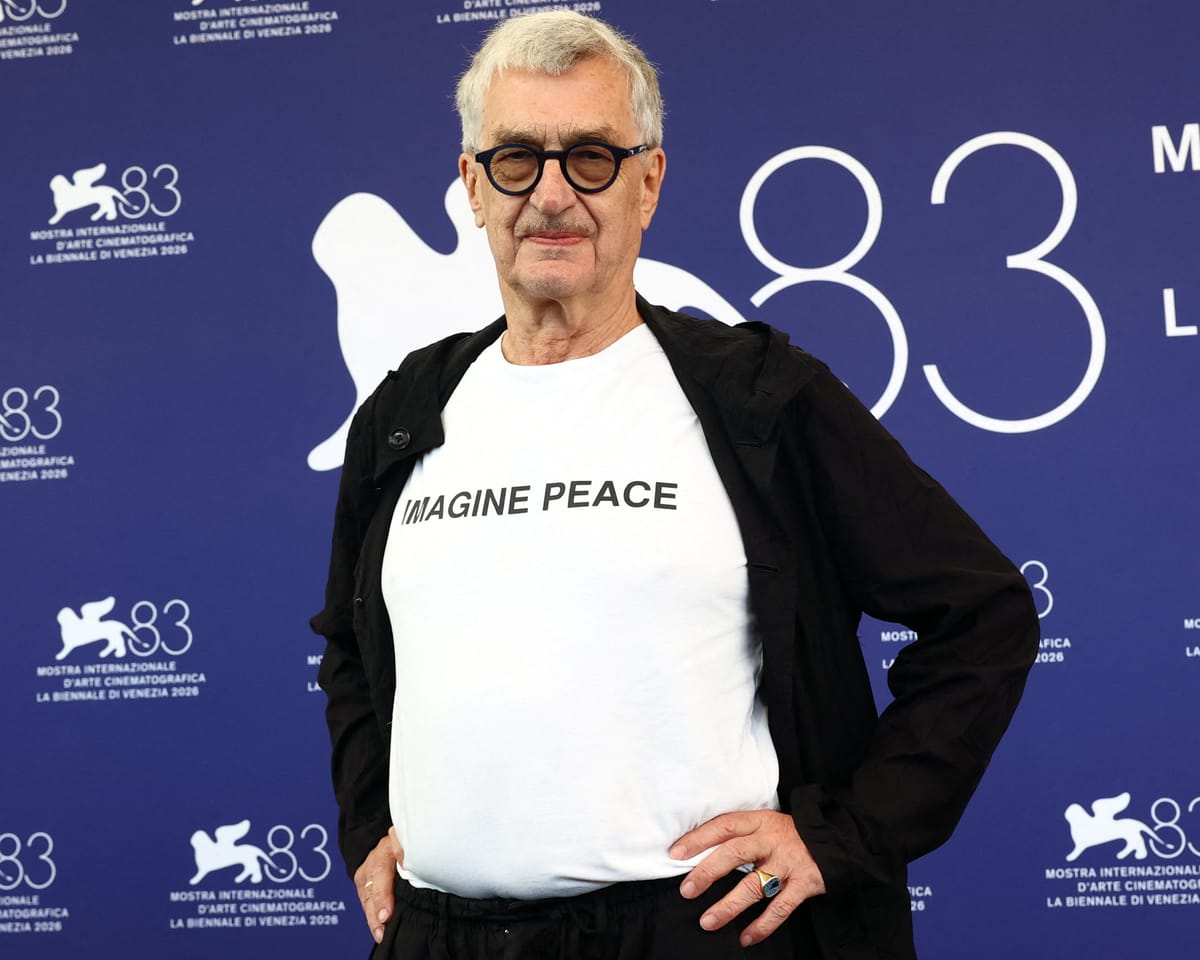
Filmmaker Wim Wenders has clarified his earlier comments on the relationship between cinema and politics. Speaking at the Venice film festival, he stated that he does not believe filmmakers should completely avoid political engagement.
Earlier in the year, while serving as jury president at the Berlin film festival, Wenders told a press conference that "we have to stay out of politics because if we make movies that are dedicatedly political, we enter the field of politics." The statement drew significant attention amid criticism of the German government's support of Israel during the war in Gaza. It provoked strong reactions from some filmmakers, including Indian author Arundhati Roy, who called the remarks "unconscionable" and withdrew from an event in Berlin.
When asked at a Venice press conference whether he still stood by his earlier comments, Wenders said he "could repeat the same thing" but acknowledged he "could be more explicit."
"What I said then was, as filmmakers, we are the opposite of politicians. We have empathy. Politics work without empathy; that's all I said," Wenders explained while in Venice to present his new documentary about Swiss architect Peter Zumthor.
"We have a very different thing. I'm not working with a mindset of politicians, we are working with a mindset of empathetic people. And we are into changing things, politics are into confirming what is."
Wenders, director of films including Wings of Desire and Kings of the Road, continued: "That's what I said, and was quoted as: 'We have to stay out of politics,' and that is not what I said, because it's not what I said now, and I said the same thing then."
"The frame of filmmakers is a different mindset than the mindset of politicians, and we should not work with that mindset. We work with a different set of rules. I said it again, and I hope you're not misquoting me, and say we have to stay out of politics because we do the opposite. We are the antidote."
From Inside Out: The Architecture of Peter Zumthor is a 3D film that follows Wenders's previous documentaries about Cuban musical ensemble Buena Vista Social Club, choreographer Pina Bausch, and artist Anselm Kiefer. It examines the Pritzker prize-winning architect's philosophy through portraits of his most notable buildings.
These include the concrete cube of Kunsthaus Bregenz on Lake Constance and the "amoeba-shaped" David Geffen Galleries at the Los Angeles County Museum of Art, along with more practical structures such as shelters for a Roman archaeological site in Chur, Switzerland, and Alpine chapels.
Speaking in Venice, Wenders said architecture and politics were "linked in many ways." He pointed to the controversy over the site of the former Gestapo and SS headquarters in Berlin, which Zumthor was chosen in 1993 to transform into the Topography of Terror memorial museum. Those plans were later abandoned by the Berlin senate due to funding problems.
"They didn't stop it because it was too expensive," Wenders said. "They stopped it because [they] thought it was more than necessary, because they already had the Holocaust memorial and they already had the Jewish Museum. So what they did instead, they built something cheap."
Wenders described Zumthor's original design as a "political act" intended to render the historical structure "invisible" and instead "show documents." The redesigned site that opened to the public in 2010, he said, "doesn't speak, and politics don't want places to speak, politics wants control over the show."
Read next
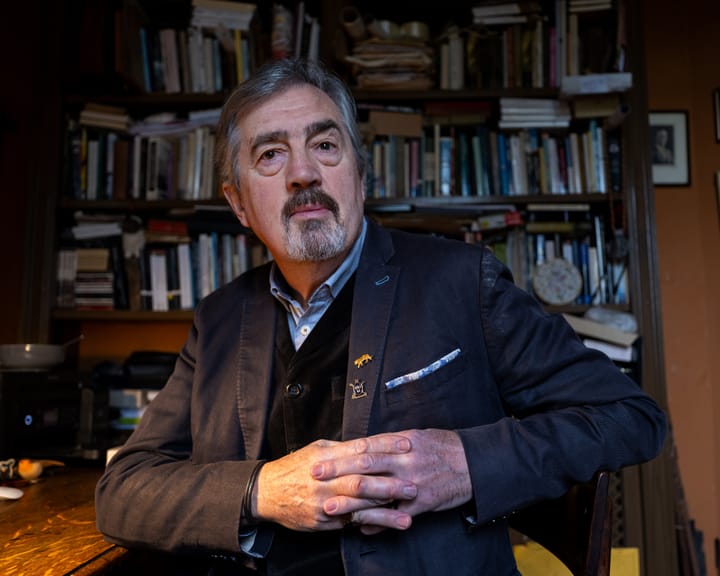
Sebastian Barry's The Newer World: a near-miracle of storytelling review
Sebastian Barry’s latest novel, *The Newer World*, gives voice to Tennyson Bouguereau, a formerly enslaved man navigating post-Civil War America. Through Tennyson’s recollections, the narrative revives the perennial question: is history better served by novelists or historians? Historians might demur, but as Barry illustrates, fiction can fill
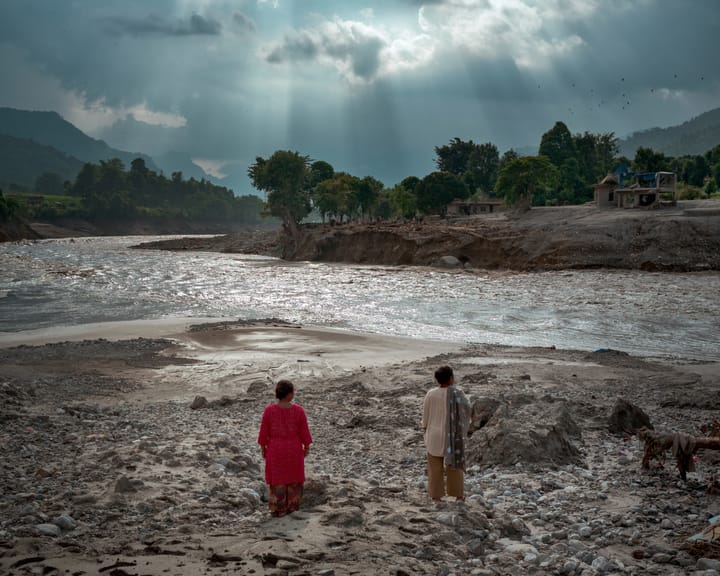
The week around the world in 20 images
The week witnessed a series of catastrophic events, including the devastating floods along the Nepal-Tibet border, Russian missile attacks on Kyiv, the rapid spread of the Plaskett Fire across California, and the vibrant celebration of the Notting Hill carnival. The following images, captured by top photojournalists, document these moments.
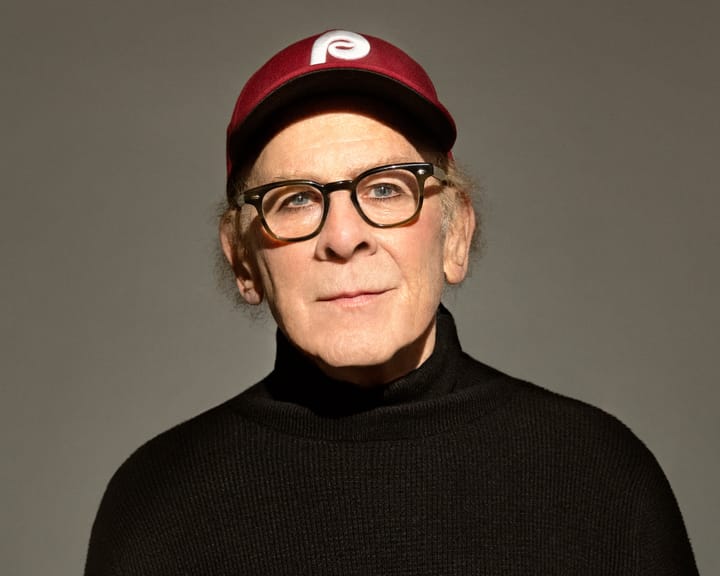
"Why Not Aim to Be the World's Best, Just for Fun?" Art Garfunkel on a Fulfilling, Restless Journey and His Reconciliation with Paul Simon
As Art Garfunkel is eager to emphasize, “I am a singer – there, use that as the title of your article” – but he was never only a singer. “I’ve been an actor. I am a writer,” he continues. “I’ve walked across countries, taken freighters across oceans. I’ve read