
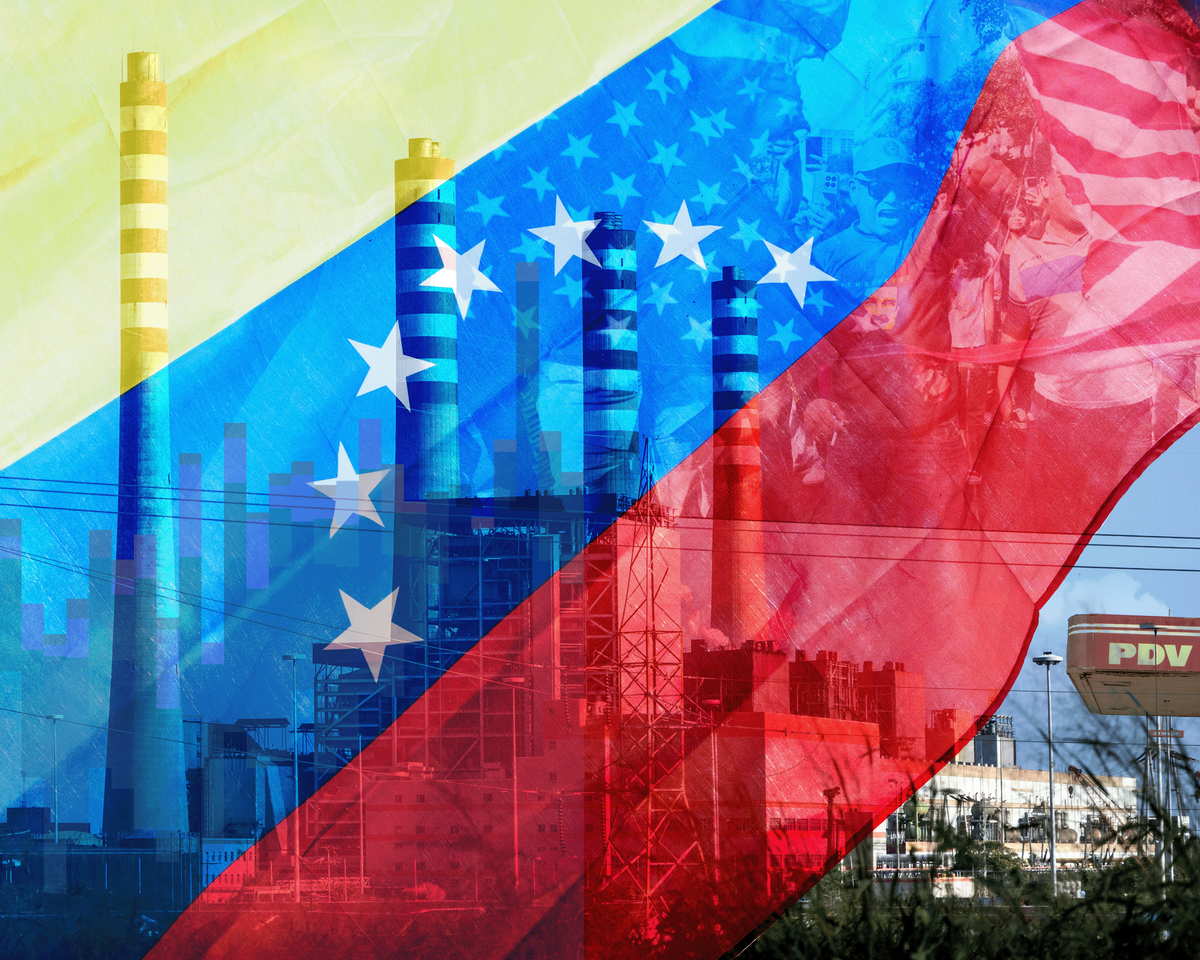
The US Department of State document from 1950 stated bluntly that oil was the binding factor between Washington and Caracas and would likely remain so. "All US policies toward Venezuela are affected in greater or less degree by the objective of assuring an adequate supply of petroleum for the US," it read.
Decades later, the dynamic persists. After a night-time raid that captured the country's leader earlier this year, Donald Trump announced last week that the US would take majority control over roughly a fifth of Venezuela's oil reserves. The White House said the arrangement "secures our energy dominance for the next century." How much it will benefit Venezuelans remains unclear.
Venezuela holds the world's largest known oil reserves and supplied fuel to allied forces during the second world war. Washington and Caracas cooperated for decades, with US energy companies extracting substantial profits from Venezuelan oil. Relations collapsed in 1999 when Hugo Chávez assumed the presidency.
A self-described socialist and anti-imperialist, Chávez formed alliances, including oil agreements, with China, Iran and Russia. Venezuela shifted 180 degrees, becoming a natural adversary of the US alongside Cuba.
Relations deteriorated further when Chávez faced a brief military detention following a deadly crackdown on mass anti-government protests. The coup attempt lasted two days. Chávez returned to the presidential palace, accusing Washington of involvement.
Chávez deepened Venezuela's reliance on oil exports. In 2007, he launched nationalisations, seizing oilfields, including those operated by US firms. Caracas had previously nationalised the industry but permitted US companies to profit from extraction. Under Chávez's new terms, the state oil company received a majority share, with foreign firms offered minority stakes.
Chevron accepted the terms, while ExxonMobil and ConocoPhillips refused and were pushed out. ExxonMobil and ConocoPhillips pursued years-long legal battles for compensation. The World Bank's international centre for the settlement of investment disputes awarded them billions, which Venezuela never fully paid.
Foreign involvement in Venezuela's oil infrastructure persists. Russian, Chinese, Cuban, UK and European companies, including Shell, BP, Italy's Eni and Spain's Repsol, continue to operate there.
Chávez died in 2013, and Nicolás Maduro rose to power. The former bus driver, who had served as foreign minister, continued an antagonistic policy toward the US.
Maduro's rule faced widespread criticism. The UN estimated in 2019 that more than 20,000 Venezuelans had died in extrajudicial killings. Key institutions, including the judiciary, eroded under his leadership, and the rule of law deteriorated.
The US declared the Maduro government illegitimate. A Washington-led sanctions campaign, combined with corruption, devastated the Venezuelan economy.
Maduro's close ties with Moscow and Beijing strained relations further. Before the US-imposed blockade in December, approximately 80% of Venezuelan crude oil went to China, accepted as repayment for prior loans, often at low prices.
Since starting his second term, Trump repeatedly demanded Maduro's removal, accusing him of sending drugs and criminals to the US, a claim experts dispute. He also alleged Maduro was stealing US oil, referencing Chávez's earlier nationalisations.
In July last year, Washington announced a $50m bounty on Maduro, accusing him of being one of the world's largest drug traffickers.
Trump's administration launched airstrikes against alleged drug traffickers in the Caribbean Sea, seized Venezuelan tankers and increased US military presence in surrounding waters.
In late November, Trump issued Maduro an ultimatum to step down, offering safe passage out of the country. Maduro refused, telling supporters he did not want "a slave's peace" and accusing the US of seeking control of Venezuela's oil.
This January, US forces carried out a pre-dawn raid on Caracas, capturing Maduro and his wife, Cilia Flores, who now face trial in New York.
Venezuela's acting president, Delcy Rodríguez, initially condemned the capture as a kidnapping but later signalled willingness to cooperate with Washington.
After Maduro's capture, Trump declared the US would control Venezuela's oil industry. In August, following months of secret talks, Trump announced the agreement granting the US control over millions of barrels of oil.
A White House press release called it the "biggest oil deal in world history," granting the US government "powerful governance rights" over reserves. The document also claimed private-sector growth would support a democratic transition, though scepticism in Caracas runs high. Rodríguez has faced accusations of surrendering Venezuela's natural resources to a foreign power.
Economist Francisco Rodríguez described the deal as "predatory," stating it was "done at gunpoint." He wrote that Washington's actions had transformed Venezuela into "a protectorate in all but name."
"Trying to run a country from the capital of an imperial power has been tried before," he said. "And it has not ended well."
Read next
Tokyo tourist hotspot outlaws short-term rentals amid complaint surge
Shinjuku Ward, Tokyo, has moved to ban short-term rental accommodations in residential areas and near schools and important cultural sites, following a slew of complaints about visitor behaviour. The decision, to be enacted through a local ordinance, marks the latest sign that Japan’s patience with mass tourism is
Canada implements retaliatory US tariffs as trade dispute intensifies
Canada’s retaliatory tariffs on about $20 billion worth of American imports took effect at 12.01am on Tuesday, ranging from 15% to 50% and applying to steel, dairy, appliances, agricultural equipment, pulp and paper, and electronics. The measures, a response to the United States’ 50% tariff on $20 billion
Prosecutor general resigns amid political turmoil in Kyiv during Ukraine war
Ukraine’s prosecutor general Ruslan Kravchenko resigned amid corruption accusations after anti-graft officers searched his offices at the weekend. He called the allegations “completely unsubstantiated” and denied wrongdoing. The National Anti-Corruption Bureau (NABu) and Specialised Anti-Corruption Prosecutor’s Office (Sapo) announced Saturday they uncovered a money-laundering