
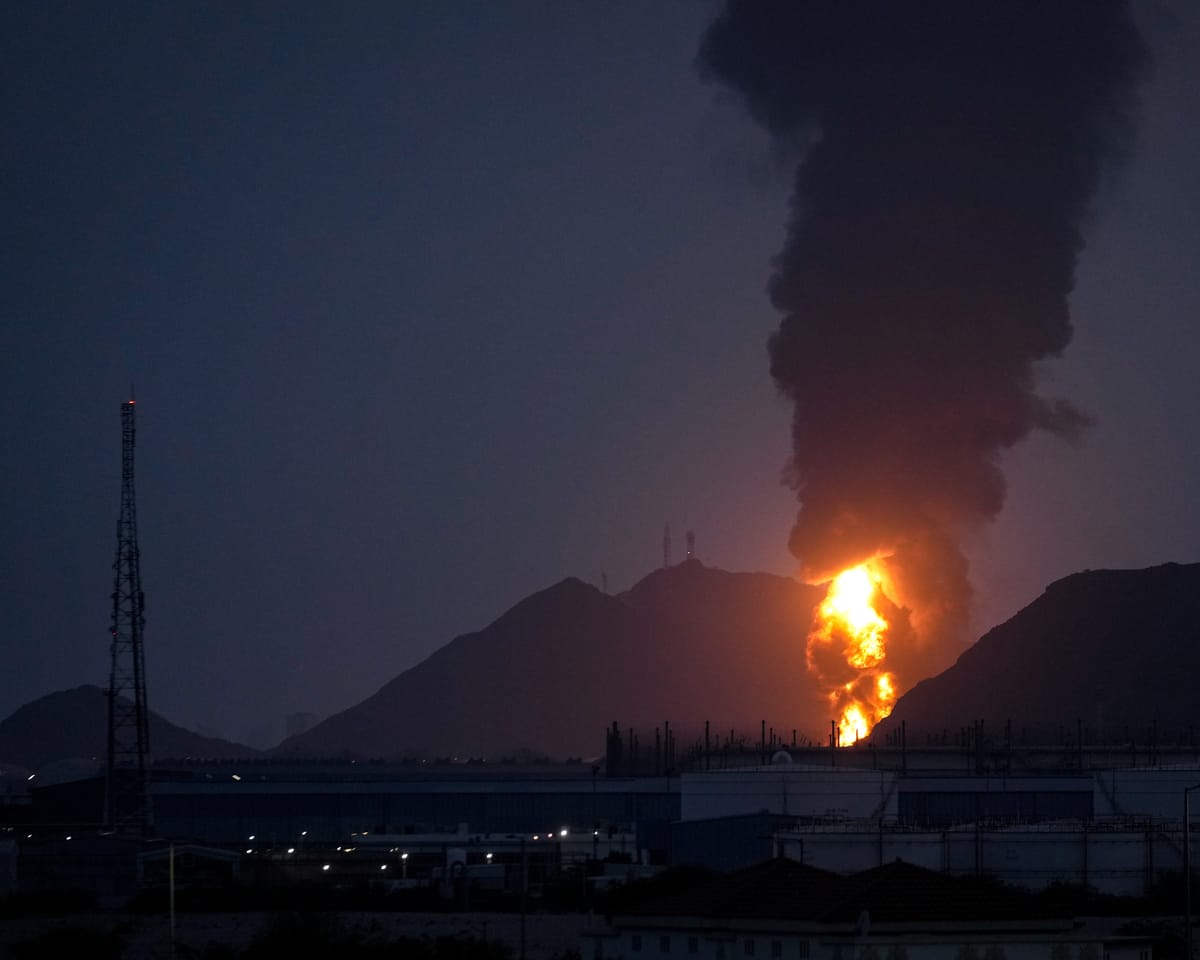
Analysts and officials say that the result and length of the Middle East conflict could hinge on a stark calculation involving the volume of Iran’s drone and missile inventories versus the crucial air‑defence ammunition possessed by the United States, Israel and Gulf nations.
From Saturday onward, Iran and its allied groups have attempted to blunt the heavy joint U.S.–Israeli campaign by launching over 1,000 attacks on sites in nearly a dozen nations spanning roughly 1,200 miles. Because its aging air force cannot match the capabilities of Israel and the United States, Tehran has turned to its stockpile of missiles and drones.
The geographic reach of Iran’s counter‑strikes has rendered the war the broadest in the Middle East since World War II. Israeli and American aircraft and missiles have hit hundreds of locations inside Iran, suffering no aircraft losses to enemy fire.
The United States and Israel aim to eliminate as much of Iran’s missile cache and related infrastructure as possible, focusing on launchers, depots and personnel.
Stacie Pettyjohn, head of the defense program at the Center for a New American Security in Washington, described the fighting as “a sort of salvo competition,” a military term for the simultaneous exchange of large numbers of precision‑guided weapons by opposing sides.
“The issue is which side possesses deeper stores of critical weapons, and the major uncertainty is the depth of Iran’s inventories,” Pettyjohn added.
Sirens rang again over Jerusalem on Tuesday, accompanied by several blasts as interceptor missiles shot down incoming rockets, yet Iranian strikes on Israel—where 11 civilians have died and over 100 have been wounded since the conflict began—have dwindled in the last 36 hours.
Analysts note that Iran, where the Red Crescent reports more than 787 fatalities, may be trying to conserve its missile reserves or simply lacks the capacity to launch further attacks.
“Iran possesses fewer systems capable of reaching Israel than those aimed at the Persian Gulf, and many drones bound for Israel are being intercepted,” Pettyjohn said.
“There also appears to be considerable disorder within the Iranian ranks as they endure decapitation strikes that have eliminated senior commanders, preventing coordinated action. They are merely firing what they can, when they can,” she noted.
Tehran may be aiming to sap its adversaries by eroding civilian morale and inflating the economic price of the war.
“Absolute defence does not exist. This is a war of attrition … A single missile hitting a university, hospital or power plant can impose a heavy toll,” said Tal Inbar, a senior research fellow based in Israel with the Missile Defence Advisory Alliance.
During the 12‑day conflict with Iran last summer, when massive missile barrages were directed at Israel, essential Israeli armaments reportedly ran short, according to some accounts.
Read next

Tokyo tourist hotspot outlaws short-term rentals amid complaint surge
Shinjuku Ward, Tokyo, has moved to ban short-term rental accommodations in residential areas and near schools and important cultural sites, following a slew of complaints about visitor behaviour. The decision, to be enacted through a local ordinance, marks the latest sign that Japan’s patience with mass tourism is

Canada implements retaliatory US tariffs as trade dispute intensifies
Canada’s retaliatory tariffs on about $20 billion worth of American imports took effect at 12.01am on Tuesday, ranging from 15% to 50% and applying to steel, dairy, appliances, agricultural equipment, pulp and paper, and electronics. The measures, a response to the United States’ 50% tariff on $20 billion

Prosecutor general resigns amid political turmoil in Kyiv during Ukraine war
Ukraine’s prosecutor general Ruslan Kravchenko resigned amid corruption accusations after anti-graft officers searched his offices at the weekend. He called the allegations “completely unsubstantiated” and denied wrongdoing. The National Anti-Corruption Bureau (NABu) and Specialised Anti-Corruption Prosecutor’s Office (Sapo) announced Saturday they uncovered a money-laundering