
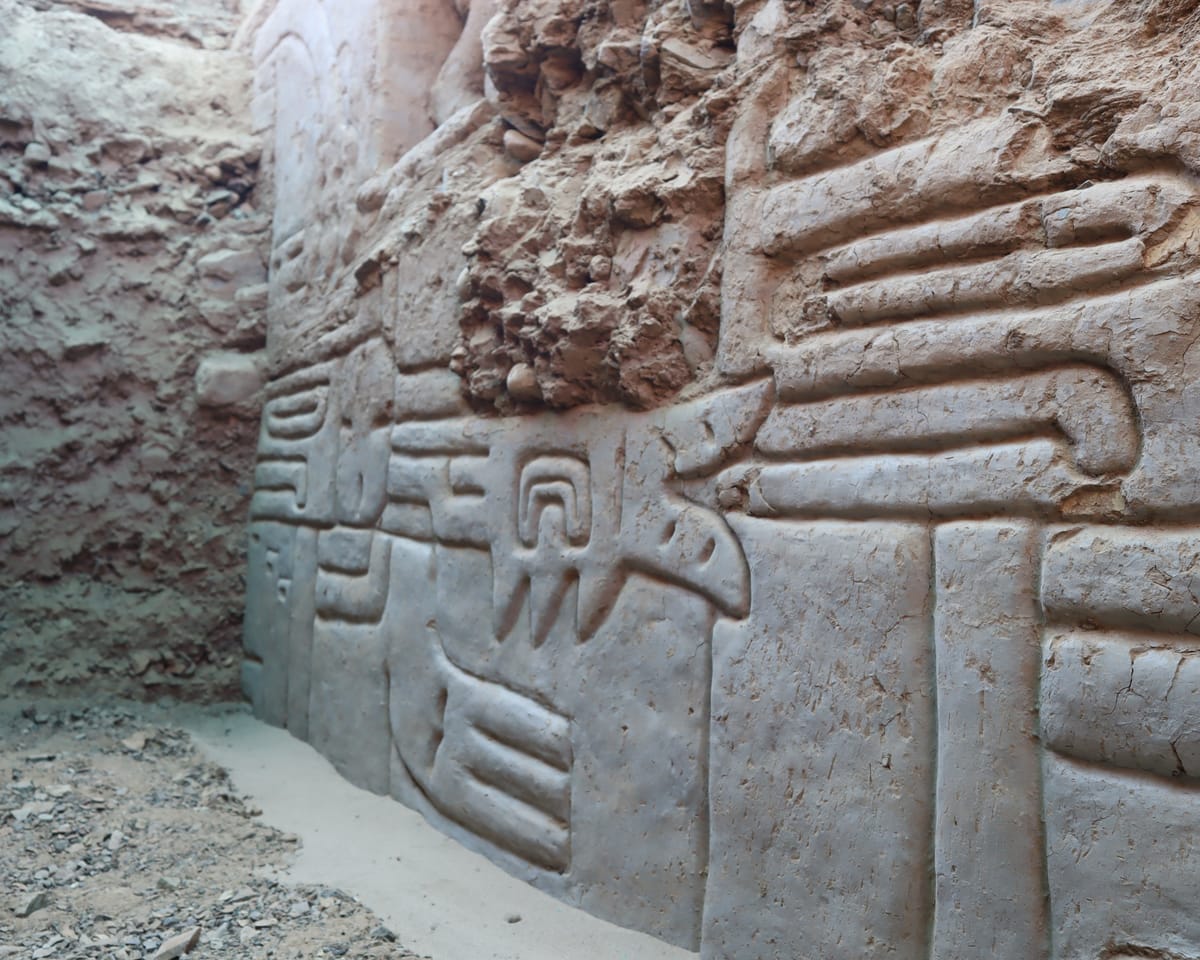
Ancient Multicolored Mural Unearthed in Peru Offers Glimpse Into Early Civilizations
Archaeologists in Peru have uncovered a vibrant three-dimensional mural believed to be approximately 4,000 years old, a discovery that could reshape understanding of early societies in the Americas.
The mural, measuring three by six meters, features a prominent stylized bird of prey with outstretched wings, its head decorated with three-dimensional diamond patterns that connect the north and south sections of the artwork. The piece is adorned with high-relief friezes and intricate designs in blue, yellow, red, and black.
The detailed imagery provides new clues about the beliefs and social organization of societies during Peru’s formative period (2000–1000 BC). Researchers regard pre-Hispanic Peru as one of the cradles of civilization in the Americas, home to an estimated 100,000 archaeological sites, including renowned landmarks such as Machu Picchu and the Nazca Lines.
Ana Cecilia Mauricio, the lead archaeologist at the Huaca Yolanda excavation site in the Tanguche valley, part of the La Libertad region, noted that the murals reflect "the emergence of social hierarchy as these groups evolved into more complex civilizations."
The mural, located on the inner walls of a temple courtyard, also includes stylized fish, fishing nets, mythological figures, and celestial symbols, offering insight into the worldview of these early coastal communities.
“These were people who relied on agriculture and fishing, yet they already displayed early signs of structured social order,” explained Mauricio, an associate professor at the Pontifical Catholic University of Peru, speaking from the excavation site.
According to Mauricio, the most prominent figures in these societies were likely shamans, priests, or priestesses. “They held critical knowledge of medicinal plants and astronomy, allowing them to forecast weather by observing the stars and the sun,” she said.
“They refined their understanding over time. In many ways, they were both scientists and spiritual guides,” she added.
One section of the mural portrays three humanoid figures seemingly in the process of transforming into birds. Mauricio suggested this might symbolize a shaman’s ritual transformation into an altered state after consuming substances like the San Pedro cactus, a traditional hallucinogen used in South America.
The Huaca Yolanda site is thought to predate Chavín de Huántar, one of the most extensively studied pre-Hispanic ceremonial sites in the Andes, though both belong to the same formative era marking the rise of early civilizations. John Rick, a U.S. archaeologist leading research at Chavín de Huántar, has previously documented ceremonial hallucinogen use within the 2,500-year-old temple’s underground passages.
Read next

"TikTok star highlights political power of South Africa's unsung culinary treasures"
Solly’s Corner, a popular eatery in downtown Johannesburg, was busy. Pieces of hake and crisp fries crackled in the fryer, green chillies were chopped, and generous amounts of homemade sauce were spread onto filled sandwiches.
Broadcaster and food enthusiast Nick Hamman stepped behind the counter, where Yoonas and Mohammed
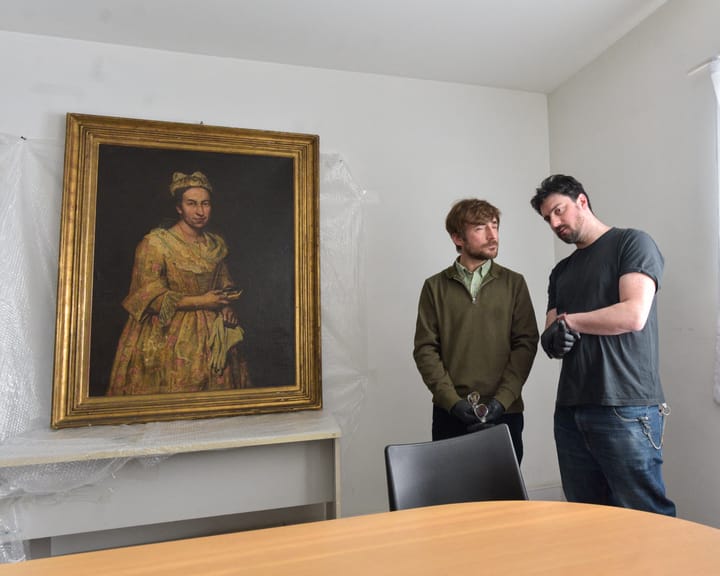
Nazi-looted 18th-century portrait found in Argentina after 80 years
There was nothing particularly unusual about the middle-aged couple living in the low, stone-covered villa on Calle Padre Cardiel, a quiet street in the tree-lined Parque Luro neighborhood of Mar del Plata, Argentina’s most well-known coastal city.
Patricia Kadgien, 58, was originally from Buenos Aires, roughly five hours north.
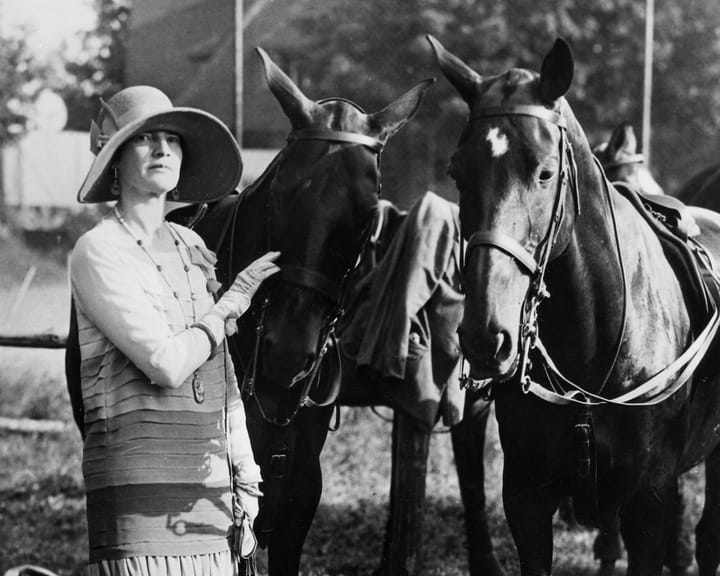
"An aristocrat hid her Jewish lover in a sofa bed amid daring acts of German resistance to the Nazis"
Resistance in the Shadows: Germans Who Defied the Nazis
Growing up, our home had a steadfast rule: nothing German was permitted. No appliances from German manufacturers in the kitchen, no cars from German automakers in the driveway. The decree came from my mother. She was not a survivor of the