
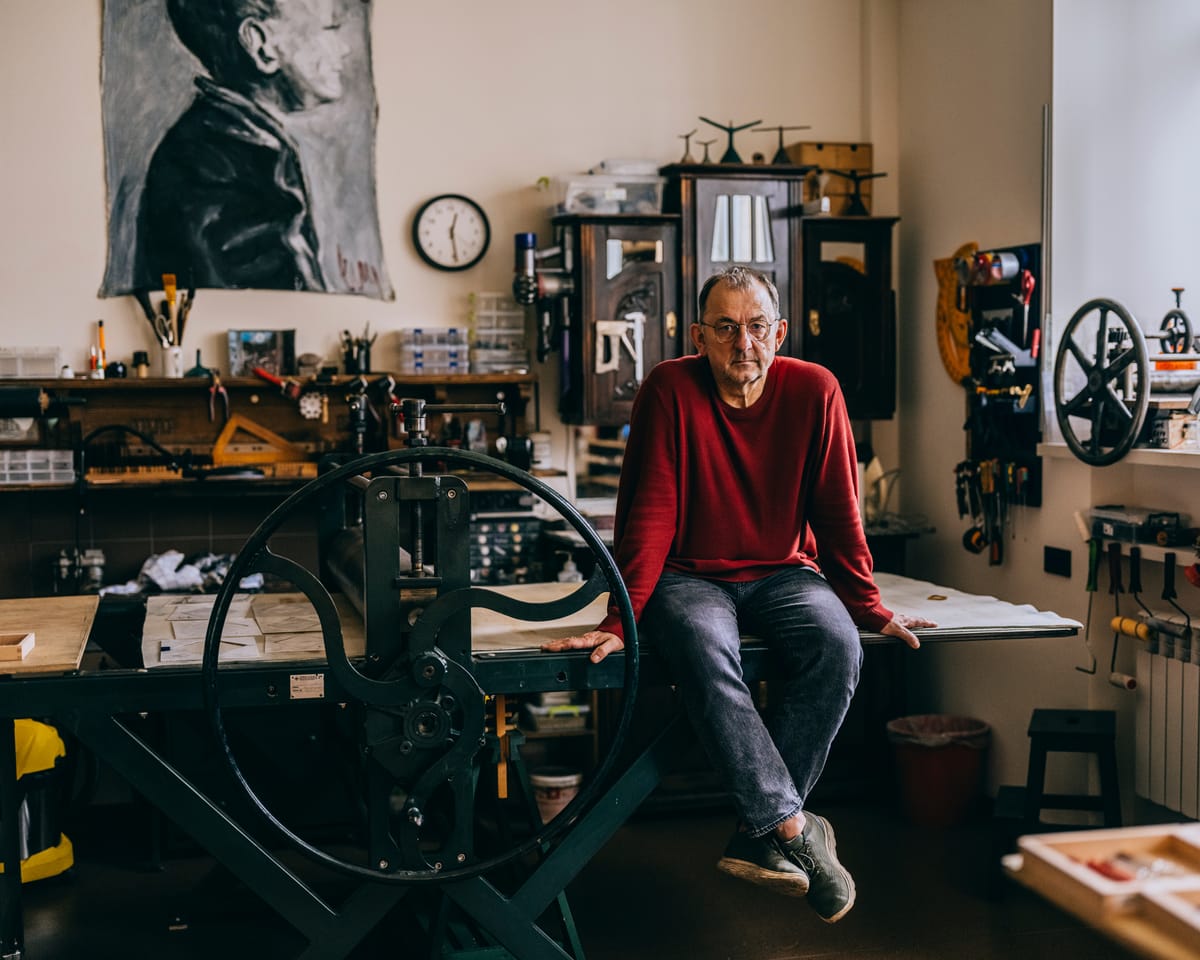
While younger men must remain in Ukraine due to mobilization laws, Pavlo Makov, 66, could leave if he chose. Instead, the renowned artist—one of Ukraine's most esteemed cultural figures—continues to live in Kharkiv, his hometown.
Located just 18 miles from the Russian border, Ukraine’s second-largest city endures relentless missile strikes at night, yet revives each day as parks, cafes, and restaurants fill with those determined to stay.
Here, cultural life persists on ground floors or—better still—underground, in basement bars, theaters, and bookshops. Makov and his wife stay despite the risks. The nearest metro station, offering shelter during attacks, is 500 meters away— too far during sudden strikes. "Most bombings are so fast that by the time the alarm sounds, the explosions have already hit," he says.
They sleep with earplugs, gambling that they’ll survive another night.
Early in the 2022 war, Makov and his family fled to Italy. But like many Ukrainians, he found exile more agonizing than staying, despite the danger. "I could’ve remained, but I felt myself fading," he recalls. "After six months abroad, you lose purpose. Returning, I immediately thought, 'This is where I belong.'"
Recently, Makov renovated a new studio in Kharkiv—a ground-floor space, safer than his former fourth-floor workspace. Its small windows aren’t ideal for an artist, but they’re practical in a city where shattered glass is routine.
On his easel rests a vibrant new work in emerald and orange—a shift from his usual intricate monochrome prints and graphite drawings. It depicts a stubborn weed growing through pavement cracks. "That’s how I feel now," he says. "A little broken, but alive."
The plant, a type of plantain, grows worldwide. In Ukraine, it’s a folk remedy for wounds, its name (*podorozhnyk*) meaning "by the road"—fitting for a nation of displaced people or those facing bombardment.
"We all live out of suitcases," Makov admits, his packed rucksack always by the door.
The weed’s symbolism, he explains, is his way of addressing war indirectly.
"War’s language is too colossal—no one can rival its force. But art persists. It always has. Even in war."
Read next
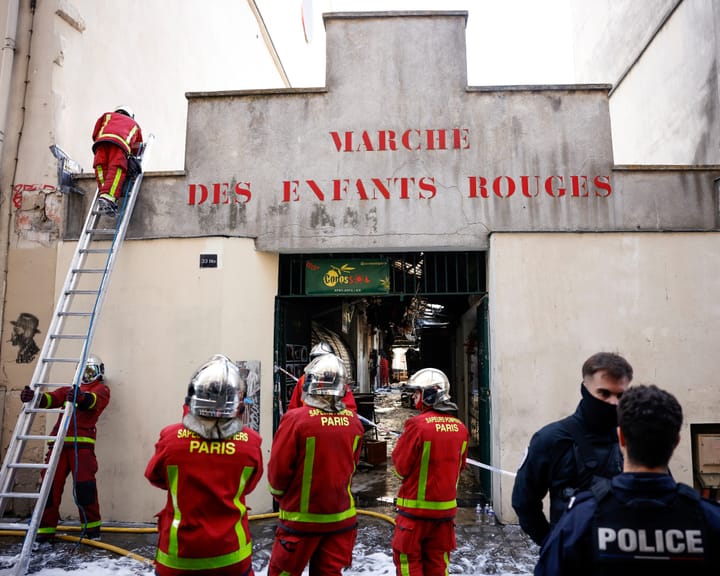
Marché des Enfants Rouges, Known as Paris' 'Coolest Market,' Ravaged by Fire
A devastating fire has swept through Paris's oldest surviving covered food market, a beloved street food destination in the Marais district. This historical venue, which attracted both locals and tourists daily, dates back to the 17th century.
Ariel Weil, the mayor of central Paris, described the Marché des
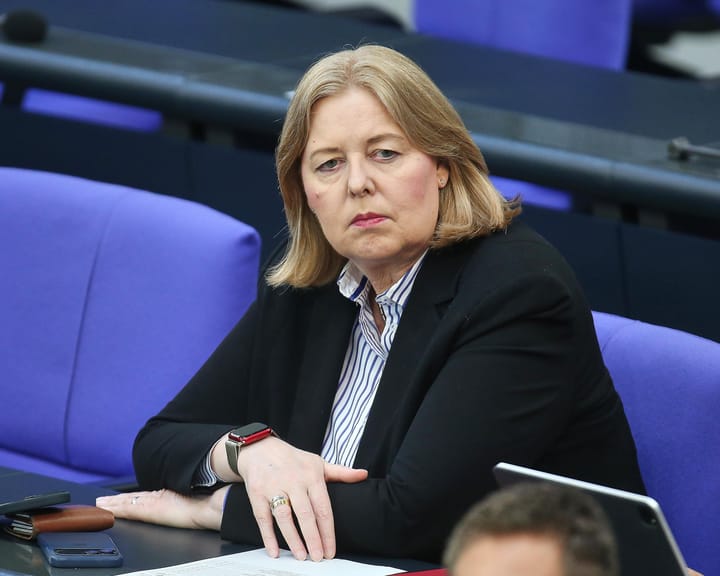
German Minister Resigns Following Stepdaughter's Death and Political Criticism
Germany's Labour Minister Bärbel Bas, a co-leader of the Social Democrats (SPD), resigned from her positions, citing the loss of her stepdaughter and subsequent political attacks as her reasons. Her resignation poses a significant challenge to the already fragile coalition government.
Bas, in a Facebook statement, mentioned
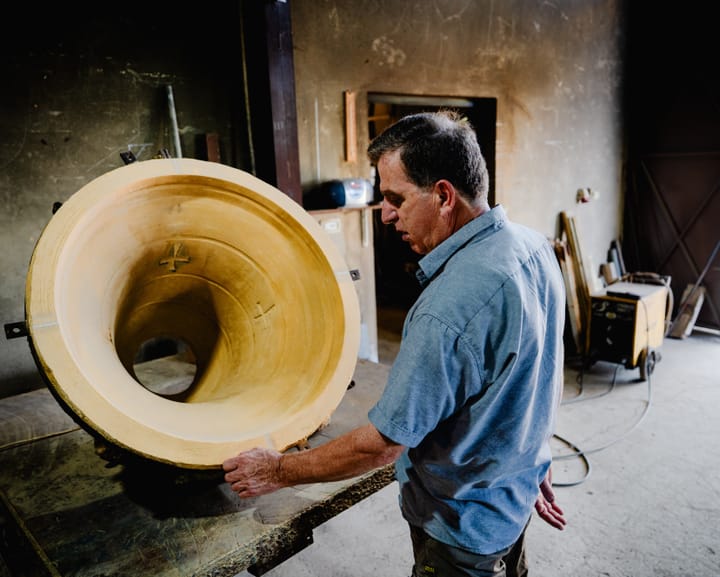
Preserving 300-Year-Old Church-Bell Tradition: Lebanon's Sole Family Artisan
The story of Lebanon's sole remaining church-bell maker traces its origins to an unexpected encounter. In the 18th century, Youssef Gabriel, a local metalworker, was involved in covertly crafting and supplying rifles to Arab revolutionaries fighting against the Ottoman rule over Lebanon. One day, a Russian engineer