
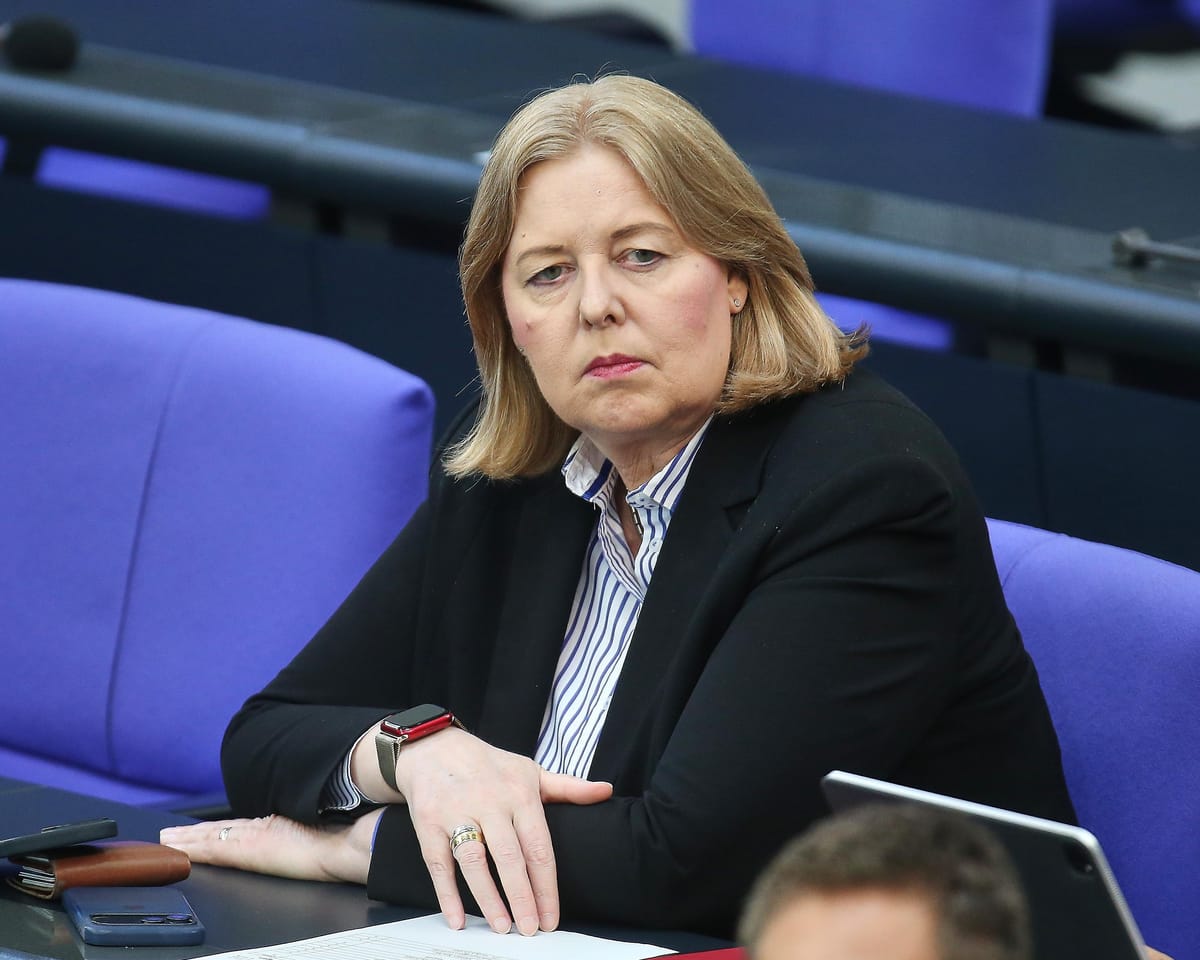
Germany's Labour Minister Bärbel Bas, a co-leader of the Social Democrats (SPD), resigned from her positions, citing the loss of her stepdaughter and subsequent political attacks as her reasons. Her resignation poses a significant challenge to the already fragile coalition government.
Bas, in a Facebook statement, mentioned needing time to process her grief following her stepdaughter's death, without providing additional details. She attributed her departure from frontline politics to public criticisms, notably from the coalition partner, the conservative Christian Democratic Union (CDU) led by Friedrich Merz, during her time of personal loss. Some CDU lawmakers criticized her absences during a critical economic reform phase, which was essential for the government's stability, despite being aware of her family tragedy.
Lars Klingbeil, Bas's SPD co-leader, also serving as vice-chancellor and finance minister, expressed regret over her resignation and criticized the attacks on Bas during her mourning period as "indecent." Klingbeil canceled a planned trip to India to address the situation and lamented the decline in national political discourse, emphasizing the need for mutual respect alongside healthy debate.
Merz, facing political challenges after his party's poor performance in recent state elections, expressed gratitude for Bas's trust-based cooperation and extended his condolences, acknowledging the profound impact of her loss. Meanwhile, Alice Weidel of the far-right Alternative für Deutschland (AfD) sympathized with Bas but suggested her departure indicated the coalition government's nearing end, calling for a "fresh start" for Germany.
The AfD leads in national opinion polls, following significant gains in recent regional elections, alongside the hard left. Bas, a former Bundestag president and a key SPD figure, will continue as an MP in Duisburg. Her resignation leaves a void, especially given her role in overseeing significant parts of Germany's social welfare system, which the CDU aims to reform.
The coalition faces deep divisions over economic revival plans, with the SPD advocating for worker protections and the CDU promoting a pro-business approach. The pressing need for pension reform, amidst societal aging and resistance to raising the retirement age, underscores these challenges.
Merz's government faces dwindling approval ratings amid fears of deindustrialization and rising living costs, compounded by Merz's perceived aloofness. Despite calls for his replacement, Merz vows to continue, positioning his agenda as a defense against authoritarianism. The next general election is set for 2029, but with state polls ahead, internal party pressures for a strategic shift are mounting, as highlighted by Karin Prien's call for a change in CDU's direction.
Read next

Marché des Enfants Rouges, Known as Paris' 'Coolest Market,' Ravaged by Fire
A devastating fire has swept through Paris's oldest surviving covered food market, a beloved street food destination in the Marais district. This historical venue, which attracted both locals and tourists daily, dates back to the 17th century.
Ariel Weil, the mayor of central Paris, described the Marché des

Preserving 300-Year-Old Church-Bell Tradition: Lebanon's Sole Family Artisan
The story of Lebanon's sole remaining church-bell maker traces its origins to an unexpected encounter. In the 18th century, Youssef Gabriel, a local metalworker, was involved in covertly crafting and supplying rifles to Arab revolutionaries fighting against the Ottoman rule over Lebanon. One day, a Russian engineer

Nobel Prize in Economics Honors Hall and Woodford for Crisis 'Smoothing' Research
Two US economists, Robert Hall of Stanford University and Michael Woodford of Columbia University, have been awarded the 2026 Nobel Prize in Economics for their contributions to economic modeling. Their work has provided central banks and finance ministers with tools to stabilize economies, helping to prevent prolonged recessions and uncontrolled