
The story of Lebanon's sole remaining church-bell maker traces its origins to an unexpected encounter. In the 18th century, Youssef Gabriel, a local metalworker, was involved in covertly crafting and supplying rifles to Arab revolutionaries fighting against the Ottoman rule over Lebanon. One day, a Russian engineer visited the Lebanese town of Beit Chabab to make a church bell, piquing Gabriel’s interest. He observed the engineer and learned the craft quickly.
An alternative account suggests that the Maronite patriarch, frustrated by Ottoman restrictions on importing church bells to Mount Lebanon, commissioned Gabriel to produce a bell. After several attempts, he succeeded and decided to cease making arms, transforming his gunsmithing into Lebanon's first church-bell foundry.
Regardless of how the transition began, Gabriel’s skill impressed the local community, leading to his new name, Youssef Naffah, with "naffah" meaning useful or successful in Arabic.
Three centuries later, the Naffah family continues this tradition in Beit Chabab. Initially one of ten family-owned bell foundries, their workshop, led by master bell-maker Naffah Naffah and his two sons, remains the last operating production center for church bells in Lebanon. It also supplies the Middle East and Lebanese diaspora in Europe, Australia, and the US.
Naffah, aged 57, emphasizes the importance of passing on the craft: “We have to pass it down to our kids, it’s been 300 years. I didn’t have any choice. My own father, he would come to the workshop when he could barely even walk.” The foundry, located under his home, overlooks Beit Chabab and the Lebanese coast, offering a tranquil retreat from Beirut’s chaos and the country’s conflicts.
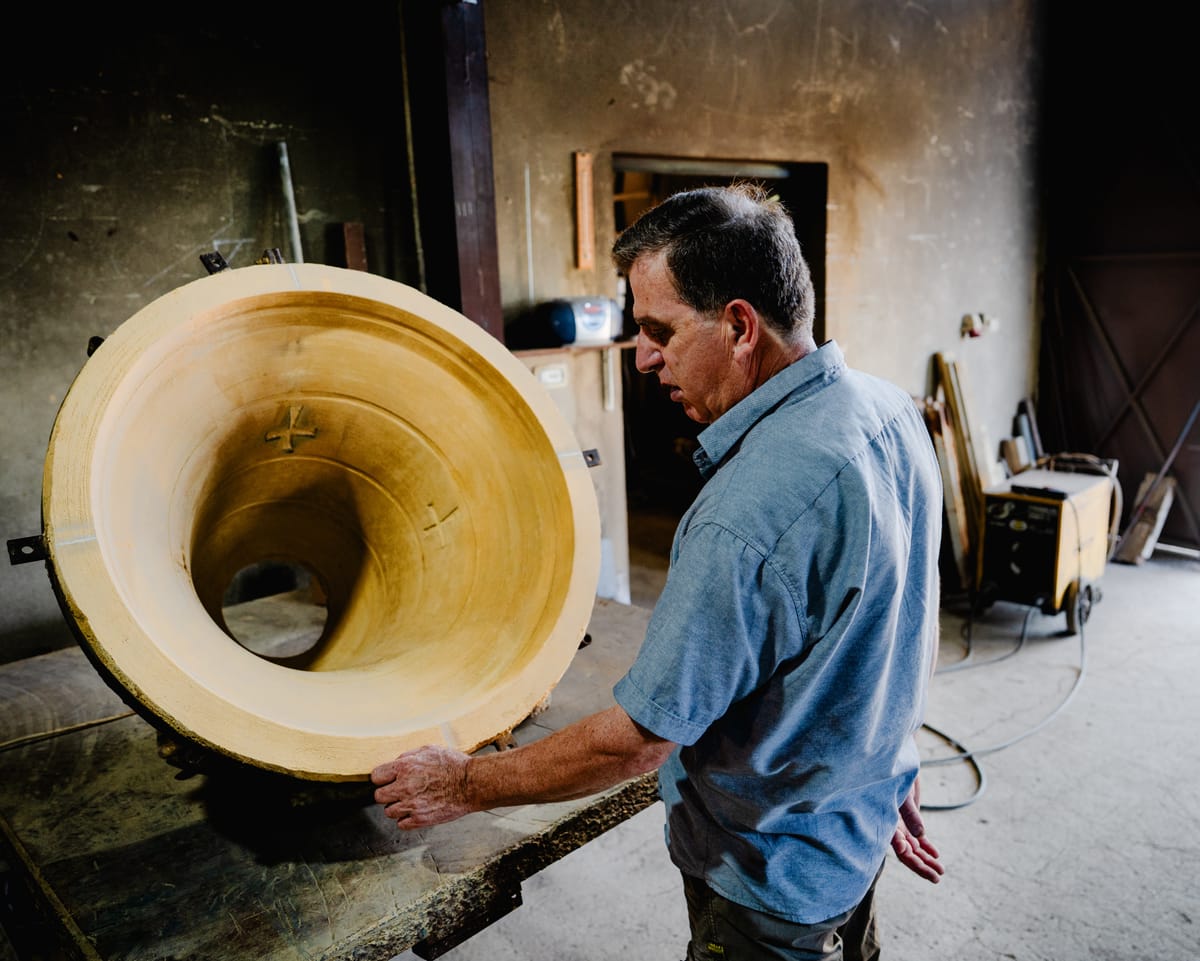
The foundry’s interior is blackened by decades of smoke, with floors scattered with bells at different construction stages. Outside, white clay mixed with goat hair forms mounds for drying. This clay creates the interior mould for the molten metal, which is poured around it. The workshop combines modern tools with ancient ones, like a hydraulic press beside a traditional anvil on a tree stump.
Each bell takes about two months to craft. The interior mould takes 40 days, while the outer mould, adorned with crosses and the workshop’s signature, takes another month to harden. The final stage involves heating the foundry and melting a copper-tin mixture for 24 hours. The molten metal is then poured over the bell mould, solidifying within three minutes.
The workshop produces around 25 bells annually, with 20 going to Lebanese churches. The cost depends on size, with every 100kg costing $8,000. A medium-sized bell, weighing about a tonne, costs approximately $80,000.
Naffah expresses a deep connection to his work: “I hate giving the bells away, it always makes me upset, like I’m giving away a child.” He points to a mould with crosses, crafted by his hands. Each bell carries the names of its makers, including Naffah, his son Charbel, and the patron. Some bells in the shop for repairs bear the names of Naffah’s grandfathers, marking a legacy traced through Lebanon’s churches.
The ringing of bells is integral to life in Lebanon’s villages, harmonizing with nature on Sundays. During the Hezbollah-Israel conflict in Lebanon, Christian villages were isolated, but churches played a vital role in providing comfort and aid.
Naffah and his sons are committed to preserving this tradition. Charbel is set to succeed his father, while Youssef, though studying medicine, is ready to take over if needed. Youssef notes that if Charbel ever decides against making bells, he would leave medical school to continue the family legacy.
Read next
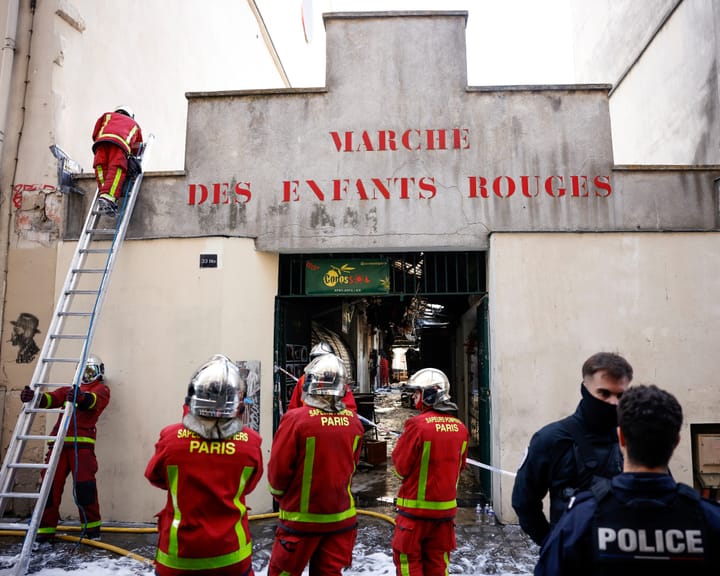
Marché des Enfants Rouges, Known as Paris' 'Coolest Market,' Ravaged by Fire
A devastating fire has swept through Paris's oldest surviving covered food market, a beloved street food destination in the Marais district. This historical venue, which attracted both locals and tourists daily, dates back to the 17th century.
Ariel Weil, the mayor of central Paris, described the Marché des

German Minister Resigns Following Stepdaughter's Death and Political Criticism
Germany's Labour Minister Bärbel Bas, a co-leader of the Social Democrats (SPD), resigned from her positions, citing the loss of her stepdaughter and subsequent political attacks as her reasons. Her resignation poses a significant challenge to the already fragile coalition government.
Bas, in a Facebook statement, mentioned

Nobel Prize in Economics Honors Hall and Woodford for Crisis 'Smoothing' Research
Two US economists, Robert Hall of Stanford University and Michael Woodford of Columbia University, have been awarded the 2026 Nobel Prize in Economics for their contributions to economic modeling. Their work has provided central banks and finance ministers with tools to stabilize economies, helping to prevent prolonged recessions and uncontrolled