
Iran has answered U.S. and Israeli strikes by carrying out a series of retaliatory attacks on nations throughout the Middle East, with serious repercussions for the petroleum sector and the world economy.
Tehran has hit oil installations in adjacent states, while vessel movement through the Strait of Hormuz – the vital choke point at the Gulf’s entrance – has virtually stopped.
The waterway between Iran and Oman – just over 20 miles wide at its narrowest – is an unavoidable bottleneck through which roughly one‑fifth of global oil output passes into the Indian Ocean and onward.
Although Iran has not formally closed the passage, it need not do so. The anxiety among oil and shipping firms – and their insurers – has effectively halted traffic.
A chart of marine movements through the strait shows vessel numbers dwindling over the weekend, with groups of tankers anchoring on either side as they wait to see how events develop.
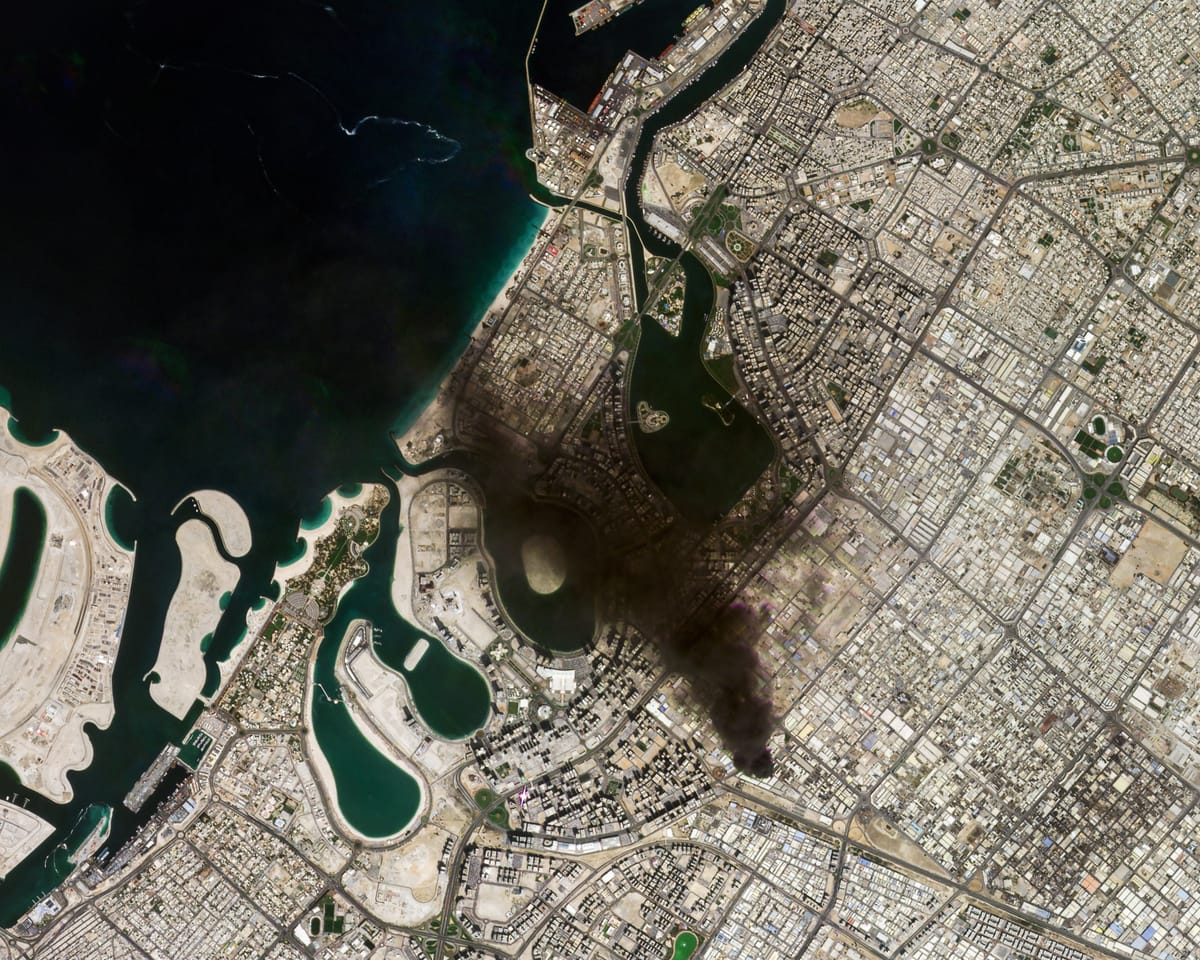
These concerns are justified, with at least three tankers damaged and one crew member killed during the weekend. Dubai’s Jebel Ali port, the busiest container hub outside Asia, halted operations before restarting after falling debris from an aerial interception ignited a fire at one berth.
According to Lloyd’s List, the London‑based shipping intelligence service, the count of cargo ships transiting the strait fell from more than 50 a day to just seven on Sunday.
Iranian forces said on Monday they struck the Honduras‑flagged fuel tanker *Athe Nova* in the strait with two drones, setting it ablaze. Tehran also hit a port facility in Oman and a vessel northwest of Muscat, while the Iranian military broadcast radio warnings to ships planning to cross Hormuz.
Amid the turmoil, crude oil prices rose by over 10 % to above $80 a barrel over the weekend before easing slightly on Monday.
Former President Donald Trump has remarked that he does not expect the hostilities to last beyond a few weeks, though some analysts warn that a prolonged clash could push Brent crude to $100 a barrel.
Fiona Cincotta, a senior market analyst at City Index, warned that U.S. crude prices could climb to $90 a barrel if concerns over supply persist and traffic through the strait does not resume.
Oil shipments could be further constrained by attacks on extraction and refining sites by both sides, with Tehran targeting infrastructure belonging to U.S. allies in a series of strikes.
Saudi Arabia’s state‑run oil company Aramco shut its Ras Tanura refinery on the eastern coast – a plant that processes about 550,000 barrels per day – early Monday after debris from intercepted Iranian drones struck the facility.
Read next

Tokyo tourist hotspot outlaws short-term rentals amid complaint surge
Shinjuku Ward, Tokyo, has moved to ban short-term rental accommodations in residential areas and near schools and important cultural sites, following a slew of complaints about visitor behaviour. The decision, to be enacted through a local ordinance, marks the latest sign that Japan’s patience with mass tourism is
Canada implements retaliatory US tariffs as trade dispute intensifies
Canada’s retaliatory tariffs on about $20 billion worth of American imports took effect at 12.01am on Tuesday, ranging from 15% to 50% and applying to steel, dairy, appliances, agricultural equipment, pulp and paper, and electronics. The measures, a response to the United States’ 50% tariff on $20 billion

Prosecutor general resigns amid political turmoil in Kyiv during Ukraine war
Ukraine’s prosecutor general Ruslan Kravchenko resigned amid corruption accusations after anti-graft officers searched his offices at the weekend. He called the allegations “completely unsubstantiated” and denied wrongdoing. The National Anti-Corruption Bureau (NABu) and Specialised Anti-Corruption Prosecutor’s Office (Sapo) announced Saturday they uncovered a money-laundering