
European defence planners collaborating with NATO have expressed concern that in the event of war with Russia, Europe would be unable to sustain a prolonged war of attrition due to insufficient public readiness. This concern was raised at a conference focused on the future of European military coordination.
The pessimistic outlook reflects worries that Russia may be gaining ground in a so-called hybrid war with Europe, limiting options available to NATO planners in case of military conflict.
The rise of populist movements in Europe's major military nations is also threatening proposals for a group of five European countries, including the UK, to assume a new coordination role as the US prepares to scale back its commitments to Europe's conventional defence.
Defence officials at a forum organized by the Munich Security Conference (MSC), a prominent security foundation, suggested that the European public may lack the willingness to support a prolonged war, requiring NATO to focus its planning on a relatively short conflict.
One former British cabinet member acknowledged that the West had performed poorly in educating its public about the scale of the hybrid conflict with Russia. Another UK diplomat stated that successive British prime ministers had failed to explain the magnitude of the threat.
They noted that this left ministers in the difficult position of persuading unprepared voters to cut welfare spending to fund defence. The UK diplomat admitted that the level of public debate had been akin to that of a kindergarten.
Private criticism has been intensified by the UK government's failure to adopt a recommendation from its 2025 strategic defence review to initiate a national conversation on the scale of the security threat facing Europe and to build national resilience.
A second diplomat argued that the collapse of the Cold War dividing line with Russia had allowed Moscow to exploit the anxieties of European publics across the political spectrum. These remarks point to a broader concern among senior European politicians that they may be losing the hybrid war with Russia, which could be reflected in rightwing populist surges next year in Poland, France and Italy.
Most populist parties, including Germany's Alternative für Deutschland (AfD), are sympathetic to Russia and advocate for an end to the Ukraine conflict.
The MSC discussion, conducted under rules prohibiting speaker identification, gained urgency this week when the German government blamed Russia for an attempted drone attack on Leipzig airport last month.
One of the suspects in the attack on 4 August, where an armed drone exploded, has been identified as a Belarusian citizen with a Russian passport who appears to have entered Europe using an Italian tourist visa.
The MSC, an independent foundation, has been advocating for the five main European military powers to collaborate more closely, including bringing the UK, outside the EU, into the centre of European defence planning.
Decisions in Washington on troop deployments that could effectively place Europe in charge of its own conventional defences are anticipated in the coming months. However, the scale of hybrid war, the potential impact of next year's elections, and the rise of the AfD in Germany were described at the conference as "the elephant in the room."
One proposal calls for the EU to publish a collective statement on the Russian threat, challenging populist forces to either accept or reject it.
The E5 group of European defence ministers meets regularly but remains in the early stages of agreeing on joint procurement of capabilities such as integrated air and missile defence, deep precision strike, and space-based early warning systems, currently provided mostly by the US.
Wolfgang Ischinger, chair of the MSC, stated that Europe is stagnating at a time when external threats have taken on a very serious dimension, requiring greater integration in defence.
He argued that the E5 grouping offers a way to include all European countries with substantial defence industrial capacity and could later incorporate Ukraine in the context of a truce, noting that Kyiv now has the largest and strongest army in Europe.
Advocates of the E5 maintain it will neither duplicate nor undermine NATO, but concerns were raised that the US might block a stronger European pillar within NATO. One diplomat remarked, "The US are better at talking about burden shifting than power sharing."
Italy is among the E5 states most concerned about the impact of Russia's hybrid warfare on its domestic politics, as Giorgia Meloni's rightwing government, more moderate than expected and cultivating a pro-Ukraine image abroad, becomes its longest-running since the second world war.
Italian Foreign Minister Antonio Tajani warned that Italy faces daily cyber-attacks and is not immune from potential Russian interference in next year's national elections, the first time an Italian politician has raised this concern.
"There are many ways to wage hybrid warfare, it is not done using bombs, planes or tanks," the minister said.
Italy's Defence Minister Guido Crosetto, a close ally of Meloni, has stated it would be foolish not to acknowledge the level of Russian interference.
At the NATO summit in Ankara this summer, he warned: "We don't have the antibodies and we're penetrable: analyse bots and you'll see it. The increase occurred thanks to social media."
His concerns have deepened given Moscow's ability to operate across multiple domains, including social media, AI, cybersecurity, databases, and critical infrastructure. On Tuesday, he noted that the Russian threat continues to grow.
Crosetto also recognized that Russia is exploiting real problems such as low wages, cautioning that attributing government unpopularity solely to Russian disinformation risks misdiagnosing a malaise affecting Western societies, including general fatigue with the cost of the war in Ukraine.
In Italy, Roberto Vannacci, leader of the far-right Futuro Nazionale, who has challenged the stability of Meloni's coalition, is widely viewed as the most likely carrier of the Russian message in the upcoming election, potentially as early as April.
Speaking before the investigation into whether his party represents a revival of fascism, Vannacci embraced the criticism: "Just discovered that I am a 'Manchurian candidate' sent by the Russian federation to complain about the unaffordable petrol prices in my country Italy. Forgive me, but I still find it hard to accept the idea that dissent from Brussels' orthodoxy is now, in practical terms, tantamount to disloyalty towards the west."
To shift the narrative so Ukraine is seen not as a financial burden but as teaching Europe modern warfare, Crosetto has appointed former Ukraine Defence Minister Mykhailo Fedorov as his unpaid adviser for innovation. Ischinger praised the decision, describing Ukraine as having the best-equipped and most modern army in Europe.
In Ukraine, 200,000 drones are being produced monthly, with a goal of manufacturing more than 7 million by 2026. To support this growth, 500 small and medium-sized companies have emerged, assembling drones even in small workshops, primarily using Chinese components.
Read next

Tokyo tourist hotspot outlaws short-term rentals amid complaint surge
Shinjuku Ward, Tokyo, has moved to ban short-term rental accommodations in residential areas and near schools and important cultural sites, following a slew of complaints about visitor behaviour. The decision, to be enacted through a local ordinance, marks the latest sign that Japan’s patience with mass tourism is

Canada implements retaliatory US tariffs as trade dispute intensifies
Canada’s retaliatory tariffs on about $20 billion worth of American imports took effect at 12.01am on Tuesday, ranging from 15% to 50% and applying to steel, dairy, appliances, agricultural equipment, pulp and paper, and electronics. The measures, a response to the United States’ 50% tariff on $20 billion
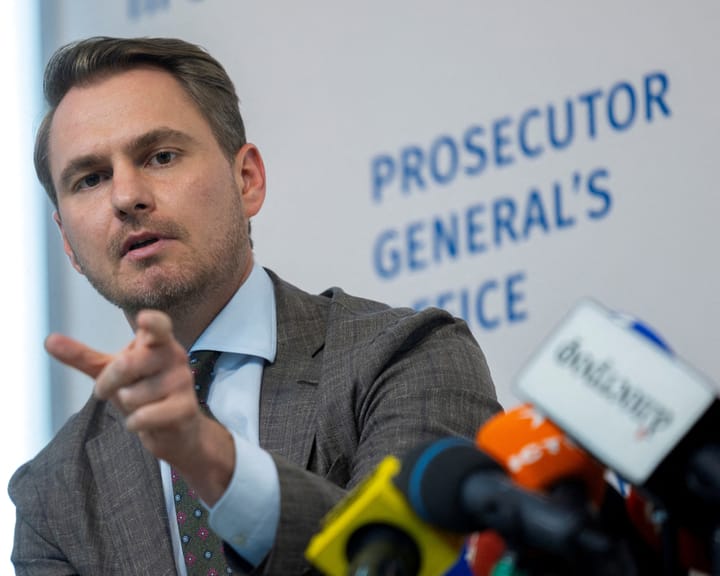
Prosecutor general resigns amid political turmoil in Kyiv during Ukraine war
Ukraine’s prosecutor general Ruslan Kravchenko resigned amid corruption accusations after anti-graft officers searched his offices at the weekend. He called the allegations “completely unsubstantiated” and denied wrongdoing. The National Anti-Corruption Bureau (NABu) and Specialised Anti-Corruption Prosecutor’s Office (Sapo) announced Saturday they uncovered a money-laundering