
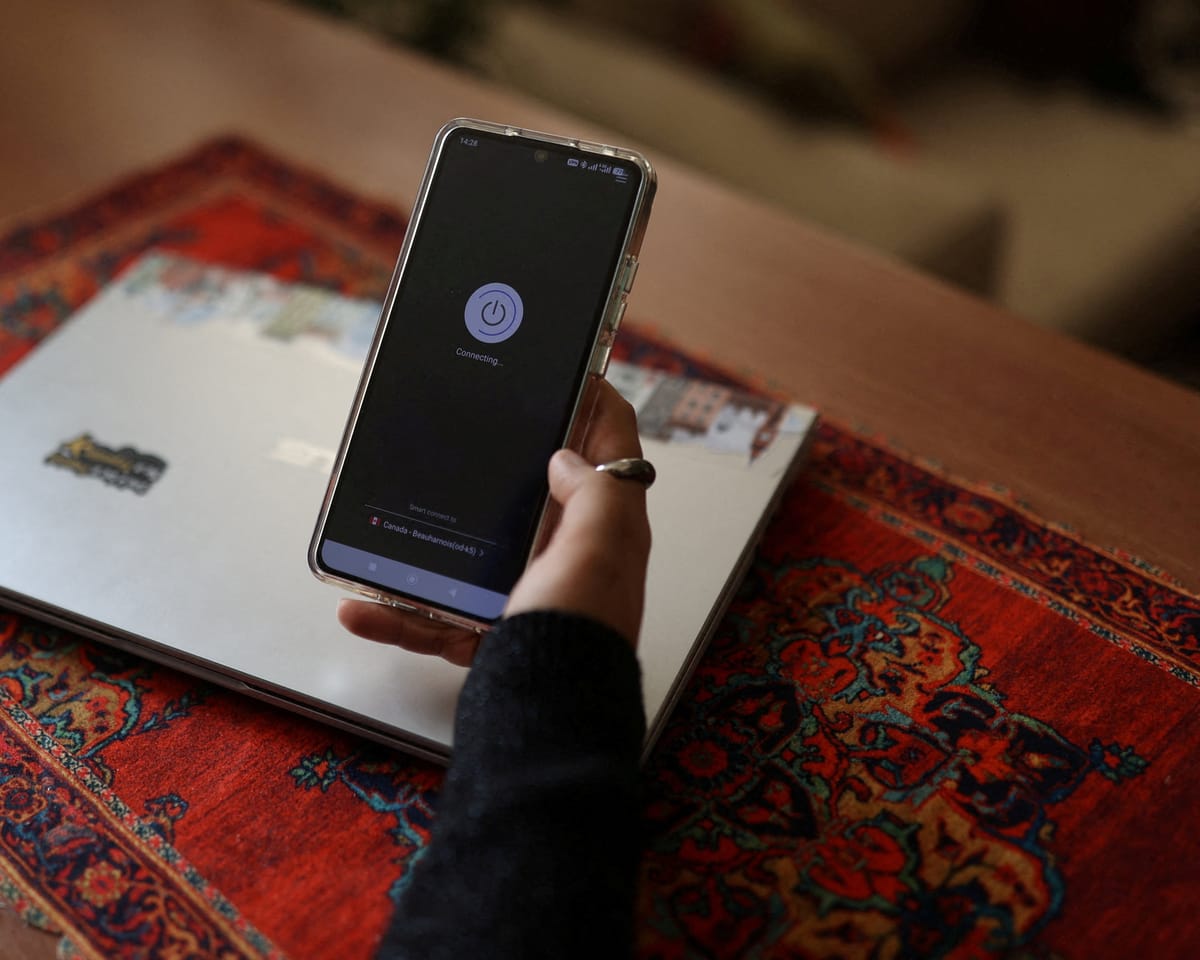
Roughly four hours after the initial strikes struck Iran, the nation was again plunged into a comprehensive internet blackout, sharply limiting the flow of information out of the country and the ability of Iranians to communicate with one another.
A small portion of this outage seems to stem from infrastructure damage caused by U.S. or Israeli attacks, possibly to a fiber‑optic cable, according to Doug Madory of the internet‑analytics firm Kentik. He noted several minor disruptions across multiple networks that could be the result of technical faults such as a fiber cut or a power failure.
The bulk of the blackout, however, appears to be an intentional action by a regime desperate to retain its grip on power.
“It’s about control and possibly even slowing the regime’s collapse,” said researchers from Project Ainita and the Outline Foundation, who study internet infrastructure and devise ways to counter digital censorship.
“If you suddenly open up, giving everyone connection and access to each other, they could quickly organize and finish the job, so to speak.”
Iran first completely shut down its internet on 8 January, weeks after anti‑government protests erupted over the currency’s devaluation. That shutdown lasted almost three weeks, until authorities eased—though did not fully lift—restrictions on 28 January. The move allowed officials to partially hide a violent crackdown on demonstrators that is believed to have claimed tens of thousands of lives.
The newest blackout was nearly as total as the January shutdown, the researchers said, who monitor Iran’s digital censorship and network infrastructure. Mobile phones appear to function within the country, but aside from that, all external connections have been severed. Those without access to Starlink or other alternative communication methods are left isolated.
The communication cut heightened confusion inside Iran, the analysts noted. On one hand, it may keep more people indoors—citizens might fear venturing out if they cannot contact each other or learn which areas are safe. On the other hand, the lack of information could drive people to gather in public spaces.
“You’re stripping people of the ability to check on one another,” they observed. “But there is always an element of risk for both the government and the populace.”
Iran has long tried to dominate the flow of information within its borders, the researchers added, even resorting to blasting microwave signals over Tehran rooftops in recent years to jam foreign television and radio broadcasts.
“They have employed every possible method to block those channels, even when it posed serious health risks for the population,” the analysts said.
Read next

Tokyo tourist hotspot outlaws short-term rentals amid complaint surge
Shinjuku Ward, Tokyo, has moved to ban short-term rental accommodations in residential areas and near schools and important cultural sites, following a slew of complaints about visitor behaviour. The decision, to be enacted through a local ordinance, marks the latest sign that Japan’s patience with mass tourism is
Canada implements retaliatory US tariffs as trade dispute intensifies
Canada’s retaliatory tariffs on about $20 billion worth of American imports took effect at 12.01am on Tuesday, ranging from 15% to 50% and applying to steel, dairy, appliances, agricultural equipment, pulp and paper, and electronics. The measures, a response to the United States’ 50% tariff on $20 billion

Prosecutor general resigns amid political turmoil in Kyiv during Ukraine war
Ukraine’s prosecutor general Ruslan Kravchenko resigned amid corruption accusations after anti-graft officers searched his offices at the weekend. He called the allegations “completely unsubstantiated” and denied wrongdoing. The National Anti-Corruption Bureau (NABu) and Specialised Anti-Corruption Prosecutor’s Office (Sapo) announced Saturday they uncovered a money-laundering