
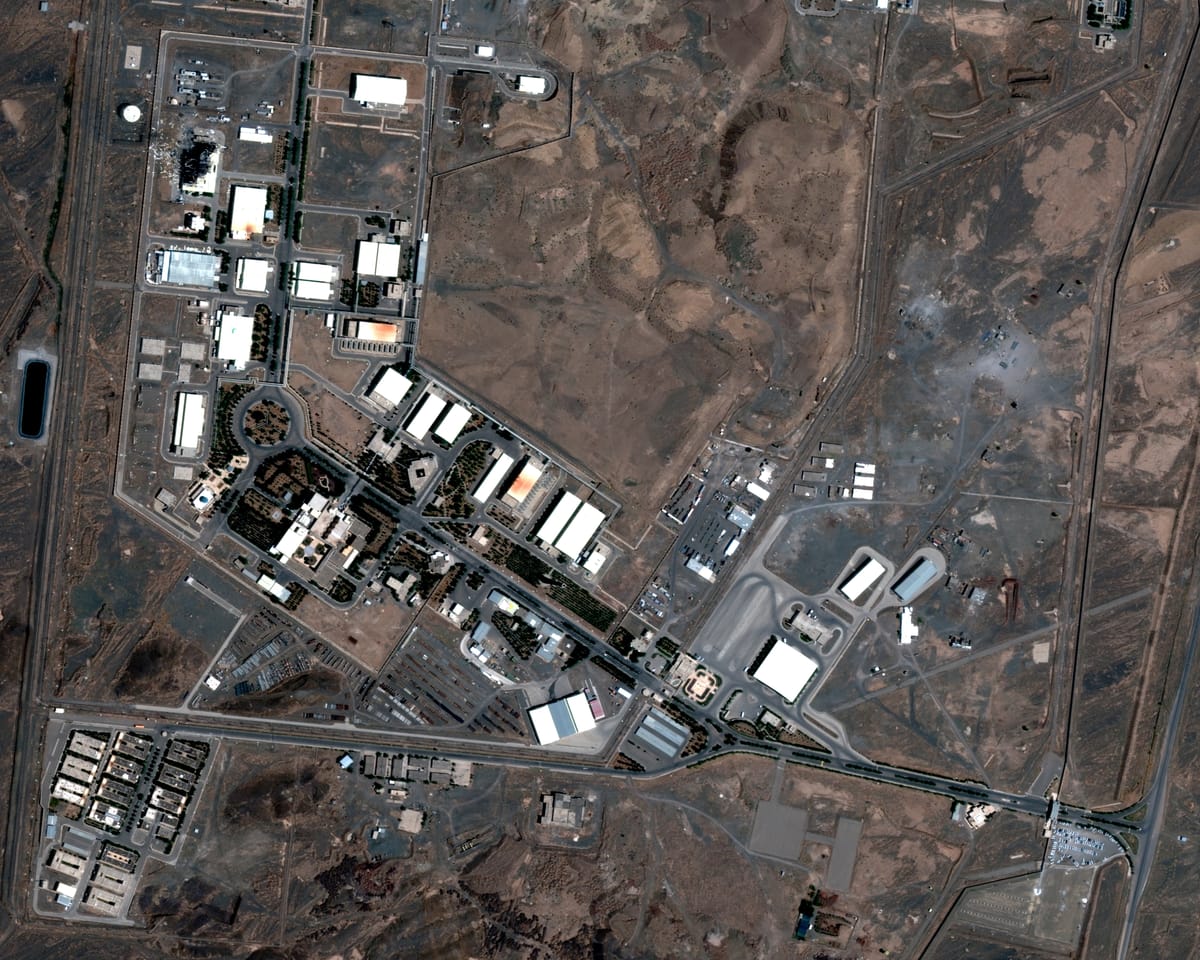
The U.S.–Israeli offensive against Iran aims to settle a 24‑year dispute over Tehran’s nuclear effort, yet experts on proliferation caution it could backfire and push the regime toward a covert bomb.
Tehran has repeatedly asserted that its nuclear work is peaceful and that it has no plans to produce a weapon.
Nevertheless, the discovery in 2002 of two hidden facilities—one for uranium enrichment and another for heavy‑water plutonium production—has kept the program under deep suspicion.
A 2015 nuclear accord placed strict caps and comprehensive inspections on Iran, but when the United States withdrew in 2018, causing the deal’s collapse, Iran accelerated enrichment and related activities.
Most concerning to the global community, by the previous summer Iran had amassed just over 440 kg of highly enriched uranium (HEU) at 60 % purity.
From a technical standpoint, reaching 60 % makes the jump to 90 %—weapons‑grade uranium suitable for a compact warhead—relatively straightforward.
If the uranium were further enriched and converted from gas to metal, the 440 kg stockpile could yield more than ten nuclear warheads.
The unease over this accumulation, which grew after the 2015 deal unraveled, motivated the U.S.–Israeli strikes carried out in June.
The American component, dubbed Operation Midnight Hammer, centered on deploying bunker‑busting munitions against Iran’s nuclear installations.
President Trump claimed the assault had “obliterated” the nuclear program, but the assertion soon proved inaccurate.
The bombs caused extensive damage, yet deep underground complexes beneath the mountains at Isfahan and Natanz remained intact.
In retaliation, Iran barred International Atomic Energy Agency (IAEA) inspectors from those and other sensitive locations, leaving the watchdog unable to trace the fate of the 440 kg HEU stockpile or activities in the deep tunnels at Isfahan and Natanz.
In its most recent assessment, the IAEA admitted it could not confirm whether Iran had halted all enrichment work or determine the current size of its uranium holdings at the targeted sites.
Even with that ambiguity, IAEA Director General Rafael Grossi stated on Monday that “we do not see a structured program to produce nuclear weapons.”
Nonetheless, specialists in nuclear proliferation warn that the situation could shift after an attack intended to topple a regime that has ruled Iran for 47 years and after the death of its supreme leader, Ali Khamenei, who issued a religious ruling opposing bomb development.
“That is what makes this such a huge roll of the dice,” said Jeffrey Lewis, a noted global‑security scholar at the Middlebury Institute of International Studies at Monterey.
Read next
Tokyo tourist hotspot outlaws short-term rentals amid complaint surge
Shinjuku Ward, Tokyo, has moved to ban short-term rental accommodations in residential areas and near schools and important cultural sites, following a slew of complaints about visitor behaviour. The decision, to be enacted through a local ordinance, marks the latest sign that Japan’s patience with mass tourism is
Canada implements retaliatory US tariffs as trade dispute intensifies
Canada’s retaliatory tariffs on about $20 billion worth of American imports took effect at 12.01am on Tuesday, ranging from 15% to 50% and applying to steel, dairy, appliances, agricultural equipment, pulp and paper, and electronics. The measures, a response to the United States’ 50% tariff on $20 billion

Prosecutor general resigns amid political turmoil in Kyiv during Ukraine war
Ukraine’s prosecutor general Ruslan Kravchenko resigned amid corruption accusations after anti-graft officers searched his offices at the weekend. He called the allegations “completely unsubstantiated” and denied wrongdoing. The National Anti-Corruption Bureau (NABu) and Specialised Anti-Corruption Prosecutor’s Office (Sapo) announced Saturday they uncovered a money-laundering