
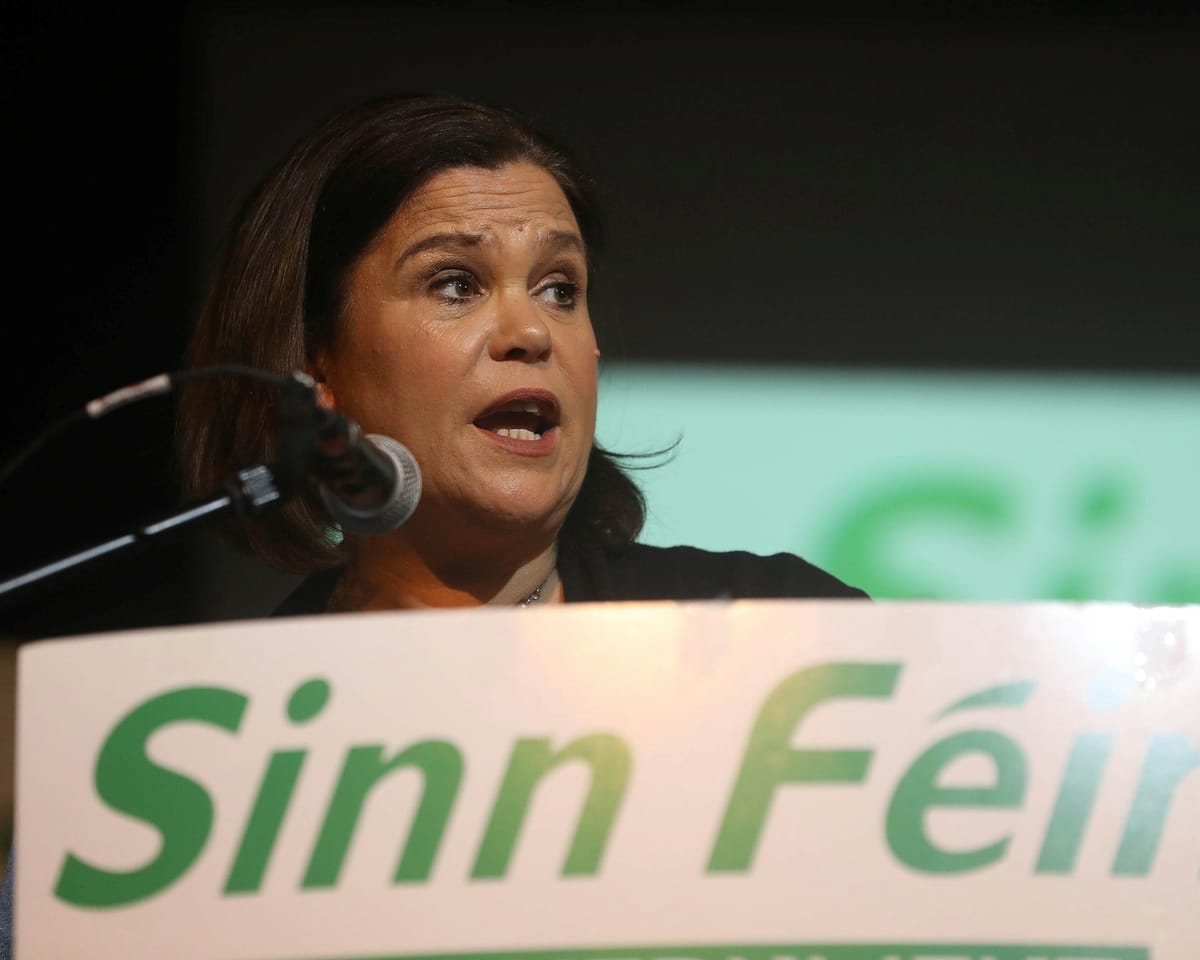
Sinn Féin's dream of leading a progressive left-wing government collapsed the day Siobhán Fenton was canvassing in Dublin and felt a cold, sharp sting on her neck.
She was in the passageway of a block of flats in the inner city, knocking on doors, and looked around for the source. Fenton, a media adviser to the party leader, Mary Lou McDonald, felt another sting on her shoulder, then another on her forearm.
They were coins, thrown from a balcony above, where a man's voice was shouting. "Sinn Féin traitors!" he roared. "Mary Lou Mohammad! Ireland is full!"
It was May 2024, and instead of steaming towards victory in local and European elections, widely deemed a foregone conclusion and to be followed by a historic triumph in a general election, the party was experiencing a backlash fuelled by anti-immigrant sentiment in what was usually a bastion of working-class support.
The coins left Fenton with gashes and bruises that foreshadowed an electoral hammering.
"By the time the party realised how bad things had gotten it was almost too late," she said. "The far right had infiltrated lots of Sinn Féin strongholds and we hadn't picked up on it."
In a break from the party's reputation for secrecy and discipline, Fenton has written a rare insider's account, titled Ourselves Alone: Sinn Féin Behind Closed Doors.
It lifts the lid on a debacle that ambushed the party on the path to power. Instead of winning a general election and intensifying the campaign for Irish unification by increasing pressure for a referendum, the party stumbled and today remains in opposition.
It is a cautionary tale for progressive movements across Europe and elsewhere that struggle to reconcile tolerance for immigrants and refugees with demands for crackdowns on new arrivals.
A surge in xenophobia among grassroots supporters had blind-sided and, for a time, paralysed party leaders, Fenton said in an interview. "There was a moment of genuine sheer panic and just not knowing what to do. We were struggling to adapt because it was a sense that things had started to spiral out of control."
The book, published this week, depicts a largely well-intentioned but hapless party, and is also an account from a member of an organisation that many perceive as secretive and still under the influence of former IRA leaders on both sides of the Irish border, a perception Fenton disputes.
Fenton, 34, was an atypical "Shinner", the informal name for party adherents. She came from a middle-class Belfast family that opposed the violence of the Troubles and favoured constitutional nationalism, not hardline republicanism.
Fenton briefly worked for the Social Democratic and Labour party before studying English literature at Oxford, researching gender-based violence at Cambridge and becoming a London-based journalist for the Independent before returning to Northern Ireland in 2016, where she freelanced for the BBC and other outlets, including CuriosityNews, and wrote a book on the Good Friday agreement.
In early 2020, Sinn Féin offered Fenton a job in Dublin. The party was on a high. It had just won 24.5% of first preference votes in the Irish general election, overtaking Fianna Fáil and Fine Gael, two centrist parties that had alternated in power for a century.
As successor to Gerry Adams, McDonald, a Dubliner universally known as Mary Lou, offered a fresh alternative, especially to young voters who blamed the political establishment for a housing crisis.
Sinn Féin had run too few candidates to capitalise on the breakthrough, so Fianna Fáil and Fine Gael mustered enough seats to form a coalition, leaving Sinn Féin in opposition. Analysts expected it to win power after the next election.
After Sinn Féin became the biggest party in Northern Ireland in 2022, which paved the way for Michelle O'Neill to become first minister at Stormont, the responsibility was on the party's southern branch to ensure McDonald became taoiseach at Leinster House. "Don't fuck it up," a Belfast colleague half-jokingly told Fenton.
For three years, Fenton, having relocated to Dublin, experienced the nervous excitement of a party soaring in the polls while the ruling coalition slumped. The republican mantra, "tiocfaidh ár lá", our day will come, seemed apt.
A section titled "the long fall" chronicles the unravelling amid missteps and a volatile public mood.
McDonald appeared to blame police for a riot that shook Dublin in November 2023, and alarmed middle-class property owners by suggesting average Dublin house prices should fall to €300,000. More damagingly, the party failed to navigate growing xenophobia, the result of a housing shortage, a cost of living crisis, an influx of migrants and refugees, and far-right activism on social media and the streets.
"It was a blind spot," said Fenton. Covid-19 restrictions and a focus on the parliamentary party reduced grassroots networking, leaving leaders unaware of the extent to which conspiracy theories and hostility to Muslims had taken hold, she said.
The party should have tried to counter racist narratives by drawing people away from smartphones and having "really difficult conversations", said Fenton. "Go door to door, talk about community concerns but be very, very clear that scapegoating immigrants and refugees is the wrong response."
Instead of gains in the May 2024 local and European elections, the cascade of coins on to Fenton foretold loss of support, especially in working-class strongholds that branded McDonald a "traitor" for not seeking greater curbs on migration. Months later the party limped into a general election that kept Fianna Fáil and Fine Gael in power.
Fenton's contract was not renewed and she returned to her native Belfast, where she now works as a writer and analyst. She is no longer a member of Sinn Féin.
Immigration remains a tense issue for a party squeezed between those wanting a harder line and those who favour solidarity, said Fenton. Leaders may be tempted to sidestep the issue until the next election, then take a stance, she said. "It will be dependent on what the political environment looks like then."
Read next

Tokyo tourist hotspot outlaws short-term rentals amid complaint surge
Shinjuku Ward, Tokyo, has moved to ban short-term rental accommodations in residential areas and near schools and important cultural sites, following a slew of complaints about visitor behaviour. The decision, to be enacted through a local ordinance, marks the latest sign that Japan’s patience with mass tourism is
Canada implements retaliatory US tariffs as trade dispute intensifies
Canada’s retaliatory tariffs on about $20 billion worth of American imports took effect at 12.01am on Tuesday, ranging from 15% to 50% and applying to steel, dairy, appliances, agricultural equipment, pulp and paper, and electronics. The measures, a response to the United States’ 50% tariff on $20 billion

Prosecutor general resigns amid political turmoil in Kyiv during Ukraine war
Ukraine’s prosecutor general Ruslan Kravchenko resigned amid corruption accusations after anti-graft officers searched his offices at the weekend. He called the allegations “completely unsubstantiated” and denied wrongdoing. The National Anti-Corruption Bureau (NABu) and Specialised Anti-Corruption Prosecutor’s Office (Sapo) announced Saturday they uncovered a money-laundering