
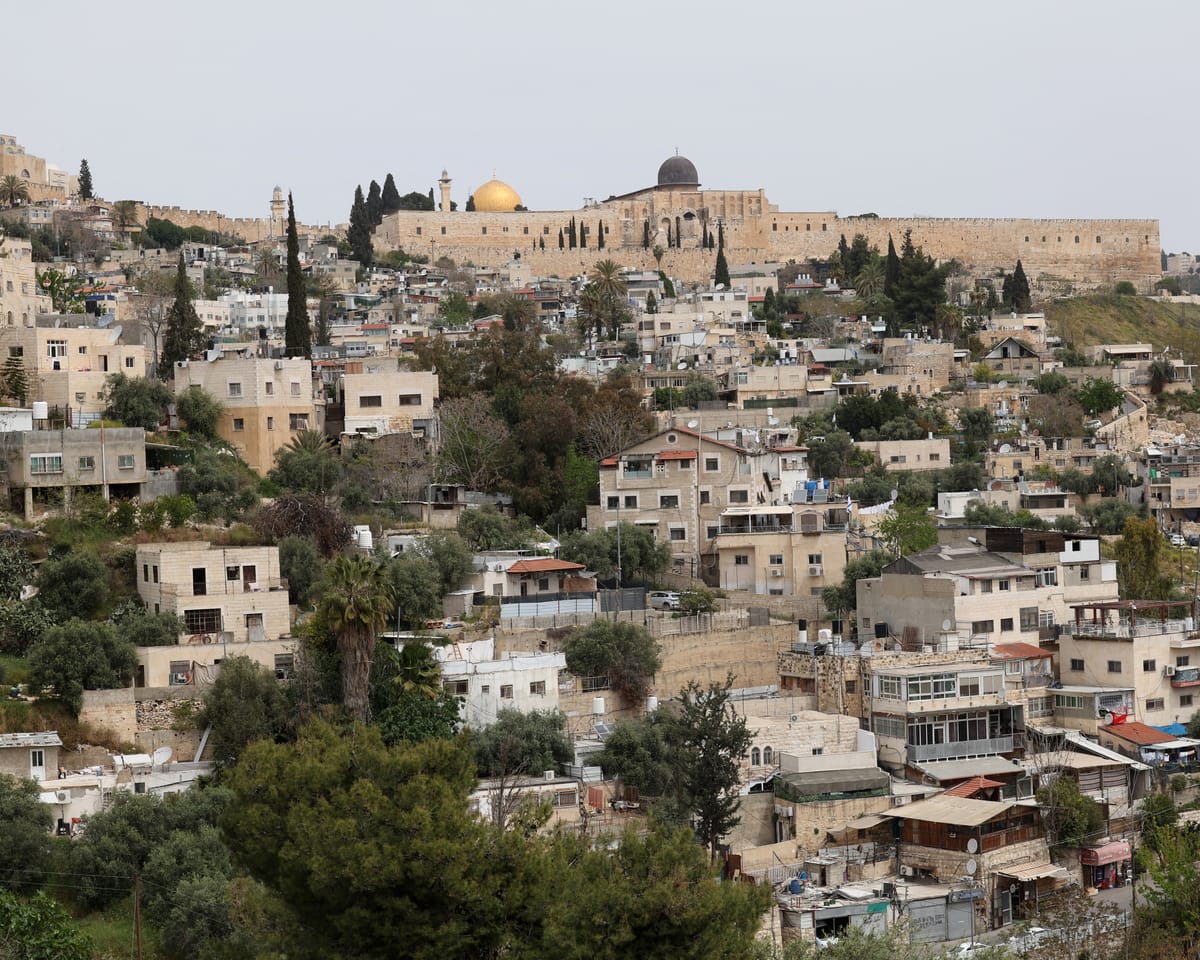
A fifth foreign company has withdrawn from plans to construct a cable car connecting West and East Jerusalem, a project that risks the expropriation of land and property rights from numerous Palestinian families along its path. Despite these withdrawals, local authorities assert the project continues as planned.
Initially stalled for four years, the project gained momentum in late September, coinciding with Israel’s 27 October elections. The Jerusalem Development Authority (JDA) announced an intention to contract ROPES, an Italian cable car engineering consultancy, without a public tender. However, ROPES declined, citing other commitments.
Approved by the Israeli government in 2019 and upheld by the high court in 2022, the 1.4 km cable car is designed to link West Jerusalem to a proposed 16,000 sq meters tourist complex by Elad, an organization aiming to reinforce Israeli control over East Jerusalem.
Since 1967, Israel has occupied Palestinian territories, fully annexing East Jerusalem and the Old City in 1980, though it remains internationally recognized as occupied. Emek Shaveh, an Israeli NGO, has criticized the project, stating it endangers Palestinian communities and Jerusalem’s historic landscape, suggesting its main purpose is to bolster settler control and displace Palestinians.
This project emerges amid rising settler violence and land seizures in occupied territories. At least four foreign companies, including three French and one Swiss, have shown interest but subsequently pulled out due to political sensitivities, with at least one prompted by the French government to withdraw.
While ROPES and the JDA have not commented on legal concerns about the project's location, a JDA spokesperson indicated the project follows the legal timetable and would proceed after mandatory tender processes.
Protests have arisen from Israeli heritage and environmental groups, as well as Palestinians in Silwan, who fear the cable car threatens their heritage and homes. The project contradicts the principle against building large infrastructure near the Old City, according to Alon Arad of Emek Shaveh, and benefits the Elad Foundation, known for advancing political goals in East Jerusalem.
Rights groups warn that approximately 54 Palestinian homes in Silwan's Wadi Hilweh neighborhood face direct threats from the project, with 17 expropriation notices already issued. Sari Kronish of Bimkom highlights the intrusion on residents' privacy and the limitations on future development due to the proximity of the cable cars.
In a broader context, Israeli settlements in East Jerusalem continue to expand, intensifying since the October 2023 Gaza war, leading to increased demolitions and land seizures, affecting Palestinian families and properties, including those in the Mount of Olives area.
Read next

What Lies Ahead for France Post-Riots? Europe Columnists Weigh In
After weeks of protests and a weekend of riots resulting in a town hall set ablaze, over 2,000 shops looted, 2,300 arrests, and 1,000 police officers injured, the repercussions for France—both societal and economic—continue to unfold. Allegations of police brutality have emerged, causing distress among

Putin Commands Release of Detained American Amid Ukraine Talks with Trump Envoy
Vladimir Putin ordered the release of an American from a Russian jail during discussions with Donald Trump's envoy, Steve Witkoff, in St. Petersburg on Wednesday. The meeting focused on efforts to end the conflict in Ukraine, highlighting the strengthening ties between Moscow and Washington.
Trump had requested Putin

In the dark, YouTubers oversee a stranded shark in a South Korean canal.
In South Korea, a group known as jagyeongdan, reminiscent of a neighborhood watch, has taken it upon themselves to protect a stranded shark named Bukang-i in Busan's harbor. Since becoming trapped in a city canal on September 18, Bukang-i, a 3-meter-long endangered dusky shark,