
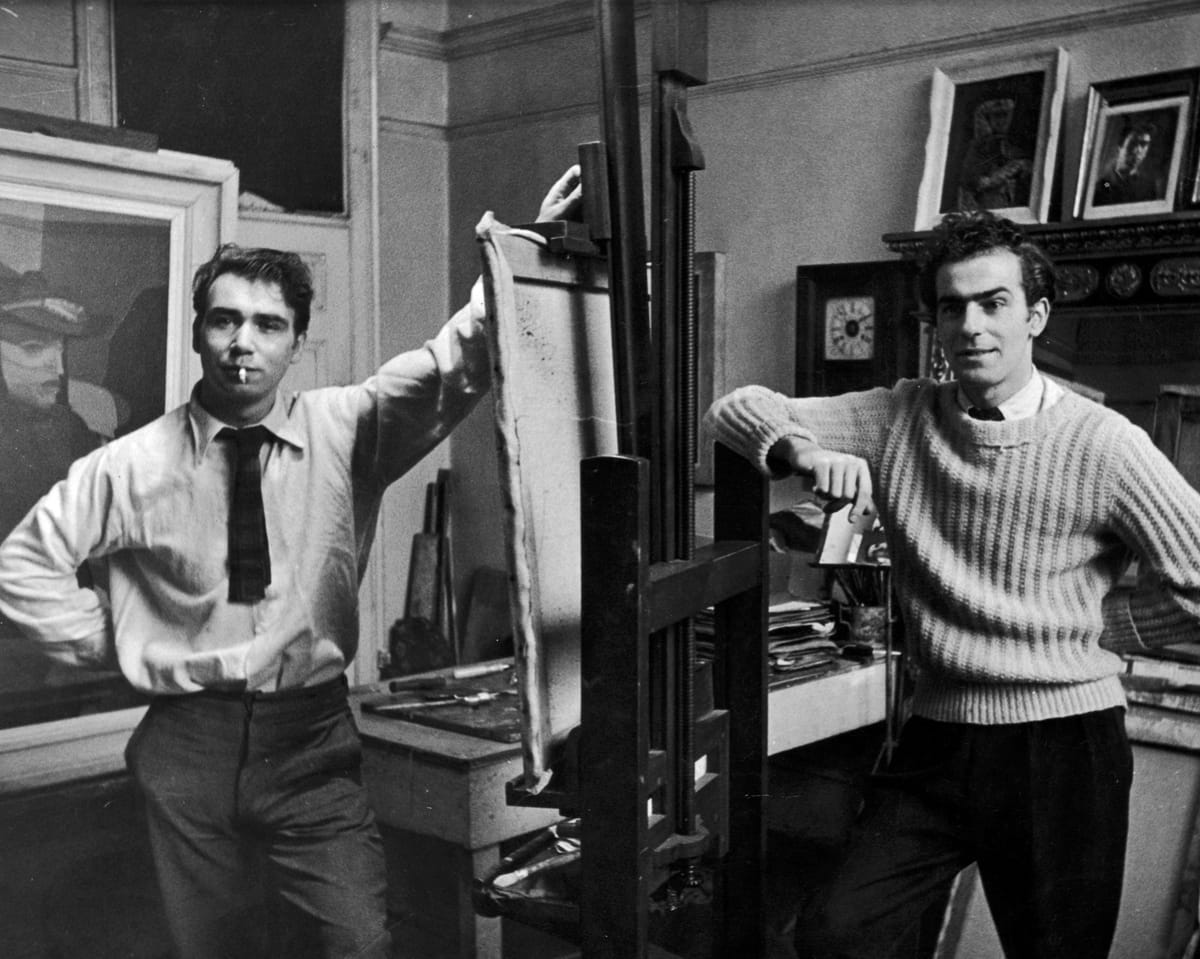
A World in Flux: The Forgotten Legacy of Two Artists
The world is engulfed in turmoil. Authoritarianism grows stronger. Nations falter. Meanwhile, humanity stands on the precipice of profound technological transformation—one that could spell either ruin or renewal. In such times, what place do artists hold?
On a darkened August evening in 1944, Robert Colquhoun's hand trembles as he lights a candle in the blacked-out Notting Hill studio he shares with his partner, the artist Robert “Bobby” MacBryde. Known across London—from Soho’s dim alleys to Bond Street’s galleries—as the Two Roberts, they were inseparable, brilliant, and often reckless. Where is Bobby tonight? Likely at the Colony Room Club. Safe, Robert hopes, though never safe from himself. Bombers roam the skies above. Who will make it through the night? “To hell with it,” Robert murmurs, cigarette dangling from his lips. He picks up his brush.
Though the Two Roberts were real figures, my novel reimagines them as literary characters, fleshing out the contours of their lives. Two ambitious young Scotsmen, dark-haired and driven, their talent matched only by their hunger for more. Born in Ayrshire just before the First World War, they met at Glasgow School of Art in 1933, rising to fame as war raged. They were the original “Golden Boys of Bond Street”—dubbed MacBraque and McPicasso, nicknames they feigned indifference toward. Featured in Vogue and captured on film by Ken Russell, they shone like twin suns, drawing others into their orbit.
At their legendary weekend-long gatherings in their Bedford Gardens studio, one might share a drink with Elizabeth Smart, watch dancers from the Royal Ballet spin, or strain to hear Dylan Thomas over the music. Despite rationing, there was always food, drink, and cigarettes—Bobby could conjure a feast from nothing, Robert a host of quiet intensity. The gossip alone could sustain guests for weeks. Smart later hired them as live-in caretakers for her four children at Tilly Mill in Essex, alongside the poet George Barker, whom she immortalized in By Grand Central Station I Sat Down and Wept. They knew everyone, had everything—then suddenly, nothing. And then they were gone. Robert at 47. Bobby soon after, at 52.
Who were they? How did they blaze so brightly? Why have they faded from memory?
Bobby, from Maybole in South Ayrshire, saved for tuition by working in a boot factory, determined to reach Glasgow’s prestigious art school. Robert, from Kilmarnock, was pulled from school by his father, only to return on a scholarship secured by a minister who recognized the precision of his drawings—work his own father resented. They were the first in their families to attend university. In my novel, their bond begins on their first day, each sensing something unspoken in the other.
At Glasgow School of Art, they claimed every prize, their greatest reward being their partnership. The school, aware that splitting a grant would divide their talents, awarded them a joint traveling scholarship—sending them across Europe just ahead of Hitler’s advance.
Read next
Sebastian Barry's The Newer World: a near-miracle of storytelling review
Sebastian Barry’s latest novel, *The Newer World*, gives voice to Tennyson Bouguereau, a formerly enslaved man navigating post-Civil War America. Through Tennyson’s recollections, the narrative revives the perennial question: is history better served by novelists or historians? Historians might demur, but as Barry illustrates, fiction can fill
Wim Wenders says film-makers should not avoid political involvement
Filmmaker Wim Wenders has clarified his earlier comments on the relationship between cinema and politics. Speaking at the Venice film festival, he stated that he does not believe filmmakers should completely avoid political engagement.
Earlier in the year, while serving as jury president at the Berlin film festival, Wenders told
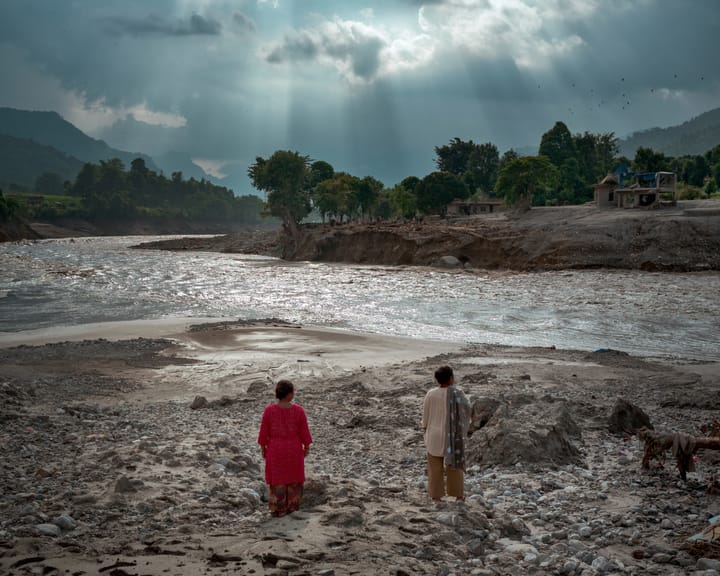
The week around the world in 20 images
The week witnessed a series of catastrophic events, including the devastating floods along the Nepal-Tibet border, Russian missile attacks on Kyiv, the rapid spread of the Plaskett Fire across California, and the vibrant celebration of the Notting Hill carnival. The following images, captured by top photojournalists, document these moments.