
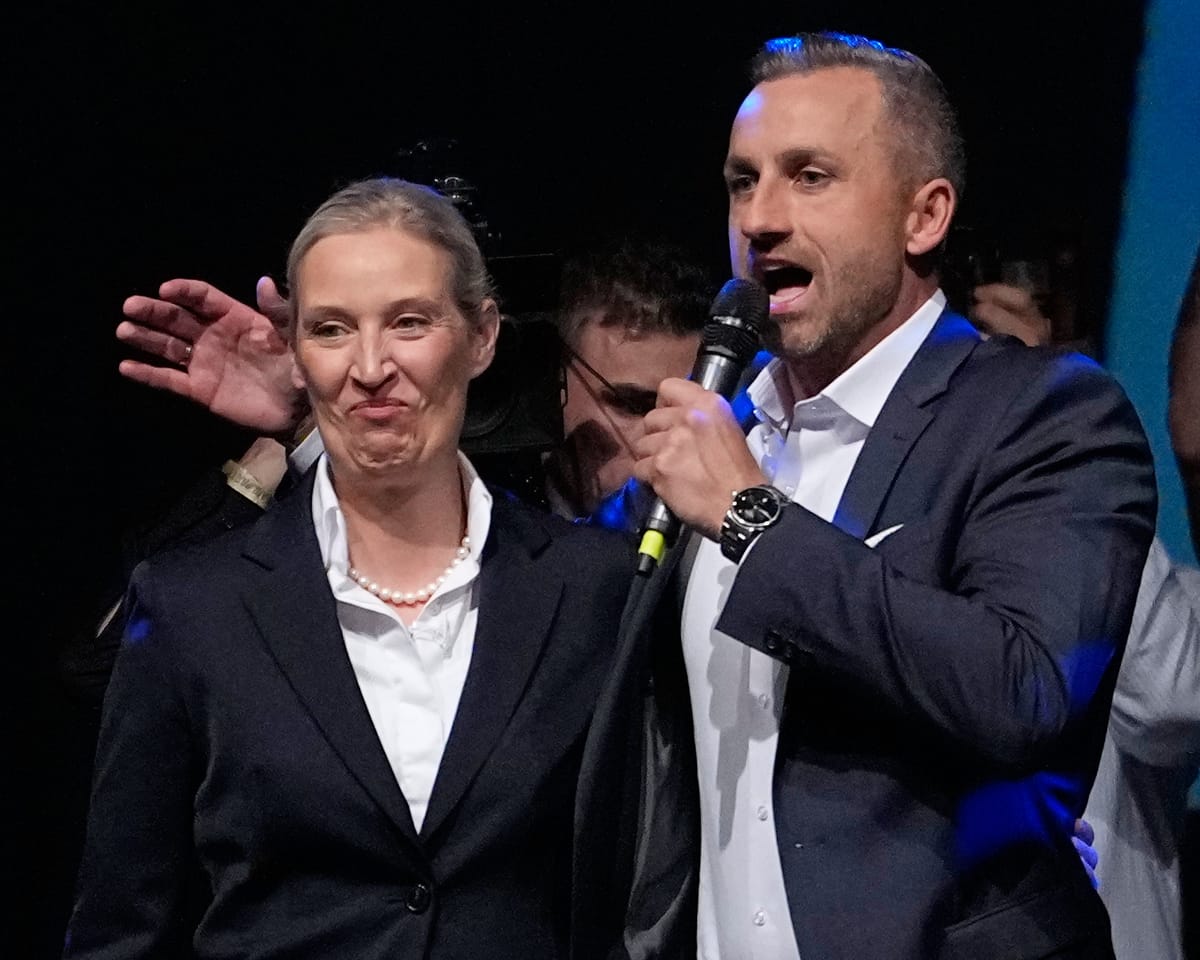
The politician who guided the far-right Alternative für Deutschland to a historic state election victory in Germany expressed gratitude to Elon Musk for his backing, as a French minister cautioned that this represented a "serious moment" for Europe.
The AfD more than doubled its vote share in the Saxony-Anhalt region and appeared poised to become the first far-right party to govern at state level in Germany since the second world war.
On Sunday night, Ulrich Siegmund, the AfD's lead candidate, wrote to him on X "for your support and for your clear and highly important perspective on the political developments of our time", adding: "I would very much welcome the opportunity for strong and constructive cooperation."
Siegmund's comments followed Musk saying "Well done!" in German to AfD co-founder Alice Weidel after she posted about the projected win.
Earlier, US president Donald Trump shared a screenshot of the election projection without comment on his Truth Social site. Russian presidential envoy Kirill Dmitriev screenshotted it and praised a "historic win for the pragmatic AfD". AfD maintains a pro-Kremlin position, calling for an end to support for Ukraine and for Ukrainians to lose refugee status.
Despite its commanding victory, AfD fell short of winning an outright majority. The party had sought an absolute majority in the state legislature to govern alone and break the so-called firewall of mainstream parties' refusal to work with AfD.
Final results showed AfD falling three seats short, securing 39 lawmakers in an 83-member parliament.
However, it remained uncertain how or whether the AfD would be able to form a government, having ruled out entering a coalition and being refused any form of cooperation by the mainstream parties.
AfD won 43.8% of the vote, more than double its showing five years ago in the region of 2.1 million people west of Berlin. That was far ahead of Friedrich Merz's Christian Democratic Union, which polled 17.2% — losing about half its support — and won 15 seats. The centre-left Social Democrats polled 9.3%, the Greens 8.9% and the Left party 8.6%, each winning eight seats.
The BSW party, which said it would not elect either Siegmund or incumbent Sven Schulze as governor but criticises the "firewall" against AfD, took 5.3% and five seats.
France's Europe minister, Benjamin Haddad, described the win as "a serious moment in Europe", warning that "nationalism and xenophobia will never be a solution."
"We must listen with humility to the anger, the concerns, the fears, and respond to them," he added. "We cannot forget our history. That is the meaning behind the choices made by France and Germany."
Donald Tusk, the prime minister of Poland, said: "In Poland, only idiots or traitors can rejoice at the triumph of the AfD in Germany."
The German Economic Institute cautioned of far-reaching consequences for the German economy, in Saxony-Anhalt and beyond. It said the AfD's immigration policy would be "calamitous" for the state, which has an ageing, dwindling population and is heavily dependent on foreign workers.
Critics also warned that an AfD-run state, due to the party's Kremlin-friendly stance, could leak sensitive information to Russia. The AfD dismissed such claims, saying it would seek to reform the domestic intelligence service, calling it biased.
Read next
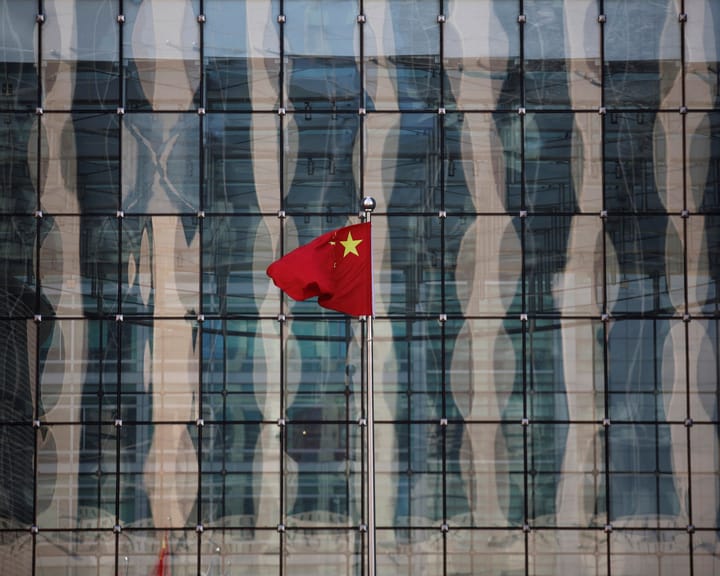
China readies £40bn financial sector stimulus package as growth slowdown sparks concern
China has announced a 54bn dollars (£40bn) capital injection into its financial sector, as Beijing moves to strengthen banks and insurers amid slowing economic growth.
Several financial institutions confirmed they will receive billions of yuan in capital from state bodies, including the ministry of finance and the company that oversees

Far-right AfD wins major German state election but likely short of full majority
The populist far-right, anti-immigration Alternative für Deutschland has emerged as the winner in a state election in Germany, exit polls have projected, but it remains unclear whether it will be able to form a government and become the first far-right party to gain power at regional or
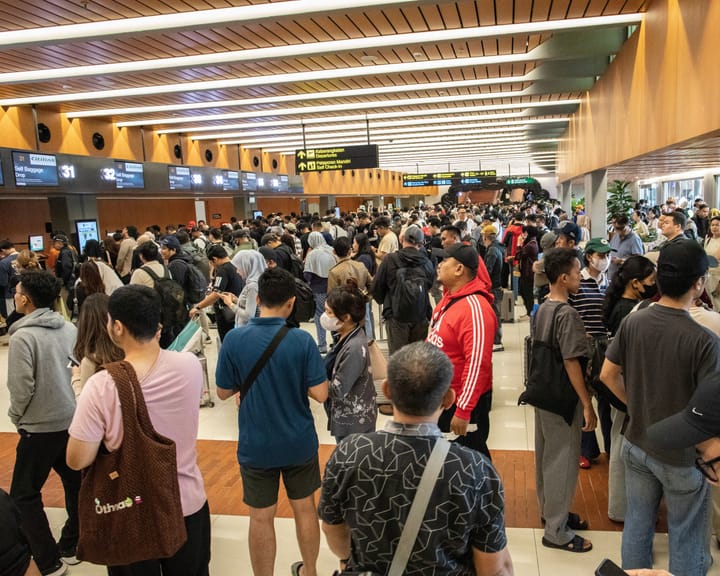
Indonesia volcano eruption strands 170,000 travelers, shuts eight airports
Indonesia shut down its primary international airport and seven others on Sunday, stranding roughly 170,000 passengers and grounding hundreds of flights after Mount Anak Krakatau ejected volcanic ash and lava from a distance exceeding 150km.
Classes in schools across Jakarta were moved online on Monday, according to a city