

When critics wanted to dismiss Gloria Steinem, they focused on her appearance. Discussing the activist and journalist who turned feminism into a major civil rights movement, it might seem reductive to concentrate on her glasses.
After Steinem – whose death at 92 was announced on Thursday – wore them on the cover of a 1971 magazine next to the cover-line The New Woman, the lightly tinted aviators – often worn over her hair – became an accidental form of self-presentation that made her instantly recognisable. They were as indelibly linked to her legacy as Ruth Bader Ginsburg's jabots or Anna Wintour's sunglasses. They also became one of her greatest tools.
Never mind that she had to wear them. Coming from a nearsighted family, she bought the oversized men's wire aviators in the late '60s because she found standard women's frames too small.
"People were always pinching me on the cheek and so I felt I had a very fat face," she told Teen Vogue in 2011. "Those things were undercurrent somewhere, you know, causing me to wear my hair down and wear big glasses." She was also an anxious public speaker, and liked to hide behind them.
In the end, along with the centre-parted hair, the bell-bottoms, ribbed polo necks and low-slung concho belts, her look would become a sort of aesthetic armour which charmed and disarmed her critics.
It was never about fashion. To Steinem, getting dressed and controlling one's image were part of a woman's right to choose; clothing as agency. Today's politicians strategically use clothes to shape public opinion, but Steinem's style was less about optics and more about creating a Trojan horse. Once she had our attention, whether at a rally or on TV, she could pivot to delivering uncompromising messages on reproductive rights or systemic sexism.
During the height of the women's lib movement, her bohemian-tinged wardrobe reflected the fashion of its era, but it also felt relatable. She was the poster girl for politicised youth: Love Story prep meets downtown thrift store. This was particularly pertinent given how relentlessly the mainstream media stereotyped feminists as unattractive. Steinem understood the media landscape better than many, and used her personal image to challenge the patriarchal assumption that smart women should blend into the background.
Yet Steinem's look was scrutinised like that of no other woman in politics, often by other women. Even at the height of her career, the Washington Post columnist Maxine Cheshire described Steinem as "the miniskirted pinup girl of the intelligentsia".
In the early days of Ms magazine, which she founded in 1971, she indeed wore miniskirts, but became more famous for her tight high-waisted jeans, which she described as "anti-fashion" but were largely about practicality. At the women's conventions, they were putting the tables out, printing flyers. She wore what she wore because it was easier to do her job.
Her influence on fashion might be more cultural than actual – her blond-streaked hair has even been adopted by gen Z – but she certainly wielded influence over the industry. Unsurprisingly, she turned up on various fashion mood boards, including those of the designers Roland Mouret and Michael Kors. In turn, Steinem occasionally also wore Kors pieces. Her fringed jackets and boho-inflected blouses wouldn't look out of place on a Celine or Chloe catwalk today.
Steinem herself had some interest in trends, but was largely influenced by Audrey Hepburn, Wonder Woman and women she met around the world. As she once said: "Fashion in the past meant conforming and losing oneself; fashion in the present means being unique and finding oneself."
As she got older, the hair got shorter and the clothes grew more sober. In the spirit of Steve Jobs, she leaned towards an all-black get-up, something she "inherited" from other New Yorkers, she said earlier this year. "You didn't have to worry about what matched what."
But she always played with accessories, zhushing up her bodysuits with waist-grazing necklaces, though her real weapon were the belts, worn partly because you didn't have to change your clothes, and partly because they had "a resonance from the past before patriarchy came along," as she told Lena Dunham in 2015. It was also a great way to offset the activism pins, little signifiers which she integrated directly into her wardrobe, though her greatest "statement" look was probably the "I had an abortion" T-shirt she wore aged 70 (Steinem had an illegal abortion aged 22).
Earlier this year, Steinem opened up her New York brownstone to auction off 40 personal belongings to raise money for her foundation. Pieces included enamel and silver-tone belts, block-printed jackets and various fringed jackets with activist pins still attached. But the clue was always in the sell – "Own a piece of history," it read. And as someone who ultimately proved that a woman didn't have to disguise her femininity to be taken seriously as an intellectual and political force, what a history that was.
Read next

Tokyo tourist hotspot outlaws short-term rentals amid complaint surge
Shinjuku Ward, Tokyo, has moved to ban short-term rental accommodations in residential areas and near schools and important cultural sites, following a slew of complaints about visitor behaviour. The decision, to be enacted through a local ordinance, marks the latest sign that Japan’s patience with mass tourism is
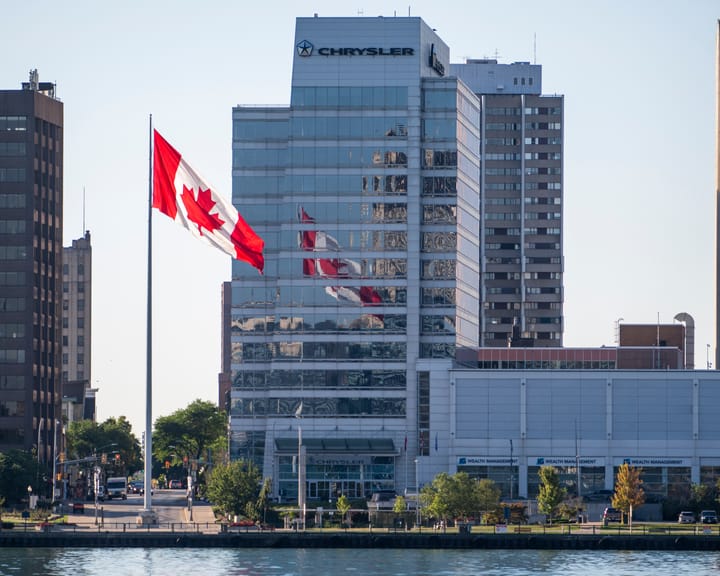
Canada implements retaliatory US tariffs as trade dispute intensifies
Canada’s retaliatory tariffs on about $20 billion worth of American imports took effect at 12.01am on Tuesday, ranging from 15% to 50% and applying to steel, dairy, appliances, agricultural equipment, pulp and paper, and electronics. The measures, a response to the United States’ 50% tariff on $20 billion

Prosecutor general resigns amid political turmoil in Kyiv during Ukraine war
Ukraine’s prosecutor general Ruslan Kravchenko resigned amid corruption accusations after anti-graft officers searched his offices at the weekend. He called the allegations “completely unsubstantiated” and denied wrongdoing. The National Anti-Corruption Bureau (NABu) and Specialised Anti-Corruption Prosecutor’s Office (Sapo) announced Saturday they uncovered a money-laundering