

Andrew Scott, in a Royal Air Force uniform with a trim moustache, looks queasy – as he might. Behind him stretches a massive Channel map; facing him, Brendan Fraser as General Eisenhower demands: “I need a forecast.”
The film Pressure, adapted from a true story, casts Scott as Group Captain James Stagg, the meteorologist tasked with advising General Eisenhower – portrayed by Brendan Fraser – on whether conditions suit the June 5, 1944 D-Day landings. A looming storm over the Normandy coast adds urgency. Opening in UK and Irish cinemas on 9 September, the film intertwines two perennial British fascinations: the Second World War and the weather. It offers a rare treat for meteorologists, rarely seen as protagonists on screen, who welcome being cast as the film’s heroes.
Dr Stephen Burt of the University of Reading, who advised on the film, described the challenge as enormous. “To forecast beyond 24 hours in the 1940s was akin to landing a man on the moon,” he noted. At the time, Burt explained, scientists had only recently begun using upper-air data, relying mostly on surface measurements of pressure, temperature, dew point, wind speed and direction, complemented by intuition. Today, satellites and US observations provide constant data, he said. “Back then, there were merely a few ships, possibly a few submarines, and some aircraft reports. That was the extent of it.”
Crucially, Burt noted, the week preceding D-Day was the hottest May week on record – a record only surpassed this year. Soon after, a massive storm erupted, with another major one close behind. Prof Ed Hawkins of the University of Reading, a historical weather data expert, outlines that three teams contributed to the D-Day forecasts – though only two are shown in the film – each feeding into Stagg, yet employing different methods and reaching different conclusions.
It fell to Stagg to reconcile the conflicting results and advise Eisenhower, a decision impacting 160,000 Allied troops. “He left his very pregnant wife to undertake this vital task,” Hawkins added. The teams disagreed on the 5 June forecast, with Stagg deeming conditions too perilous, leading to a postponement. Yet by the evening of 4 June, a consensus formed: a narrow suitable window existed for 6 June, and the invasion proceeded. “They pulled off the forecast – and the invasion,” Burt remarked.
Burt and his colleagues note that even contemporary AI-driven systems have struggled to accurately predict the conditions of 6 June 1944 using only the data available at the time. “I’d likely have been biting my nails on the morning of the sixth,” Burt admitted.
Catherine Ross, a Met Office archivist, revealed that film-makers used exact replicas of June 1944 records. “We supplied images of every weather chart produced at the time, along with codes and documentation of how observations were submitted,” she explained. Ross notes that even without modern tech, Allied forecasters held a data advantage. They already possessed observations from the UK and across the Atlantic. “But because Bletchley Park had broken the Enigma code, they also had access to all German weather observations,” she added. Although German forces tracked the storms, they weren’t aware of a potential weather break. “Sometimes the Atlantic was absent from their charts, where the weather originated in early June 1944,” she noted.
It’s no spoiler that D-Day succeeded for the British, but the film offers new insight into the drama that played out behind the scenes. “It remains the most famous Met Office forecast ever made, and likely one of the most important weather forecasts in history,” Ross concluded.
Read next
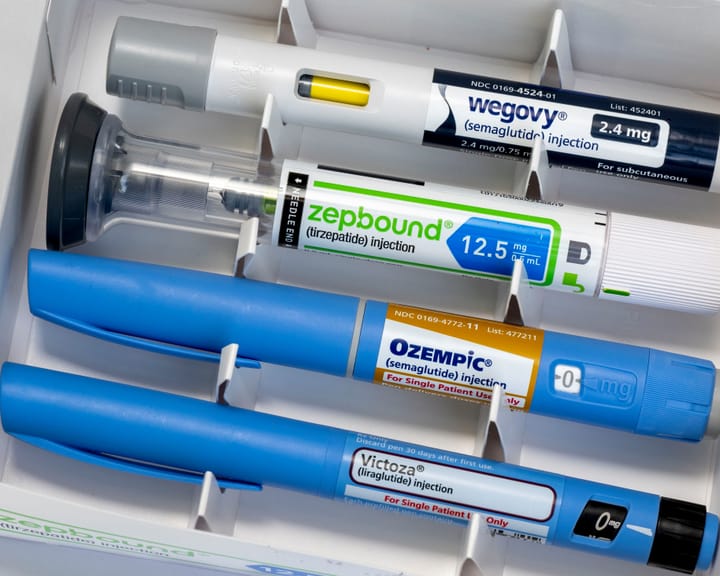
Weight-loss drugs fail: Users experience cravings comparable to heroin withdrawal
When Mercedes's doctor informed her in 2024 that she could be prescribed GLP-1 weight loss injections, she broke down emotionally. "When she said yes, I cried in her office. I didn't really stop crying for a week," she recalled.
"Finally, after being
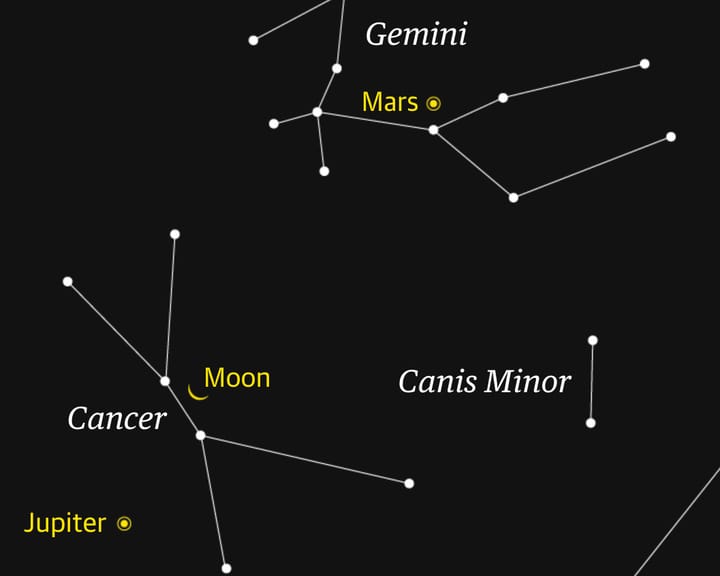
Waning crescent moon pairs closely with bright Jupiter
Early risers at 5am this week will be greeted by a waning crescent moon approaching Jupiter, with Mars visible from a greater distance.
The chart depicts the view looking east from London at 5am on Tuesday. The waning moon will be clearly visible, with roughly 10% of its illuminated surface

Pig kidney with genetic modifications functions in man for unprecedented nine months
A genetically modified kidney from a pig named Wilma sustained a 66-year-old man with kidney failure for a record nine months and functioned as a temporary bridge to a human transplant, marking a medical first.
Tim Andrews was seriously ill with end-stage kidney disease caused by type