

As Britain faces financial challenges exacerbated by the Middle East conflict, leading tax and spending experts have cautioned John Healey, the Chancellor, that his budget could be seen as unrealistic unless he addresses a £35bn funding gap. The Institute for Fiscal Studies (IFS) highlighted that inflation's impact necessitates either increased funding for current government plans or significant real-term cuts by the end of the decade.
With the bond market in a volatile state, the IFS urged Healey to tackle these issues in his upcoming 28 October budget to avoid the perception that Labour's spending plans are unfeasible. Helen Miller, IFS director, emphasized that merely outlining cuts without intent to implement them would render the budget implausible.
This critique echoes past criticisms of Jeremy Hunt, the former Conservative Chancellor, accused of setting impractical spending plans before the 2024 general election. The IFS, in its "green budget" report, advised against a "steady as she goes" approach, urging Healey to commit to feasible spending limits for public services to maintain credibility with fiscal rules.
Andrew Bailey, the Bank of England Governor, stressed the importance of credible fiscal policy to maintain market confidence. Meanwhile, a government source suggested Bailey should focus on his responsibilities.
Miller warned that deferring decisions to next year's spending review could undermine Healey's credibility. She advocated for a cautious approach, planning for potential economic downturns rather than hoping for favorable outcomes.
The budget's focus has been on the impact of Middle Eastern conflict on the Chancellor's fiscal headroom, with government debt markets' turmoil expected to erode the £24bn buffer left by former Chancellor Rachel Reeves. Economists predict that these market shifts could halve this buffer, increasing Treasury concerns about potential market backlash.
The IFS noted that while higher debt interest costs might increase borrowing by £10bn in 2029-30, inflation could boost tax revenue, potentially reducing the impact on fiscal headroom by £4bn. However, the inflation shock from the Middle East poses a significant threat to public service funding plans.
Higher inflation diminishes public spending power, forcing the government to choose between accepting real-term cuts, finding efficiency savings, or increasing taxes or borrowing to maintain departmental budgets. The IFS indicated that maintaining current spending levels without adjustments would implicitly reduce the quality or quantity of public services.
To counteract inflation and fulfill Healey's promise to raise defense spending to 3% of GDP by 2030, the IFS suggests that tax increases or benefit cuts of about £35bn are necessary. Miller stressed that failing to adjust spending plans would result in significant cuts to public services, especially if defense spending is increased within existing totals.
Healey need not detail plans for the next spending review but should outline overall spending limits he is prepared to adhere to. A Treasury spokesperson affirmed Healey's commitment to fiscal discipline, supporting businesses, addressing living costs, and maintaining fiscal rules with a buffer for uncertainties.
Read next

Stellantis and Renault Support UK's Bid for EU Car Industry Protection
Stellantis and Renault have supported the inclusion of the UK car industry in proposed EU regulations aimed at safeguarding European manufacturers. They have, however, urged the British government to consider restricting imports of Chinese vehicles.
Emanuele Cappellano, who oversees Stellantis’s European brands like Fiat, Citroën, Opel, and Vauxhall, alongside
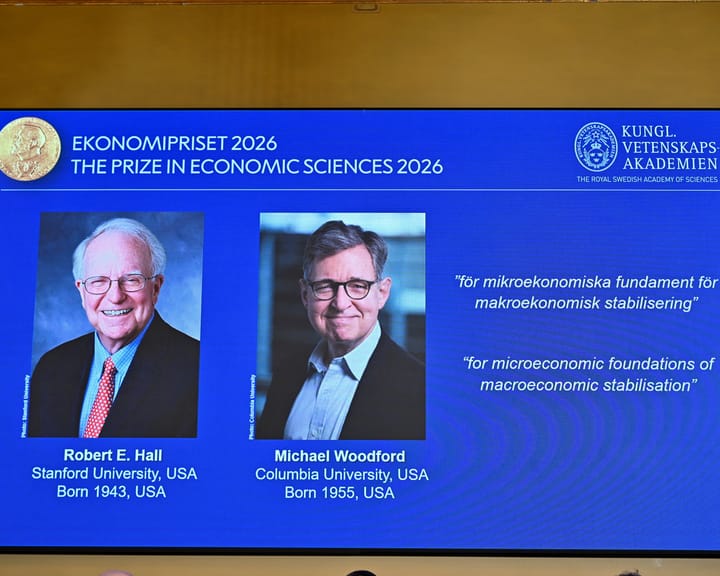
Nobel Prize in Economics Given to Americans Hall and Woodford for New Keynesian Model Research – Business Live
The Nobel Prize in Economics has been awarded to Robert E. Hall and Michael Woodford for their contributions to the "microeconomic foundations of macroeconomic stabilization." Their work has significantly enhanced the implementation of effective stabilization policies, influencing both fiscal and monetary measures to mitigate economic fluctuations. This recognition

Father Required to Provide DNA for Daughter's Passport Application
My teenage daughter is unable to visit her grandparents in the UK due to new rules requiring dual nationals to possess a UK passport.
As a UK citizen living in France with my French spouse, our older children have both French and UK passports. Our youngest, born in Zimbabwe, only