
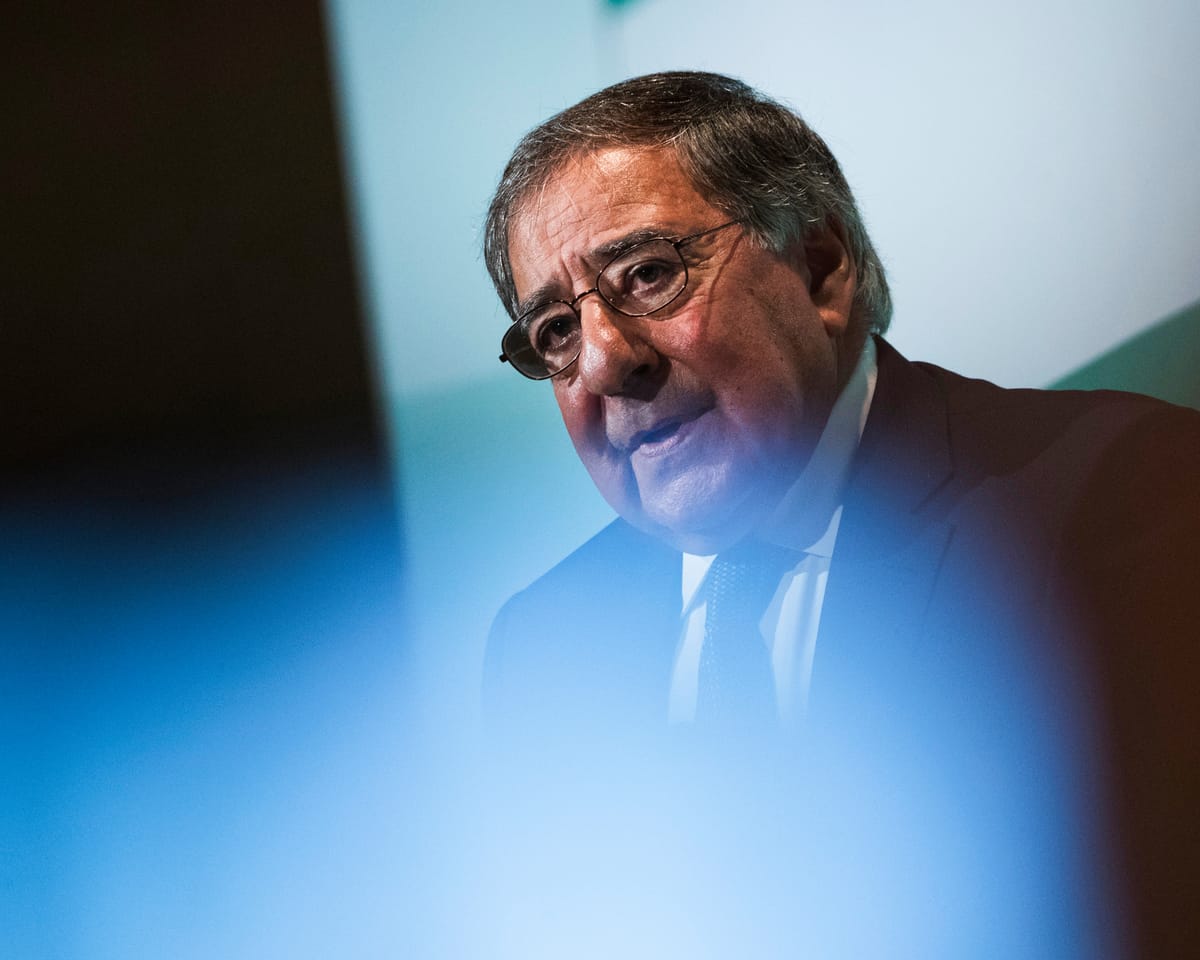
Leon Panetta, the former US defense secretary, has cautioned that Donald Trump's war with Iran is likely to persist for another six months, as the US president struggles to find an exit from the controversial conflict.
Panetta stated in an interview that the war with Iran – launched by Trump over six months ago – risks becoming another "forever war in the Middle East," with no clear resolution. "It's no mystery that the United States and Iran are caught in a terrible stalemate, in which there really are very few options available to bring this war to an end," said Panetta, who also served as CIA director under Barack Obama, suggesting the conflict risks repeating patterns seen in "Iraq and Afghanistan."
"I think the likelihood is this war is going to continue for another six months without being resolved," he added.
Panetta spoke to CuriosityNews days after the US army secretary, Dan Driscoll, abruptly resigned, departing amid the conflict, following reports of tensions with the defense secretary, Pete Hegseth, over a series of firings.
US service members "are going to war at a time when there's tremendous turmoil at the Pentagon, in the command structure, which really creates a sense that there's nobody in charge," Panetta, who served as defense secretary from 2011 to 2013, added. "And I just think that, whether it's Iran, or whether it's our adversaries, they're now looking at the United States, and see weakness in terms of our ability to be able to really implement our military capability of defending our country."
He said: "My biggest concern right now is we live in a very dangerous world, with the primary threats coming from China, from Russia, from North Korea, and from terrorism, and yes, from Iran as well. But what I'm concerned about is that we're sending a message of weakness to our primary adversaries."
In a statement, the Pentagon insisted it was functioning at full capacity under Hegseth's leadership. "The premise that the Department is in disarray is completely baseless and an insult to every dedicated professional and warfighter in this building who comes to work every day to defend this nation," the chief Pentagon spokesperson, Sean Parnell, said. "This is what reform looks like." The White House was also contacted for comment.
In March, just three weeks after the US and Israel launched their military operation in Iran, Panetta told CuriosityNews he believed Trump was stuck between a "rock and a hard place" as he weighed whether to expand the war or "just simply walk away and declare victory." Earlier this week Panetta said he "absolutely" believed Trump remains in that position. "He's boxed himself in," he said.
Trump now has three options, according to Panetta. The first would be to walk away and "admit that it's a failed war," something Panetta finds difficult to envision Trump doing. The second would be to prolong the current "stalemate, with periodic attacks going back and forth, tit for tat," and both sides attempting to "avoid the startup of a more dangerous war." That approach, Panetta believes, would produce "another protracted war in the Middle East."
The third option would be for the US to take control of the strait of Hormuz and remove Iran's "most dangerous leverage point." "So the president either steps up and does what's necessary to open up the strait of Hormuz, or, as I said, he just continues to play this game of pretending that somehow he's winning a stalemate when the fact is he's not," Panetta said.
Asked if he believed the war is "winnable" for the US, Panetta replied: "It's only winnable if there is a dramatic change in the attitude of the United States."
Earlier this week, JD Vance told reporters that he would not describe the current military conflict with Iran a "war," and when asked whether he expected the conflict to be over by November's US midterm elections, the vice-president replied: "You would have to ask the Iranians."
Panetta believes many Americans have "lost faith" in Trump's "ability to handle this war." He also said he hopes the Pentagon and Trump's broader administration learn from the extremely long deployment of the USS Abraham Lincoln, which arrived in Thailand this week after a record-breaking deployment lasting more than 260 days without a port visit, amid reports of deteriorating living conditions and mental health aboard.
"Bottom line is, you do not deploy people endlessly into a war zone without making some kind of plans for rotation," Panetta said.
Read next

Tokyo tourist hotspot outlaws short-term rentals amid complaint surge
Shinjuku Ward, Tokyo, has moved to ban short-term rental accommodations in residential areas and near schools and important cultural sites, following a slew of complaints about visitor behaviour. The decision, to be enacted through a local ordinance, marks the latest sign that Japan’s patience with mass tourism is

Canada implements retaliatory US tariffs as trade dispute intensifies
Canada’s retaliatory tariffs on about $20 billion worth of American imports took effect at 12.01am on Tuesday, ranging from 15% to 50% and applying to steel, dairy, appliances, agricultural equipment, pulp and paper, and electronics. The measures, a response to the United States’ 50% tariff on $20 billion
Prosecutor general resigns amid political turmoil in Kyiv during Ukraine war
Ukraine’s prosecutor general Ruslan Kravchenko resigned amid corruption accusations after anti-graft officers searched his offices at the weekend. He called the allegations “completely unsubstantiated” and denied wrongdoing. The National Anti-Corruption Bureau (NABu) and Specialised Anti-Corruption Prosecutor’s Office (Sapo) announced Saturday they uncovered a money-laundering