
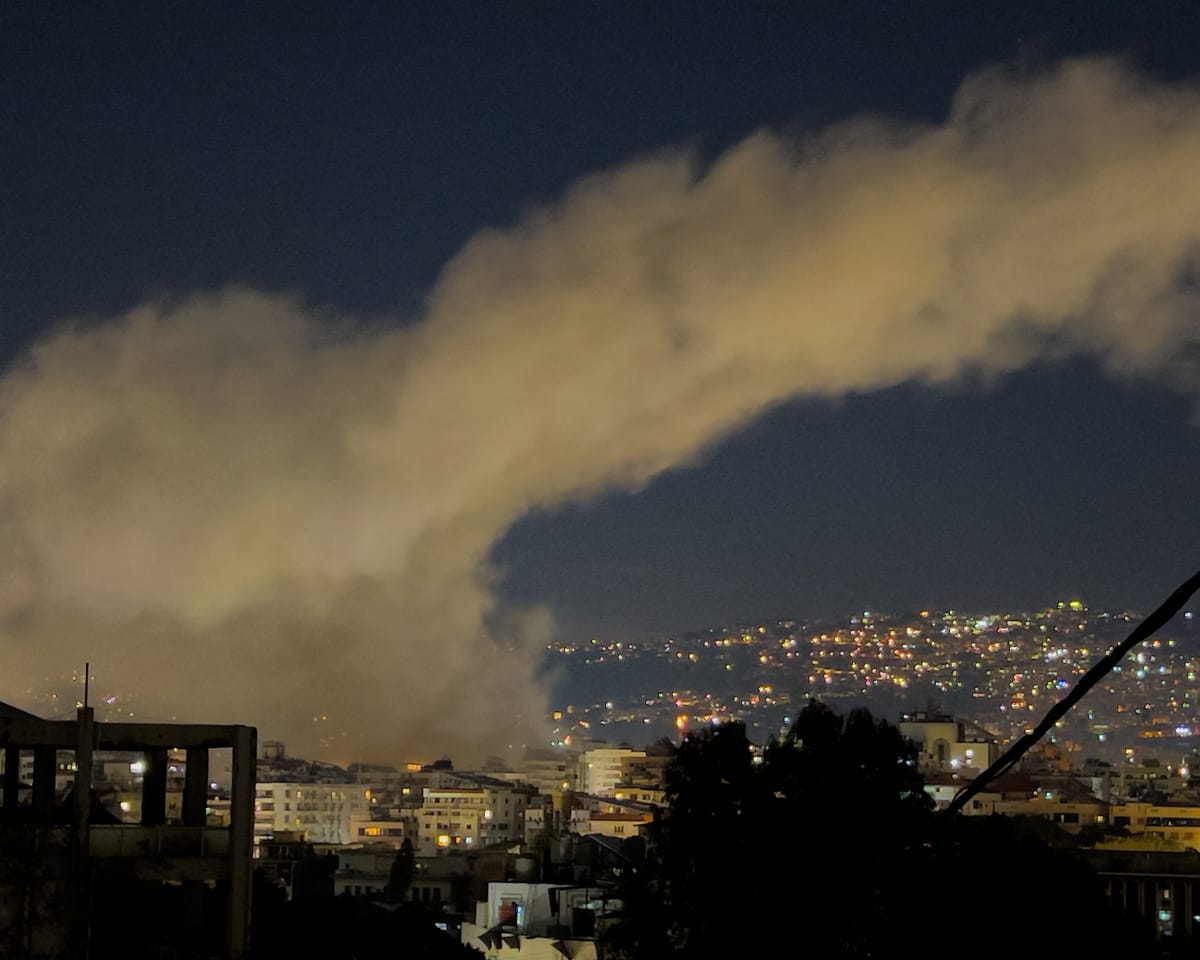
Israel launched a series of intense air attacks on the Hezbollah‑held southern districts of Beirut on Monday, following the Iran‑aligned faction’s launch of missiles and drones toward Israel in response to the death of Iran’s Supreme Leader Ali Khamenei.
Beirut’s inhabitants were roused at around 3 a.m. by the sound of roughly a dozen explosions as Israeli forces hit three separate sites in the city’s southern outskirts.
The blasts rattled windows throughout the capital and could be heard for miles; residents of southern Lebanon reported hearing warplanes and bombs as strikes swept across large portions of the south, bringing down structures in villages near Tyre.
In a communiqué, Hezbollah claimed it had fired a volley of missiles and drones at the Mishmar al‑Karmel air‑defence installation near Haifa around midnight, describing the action as “retaliation” for Khamenei’s killing and “defence of Lebanon and its people.”
Israel answered a few hours later, targeting what it said were Hezbollah positions in south Lebanon, the Bekaa Valley and the Beirut suburb of Dahieh, and said the Dahieh strikes eliminated several senior Hezbollah commanders.
“Hezbollah launched an overnight campaign against Israel and bears full responsibility for any escalation. Any adversary that endangers our security will pay a steep price,” said Israeli chief of staff Lt Gen Eyal Zamir in a statement.
An Israeli military spokesperson ordered the evacuation of 55 villages and towns across Lebanon, urging residents to stay at least one kilometre from the sites, which were described as housing “Hezbollah operatives and facilities.” Earlier on Sunday, the Israeli army announced the mobilisation of 100,000 reservists, many positioned along the Lebanese border.
Crowds began leaving Dahieh on foot and by car, while queues of vehicles formed outside fuel stations in the southern city of Tyre as people headed north. The routes from Dahieh to the capital became clogged with scooters and cars navigating rubble and debris left by the earlier bombardments, and motorists in the south travelled northward on both sides of the highway to avoid the congestion.
Footage showed the tops of Dahieh buildings alight, with charred car shells scattered at the bases of the collapsed structures. As residents hurried to escape, witnesses said they saw rocket salvos arcing from southern Lebanon toward Israel, appearing to be Hezbollah artillery fire.
The memory of the 13‑month conflict between Israel and Hezbollah that concluded in 2024 loomed large over the Lebanese populace, prompting swift fears that Dahieh, the Bekaa Valley and extensive parts of the south could become uninhabitable as they had been then. Israeli forces bombed those zones daily during the war, resulting in nearly 4,000 deaths and the displacement of about a million people.
Read next
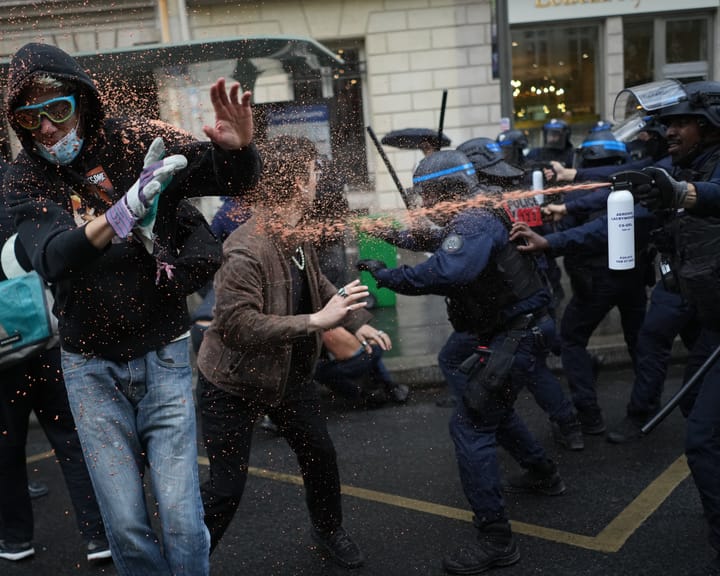
French Minister Refutes Police Brutality Claims Amid Ongoing Student Protests Across France – Europe Live
In recent developments, French Interior Minister Laurent Nuñez has refuted claims of excessive police force during the ongoing student protests in France. He emphasized that police action is only taken in response to violence or property damage. Addressing lawmakers, Nuñez described the protests as "unprecedented" due to the
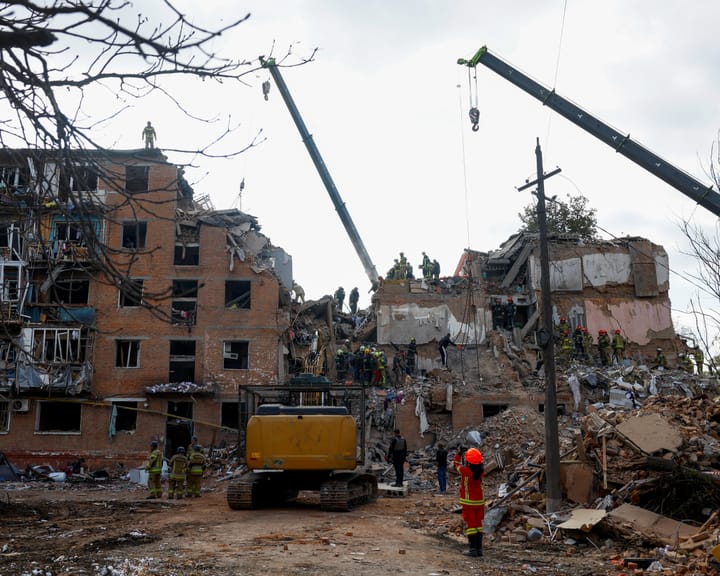
Ukraine Reports Russia Bombed Apartment Building Coinciding with Putin's Birthday
Volodymyr Zelenskyy has accused Russia's military of deliberately targeting civilians and bombing residential buildings as a grim gift for Vladimir Putin, who celebrates his 74th birthday on Wednesday.
Ukraine’s president described Russia’s overnight drone and missile strikes, which killed at least 24 people, as “despicable.” “The

Fears of 'another coup d'état' grow as Flávio Bolsonaro vows to 're-democratise' Brazil
Flávio Bolsonaro, the leading candidate for Brazil's presidency, has promised to "re-democratise" the nation, raising concerns about potential authoritarian governance should he win. Brazil transitioned to democracy in the 1980s after a harsh 21-year dictatorship, a period lauded by Flávio's father, former