
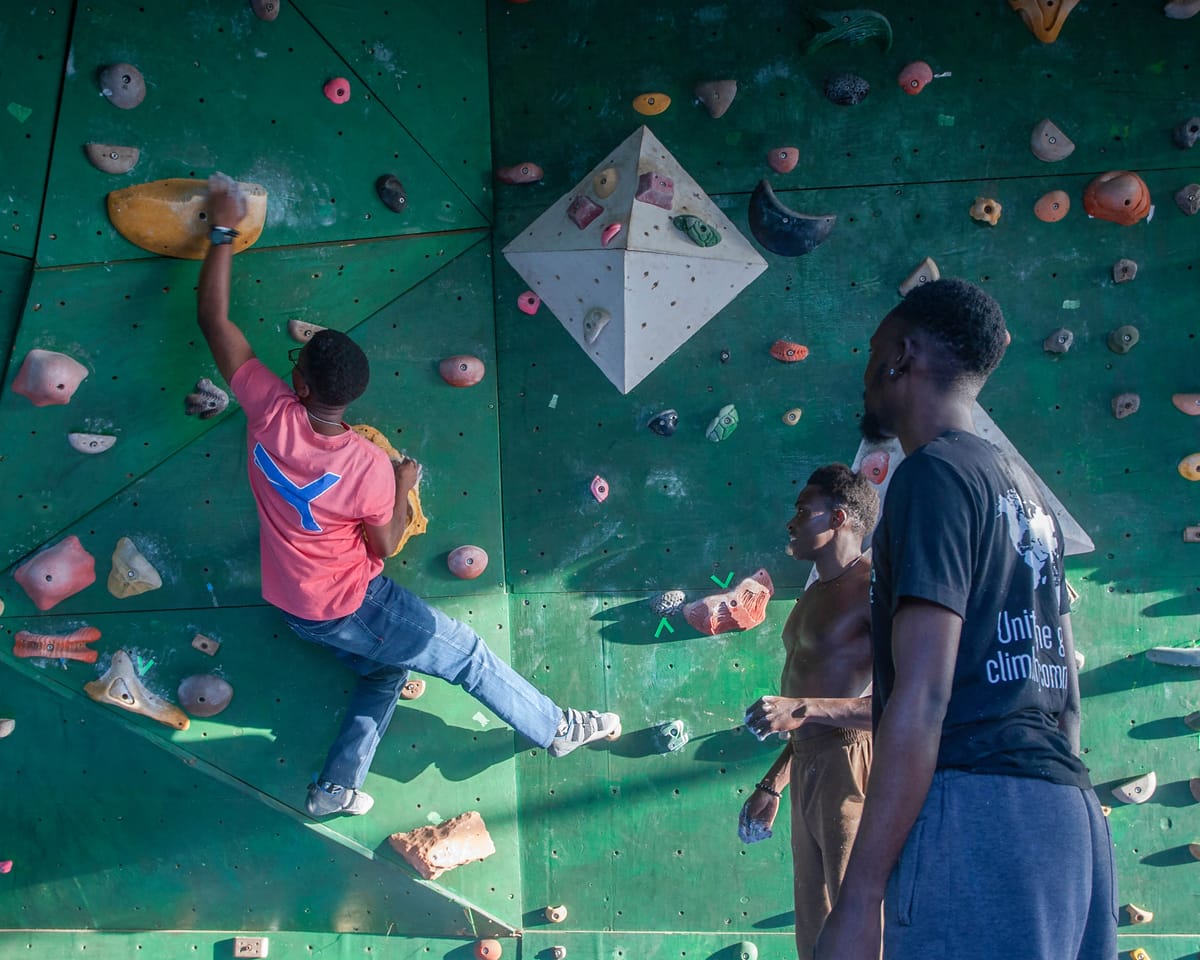
Emmanuel Jekete was attending secondary school in 2019 when his mother’s employer, a Canadian, invited him to try a climbing wall in his garden in Lilongwe, Malawi’s capital. Jekete initially found it simple to scale the plastic holds on the vertical wooden board. But when the wall extended at a 25-degree angle, he faced difficulty—and was instantly captivated.
Now, Jekete is among a growing number of young Malawians who have embraced climbing and the camaraderie around it, hoping to see the sport gain traction in the southern African nation.
“I was one of the first Malawians to try both indoor and outdoor climbing, so I thought, ‘I’m going to be one of the pioneers—I’ll definitely make my mark in this sport,’” the 23-year-old said during an interview at the Climb Centre, an outdoor facility managed by a local climbing group in Lilongwe.
Jekete climbs three times a week with friends on bouldering walls—angled wooden structures with plastic grips that require no ropes. Once or twice a month, they venture outdoors to climb cliffs using safety ropes.
“Even on a stressful day, when I’m at the wall, I forget everything bothering me,” says Jekete, who works as a mining company assistant. “It’s like therapy.”
Moses Kalirani, who started climbing with Jekete in 2019 while they were classmates, worked as a coach and gym manager until recently returning to studies.
“I love the sense of community—being part of something meaningful. You’re like a cog in a machine; without you, progress stalls,” he remarks.
Kalirani and his friends hope more Malawians will take up climbing rather than see it as an activity for foreigners. “I’d love for the local community to grow because it’s mostly dominated by people from abroad,” he says.
The climbing initiative was established in 2018 by Tyler Algeo, the Canadian who employed Jekete’s mother. In 2019, the climbing wall was relocated from Algeo’s residence to its current spot.
Access operates on a flexible payment system, with a suggested monthly donation of 35,000 Malawian kwacha (£15) for gym use and additional fees for outdoor excursions. Given Malawi’s economic challenges, most contributions come from international climbers and wealthier locals, while others pay less or volunteer.
All gear, from anchors fixed on cliffs to harnesses, ropes, and shoes, is donated from abroad. Support also comes from an international nonprofit based in Colorado.
Ed Nhlane, who ran a tour company before discovering climbing through a friend in 2019, says he never turned back.
The pandemic reminded Malawi’s climbers to become more self-reliant, says Nhlane, 34. Efforts are underway to boost local participation and infrastructure for the sport.
Read next
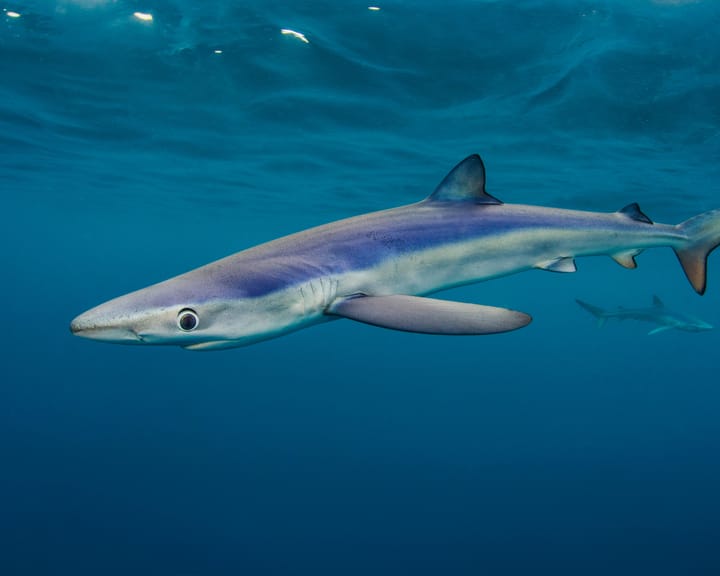
Three-year project lifts lid on Britain’s little-understood shark species
Shark Scientists Turn to Anglers for Answers on Vulnerable Species
Dr Lucy Hawkes, associate professor at the University of Exeter, is co-leading a new three-year project to study some of England’s most vulnerable shark species. “I like the porbeagle, which looks like a baby great white shark,
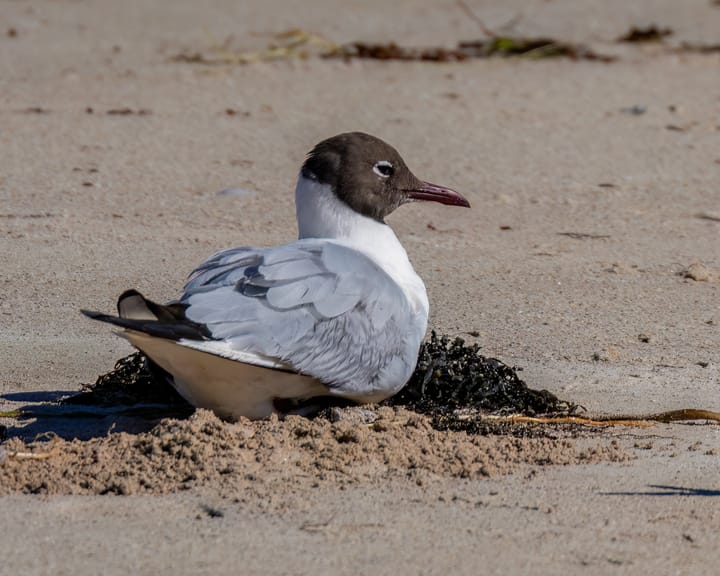
Rare gull drifts thousands of kilometres to Australia, making birdwatching an 'extreme sport'
A rare seabird has created excitement among birdwatchers after appearing on the coast of Western Australia, thousands of kilometers away from its typical migration route.
The black-headed gull, a species that generally migrates between Asia and Europe, was spotted in Geraldton. The sighting was first shared on a local

Why U.S. Cities Prioritizing Cars Lag Behind Global Peers in Public Transit
The only train station in Houston, the US’s fourth‑largest city and one of the fastest‑growing conurbations in the country, is a diminished, morose sight. Intercity trains arrive at this squat, shed‑like Amtrak building, which cringes in the shadows of roaring highways, just three times a week.