
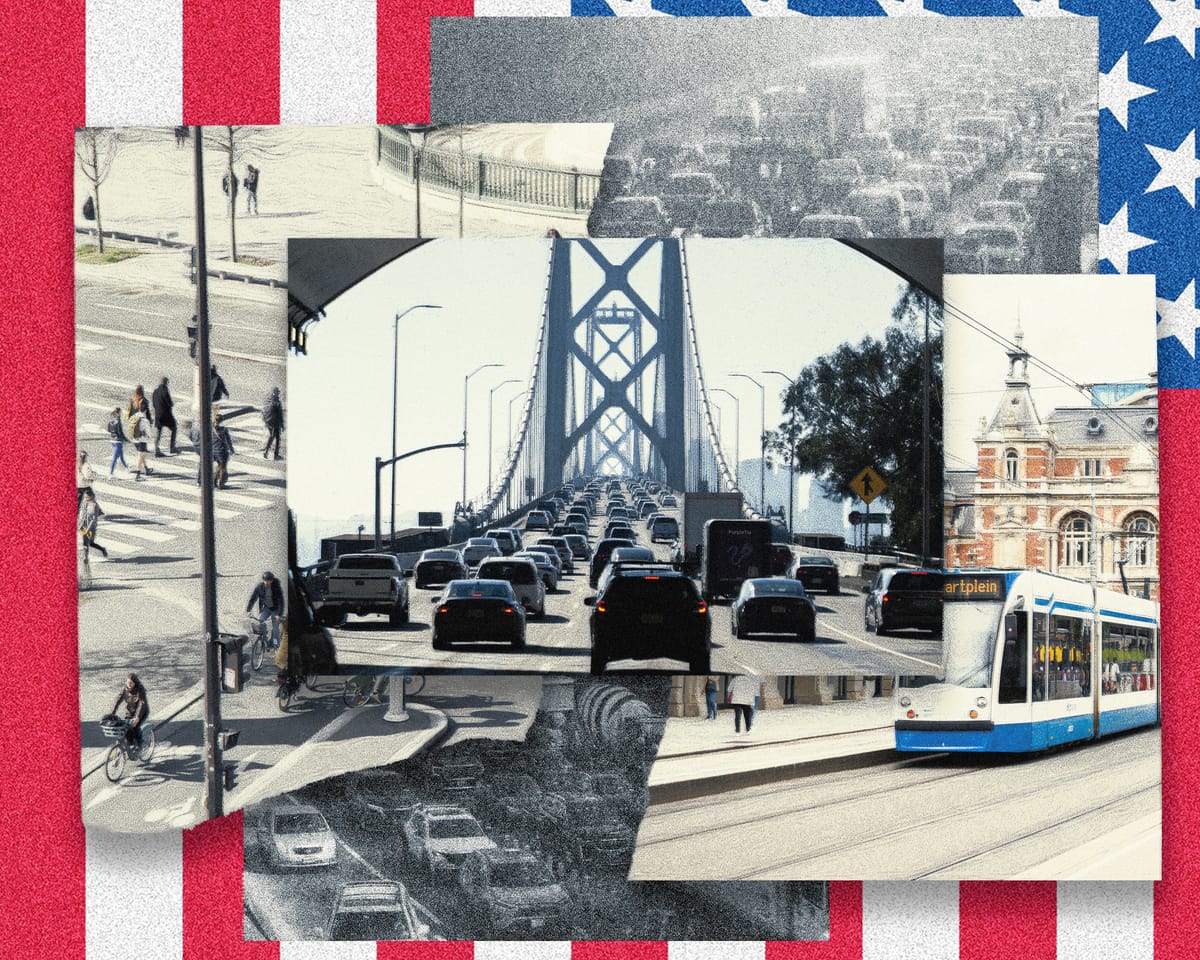
The only train station in Houston, the US’s fourth‑largest city and one of the fastest‑growing conurbations in the country, is a diminished, morose sight. Intercity trains arrive at this squat, shed‑like Amtrak building, which cringes in the shadows of roaring highways, just three times a week.
That such a meagre train station could ostensibly serve a metropolitan area of about seven million people is a stark symbol of how the sprawling, car‑dominated US has fallen behind cities around the world where people can rely on extensive, high‑quality public transport to get around.
The gap is now so large that for major American cities to bring their public transit up to “world‑class” status, it would cost an enormous $4.6tn, involving 7,500 miles of new dedicated infrastructure for trains and buses over the next 20 years, a recent report found.
American cities languish badly compared with global leaders such as Sydney, Hong Kong and Barcelona, based on the number of transit vehicles per 100,000 residents, according to the Transportation for America study.
How people get around matters in terms of convenience, but also human and planetary health. Globally, transportation accounts for about a third of all planet‑heating emissions, with the sector’s emissions doubling since 1990 amid a growing thirst for oil to power more cars, planes and ships.
With global demand for passenger transport expected to nearly triple by 2050, an expansion of efficient, affordable public transport is critical in helping address the climate crisis and toxic air pollution. The need for better public transit has been underscored, too, by recent soaring gasoline costs that have hit car drivers around the world.
The research defines world‑class transit as being an “accessible, frequent, reliable and convenient alternative to automotive travel” and bases its ranking on transit vehicles given the large variance in fares and funding among countries.
Houston has just 16 transit vehicles per 100,000 people via its bus and light rail system, the study says, compared with 118 in Paris – a city with a similar population that has embraced cycling and walkability. Detroit has eight, Indianapolis has seven and Oklahoma City has just six. Frisco and McKinney, a combined urban area of 500,000 people near Dallas, has none at all. By comparison, Vienna has 120 buses and trains per 100,000 residents, while Montreal has 107.
Only New York City, boasting the premier subway system in the US, approaches world‑class standards, but still has fewer transit vehicles, proportionally, than Tehran. Ridership per capita in New York, the most walkable, transit‑rich American city, lags below that of Bengaluru, Santiago and Warsaw, according to a separate 2023 study.
Across the world, too, there are large disparities. In terms of per capita use, places in east Asia such as Hong Kong and Taipei rank highly, while several big African cities such as Johannesburg and Lagos struggle.
Read next

Three-year project lifts lid on Britain’s little-understood shark species
Shark Scientists Turn to Anglers for Answers on Vulnerable Species
Dr Lucy Hawkes, associate professor at the University of Exeter, is co-leading a new three-year project to study some of England’s most vulnerable shark species. “I like the porbeagle, which looks like a baby great white shark,

Rare gull drifts thousands of kilometres to Australia, making birdwatching an 'extreme sport'
A rare seabird has created excitement among birdwatchers after appearing on the coast of Western Australia, thousands of kilometers away from its typical migration route.
The black-headed gull, a species that generally migrates between Asia and Europe, was spotted in Geraldton. The sighting was first shared on a local
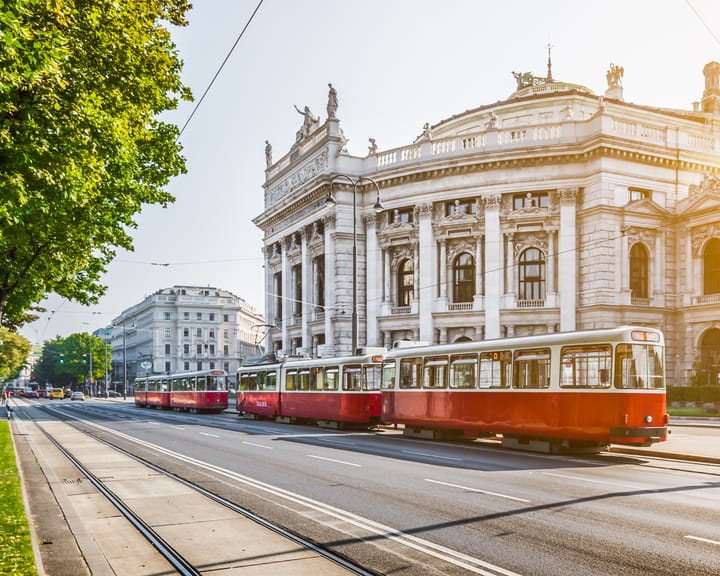
Vienna’s Public Transit Leads Globally – Yet Cars Still Dominate
When Leonore Gewessler rides Vienna’s punctual underground trains and street‑level trams, she values the convenience, low cost and the time she “receives as a gift” rather than wasting it in traffic jams. Yet Austria’s former climate and transport minister recognises that cars still dominate the city’s