
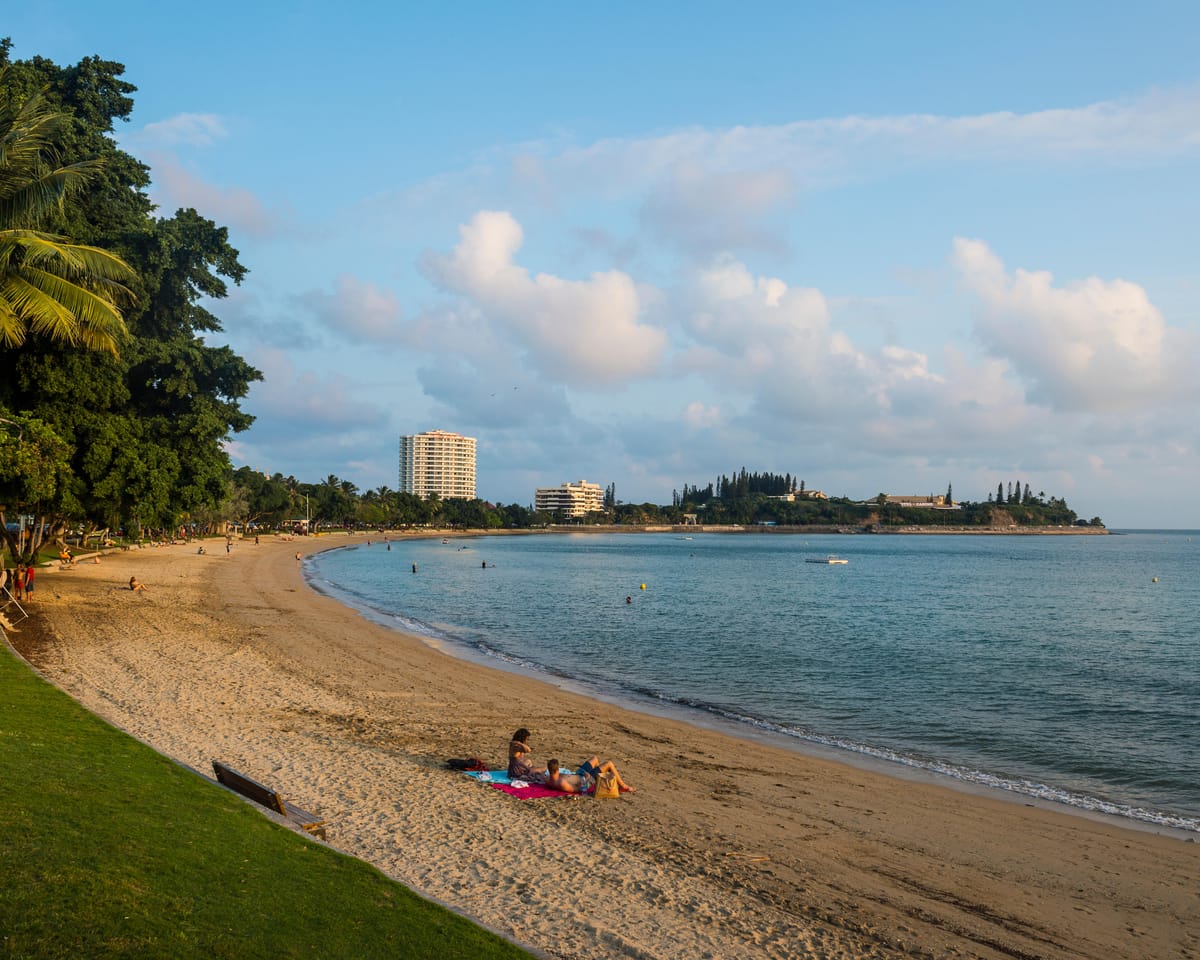
Several beaches in New Caledonia have been closed to swimming and officials have started a shark cull near the capital, Nouméa, following a deadly attack in a well‑known tourist area – sparking a court challenge to halt the measure and reviving discussion on public safety and marine preservation.
The cull commenced on 23 February, after a New Caledonian man using a wing‑foil in a leisure zone was assaulted and died. Early inquiries suggest the assault was carried out by a tiger shark at least three metres long.
The operation focuses on tiger and bull sharks off Nouméa’s shoreline, an area heavily frequented for swimming, boating and water sports by locals and visitors.
Officials argued the measure was required to “protect human lives” amid rising shark threats. Swimming and other water activities beyond designated zones have been prohibited along a 300‑metre stretch of coast, with the ban set to stay until the cull concludes on Wednesday.
Managing shark risk has become a contentious topic throughout the French Pacific territory, where local elections are scheduled for this month.
Nouméa’s mayor, Sonia Lagarde, defended the policy, dismissing the label “cull” in favor of “regulation” during a council meeting on 25 February.
“When unusually large sharks come close to shore, the issue of regulation must be raised,” Lagarde said. “The risk exists.”
On Monday, a Nouméa court was set to hear a petition from the marine‑conservation group Ensemble Pour La Planète (EPLP) seeking to halt the shark cull.
“No recent independent scientific research shows that shark culls lower attack risk,” the group stated, noting that the species targeted are legally protected in waters off Nouméa.
EPLP won a comparable court case against a shark cull in 2023. Authorities had initiated culls after a string of attacks, among them the fatal stabbing of an Australian tourist in February 2023. That effort netted 127 sharks, primarily tiger sharks, but the court subsequently ordered the program halted, calling it “disproportionate”.
Since the latest cull began, officials report catching seven tiger sharks and one bull shark. Individuals under 2.1 metres are being released.
Lagarde argued the measure was needed due to what she described as a marked rise in near‑shore shark sightings, noting that large sharks are now seen in zones regularly used for swimming and surfing.
She also contended that alternatives like permanent drone monitoring or extra exclusion nets would be too expensive and technically demanding.
“New Caledonia is not Australia. Such systems are prohibitively costly, and we simply cannot fund them,” she said.
The main pro‑independence coalition has denounced the cull and urged the adoption of non‑lethal prevention measures.
Read next

French Minister Refutes Police Brutality Claims Amid Ongoing Student Protests Across France – Europe Live
In recent developments, French Interior Minister Laurent Nuñez has refuted claims of excessive police force during the ongoing student protests in France. He emphasized that police action is only taken in response to violence or property damage. Addressing lawmakers, Nuñez described the protests as "unprecedented" due to the

Ukraine Reports Russia Bombed Apartment Building Coinciding with Putin's Birthday
Volodymyr Zelenskyy has accused Russia's military of deliberately targeting civilians and bombing residential buildings as a grim gift for Vladimir Putin, who celebrates his 74th birthday on Wednesday.
Ukraine’s president described Russia’s overnight drone and missile strikes, which killed at least 24 people, as “despicable.” “The

Fears of 'another coup d'état' grow as Flávio Bolsonaro vows to 're-democratise' Brazil
Flávio Bolsonaro, the leading candidate for Brazil's presidency, has promised to "re-democratise" the nation, raising concerns about potential authoritarian governance should he win. Brazil transitioned to democracy in the 1980s after a harsh 21-year dictatorship, a period lauded by Flávio's father, former