
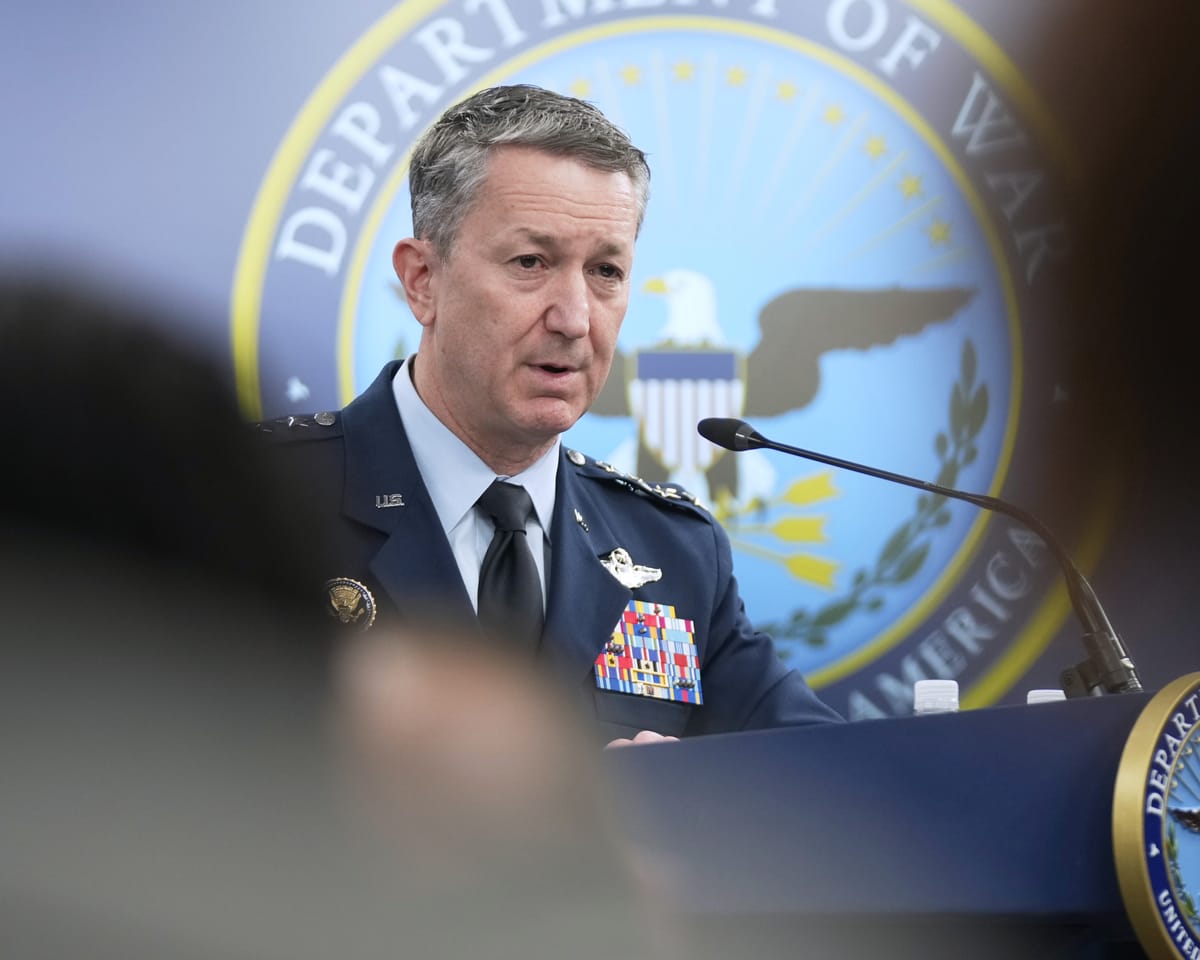
Top military leaders told legislators in a closed‑door briefing on Tuesday that they may not be able to intercept every Iranian drone aimed at U.S. bases and assets in retaliatory strikes, according to two sources familiar with the discussion.
The briefing, headed by the chairman of the Joint Chiefs of Staff, Gen. Dan Caine, noted that Iran has been fielding thousands of one‑way attack drones. While U.S. forces can neutralise the great majority of the onslaught, some will inevitably get through.
Consequently, the officials said in a classified session for Capitol Hill lawmakers that the United States is concentrating on destroying the drones’ launch points and the associated conventional missiles as swiftly as possible. The sources spoke on condition of anonymity to protect sensitive information.
In response to U.S. attacks, Iran has been firing low‑cost, one‑way Shahed drones. Their low‑altitude, slow‑speed flight profile makes them harder for traditional air‑defence systems to track than ballistic missiles.
A senior administration official described Iran’s apparent drone tactic – to force the United States to expend its most advanced Patriot and THAAD interceptors – as flawed and ineffective, noting that the U.S. has been shooting down the drones with a variety of methods.
Nevertheless, leading Democrats in Congress have voiced worries that the United States is depleting its interceptor inventory while countering Iranian ballistic missiles. Caine recognised that concern, a person familiar with the matter said, even as he publicly affirmed confidence in current stockpiles.
“We have ample precision munitions for the mission, both offensively and defensively,” Caine told reporters at the Pentagon on Wednesday morning, though he offered no further specifics.
The high tempo of engagements has been costly. In the opening days of the conflict, U.S. expenditures ran about $2 billion per day; that figure has fallen to roughly $1 billion and is expected to decline further as the war proceeds, according to a source familiar with a preliminary Department of Defense assessment.
A White House spokesperson did not immediately respond to a request for comment, and a Joint Chiefs of Staff spokesperson declined to speak, citing operational security.
On Monday night, former President Trump posted on social media that the United States could maintain its firing rate indefinitely, claiming the stockpile of “medium and upper‑medium‑grade” munitions was “virtually unlimited.” He added, however, that weapons at the “highest end” were “not where we want them to be.”
At a Wednesday press briefing, White House press secretary Karoline Leavitt said the United States possessed more than enough arms to sustain a prolonged conflict with Iran and suggested Trump’s comment was aimed at criticizing the Biden administration’s decision to supply weapons to Ukraine.
Read next

Tokyo tourist hotspot outlaws short-term rentals amid complaint surge
Shinjuku Ward, Tokyo, has moved to ban short-term rental accommodations in residential areas and near schools and important cultural sites, following a slew of complaints about visitor behaviour. The decision, to be enacted through a local ordinance, marks the latest sign that Japan’s patience with mass tourism is

Canada implements retaliatory US tariffs as trade dispute intensifies
Canada’s retaliatory tariffs on about $20 billion worth of American imports took effect at 12.01am on Tuesday, ranging from 15% to 50% and applying to steel, dairy, appliances, agricultural equipment, pulp and paper, and electronics. The measures, a response to the United States’ 50% tariff on $20 billion

Prosecutor general resigns amid political turmoil in Kyiv during Ukraine war
Ukraine’s prosecutor general Ruslan Kravchenko resigned amid corruption accusations after anti-graft officers searched his offices at the weekend. He called the allegations “completely unsubstantiated” and denied wrongdoing. The National Anti-Corruption Bureau (NABu) and Specialised Anti-Corruption Prosecutor’s Office (Sapo) announced Saturday they uncovered a money-laundering