
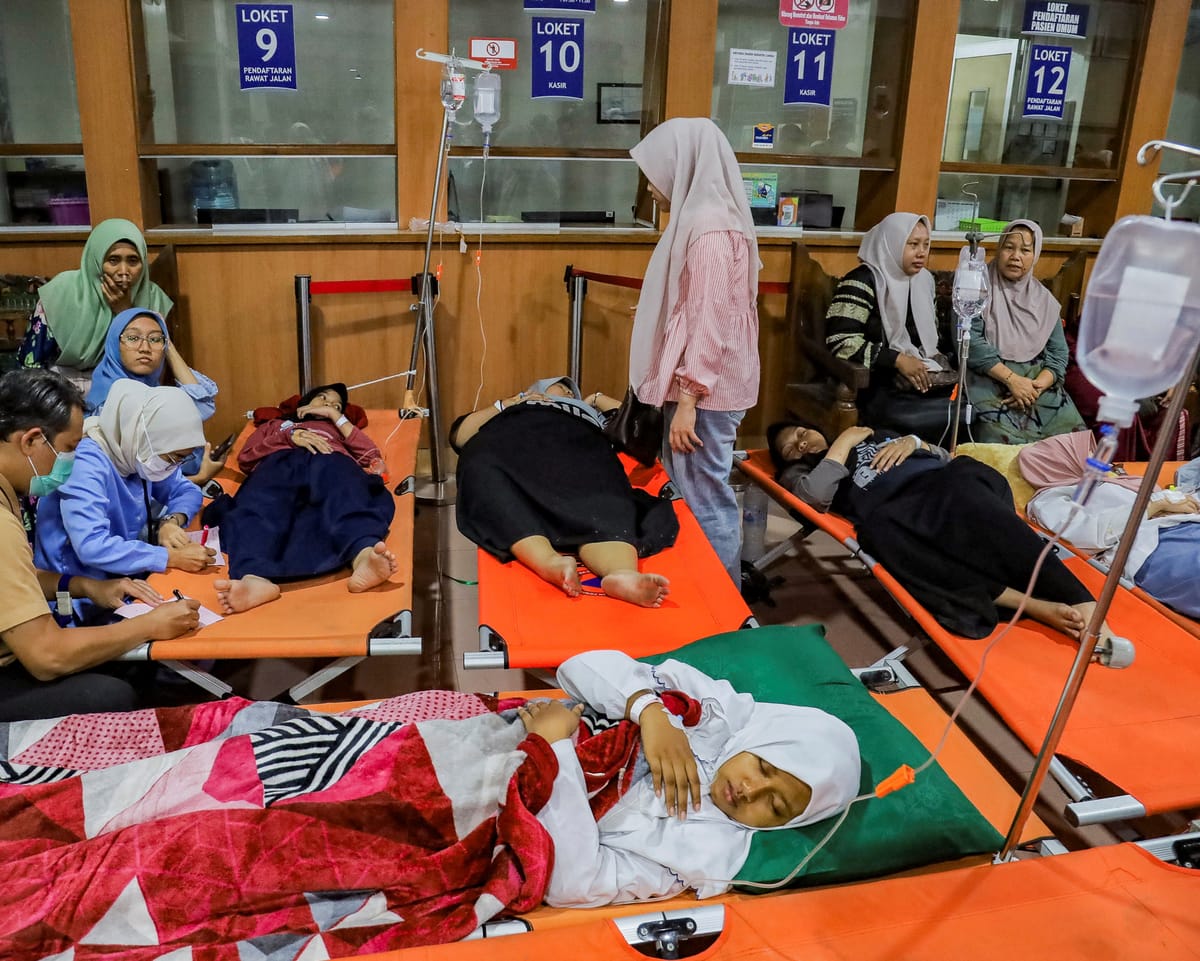
More than 800 Indonesian students and teachers have fallen ill in separate incidents of food poisoning linked to President Prabowo Subianto’s free-meals program this week, with dozens hospitalised after being struck with nausea, vomiting and stomach aches.
The president’s free-meals program was launched last year to tackle malnutrition, with meals distributed to more than 62 million students and pregnant women across the country.
But the multi-billion policy has been plagued by controversy, including recurrent cases of food poisonings, alleged corruption, leadership changes, and complaints that it is a heavy burden on the budget.
This week 566 students fell ill after eating the government’s free meals in Sidoarjo, East Java, with 88 of them hospitalised. In Nganjuk, also in East Java, 49 students fell ill on Wednesday after eating a free meal of fried rice, chicken and tofu.
Another 237 students and teachers in Agam, West Sumatra, also fell ill after their meals on Wednesday, according to local media reports. Eggs were suspected to be the cause.
The regional government in Agam has reportedly suspended distributing the meals, pending an evaluation. The kitchen linked to the Sidoarjo case was also suspended on Wednesday.
In the past year many Indonesians have complained about the program, writing on social media about maggots in tempeh, shards of glass in rice, and food trays washed in dirty water.
Overall, 37,600 people are believed to have suffered food poisoning linked to the free meals as of 8 Aug., according to Network for Education Watch, a non-governmental watchdog.
Charles Honoris, a lawmaker and member of the sole political party outside the governing coalition, described the situation as a “failure of the system”.
The National Nutrition Agency has blamed previous cases of food poisoning on improper food storage and late delivery of cooked meals.
Prabowo has also played down the scale of the problem, saying that of more than a billion meals served, poisoning cases represented just “0.0017% – quite a proud achievement”. He also said the policy had improved school attendance and achievement.
In July, a survey by pollster Saiful Mujani Research and Consulting showed only a third of people were satisfied with the scheme, with the reported cases of poisoning cited as a major reason.
Despite the mounting criticism, Prabowo told parliament last month the program would be continued, and promised that improvements would be made.
“We start with the most fundamental aspect: nutrition. Our children must not study while hungry. No child can learn effectively if they are hungry,” he said.
“We cannot accept a situation where one in four Indonesian children suffers from stunting,” he continued, “We cannot accept that.”
Read next
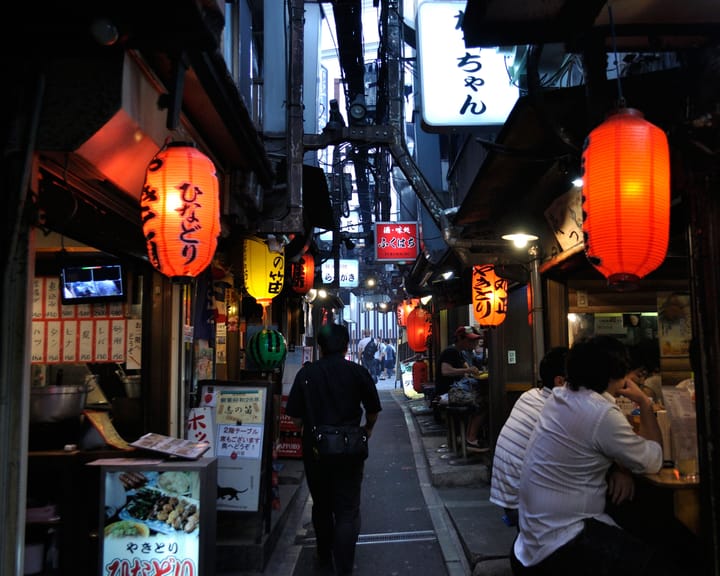
Tokyo tourist hotspot outlaws short-term rentals amid complaint surge
Shinjuku Ward, Tokyo, has moved to ban short-term rental accommodations in residential areas and near schools and important cultural sites, following a slew of complaints about visitor behaviour. The decision, to be enacted through a local ordinance, marks the latest sign that Japan’s patience with mass tourism is
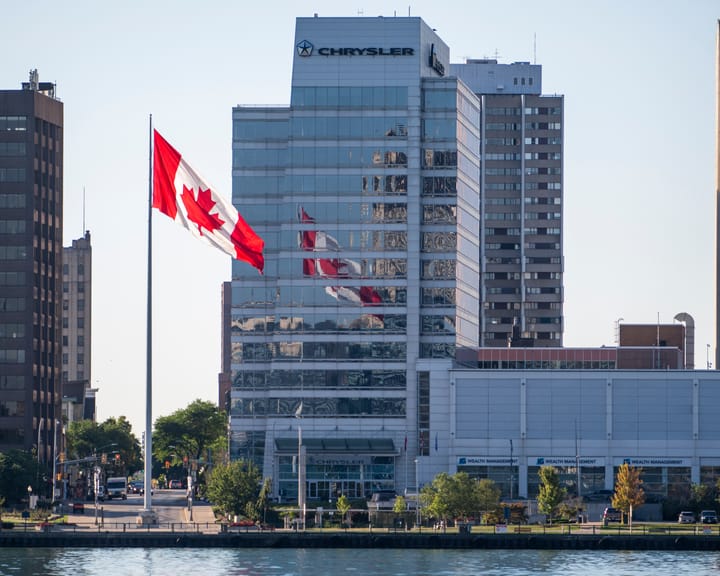
Canada implements retaliatory US tariffs as trade dispute intensifies
Canada’s retaliatory tariffs on about $20 billion worth of American imports took effect at 12.01am on Tuesday, ranging from 15% to 50% and applying to steel, dairy, appliances, agricultural equipment, pulp and paper, and electronics. The measures, a response to the United States’ 50% tariff on $20 billion

Prosecutor general resigns amid political turmoil in Kyiv during Ukraine war
Ukraine’s prosecutor general Ruslan Kravchenko resigned amid corruption accusations after anti-graft officers searched his offices at the weekend. He called the allegations “completely unsubstantiated” and denied wrongdoing. The National Anti-Corruption Bureau (NABu) and Specialised Anti-Corruption Prosecutor’s Office (Sapo) announced Saturday they uncovered a money-laundering