
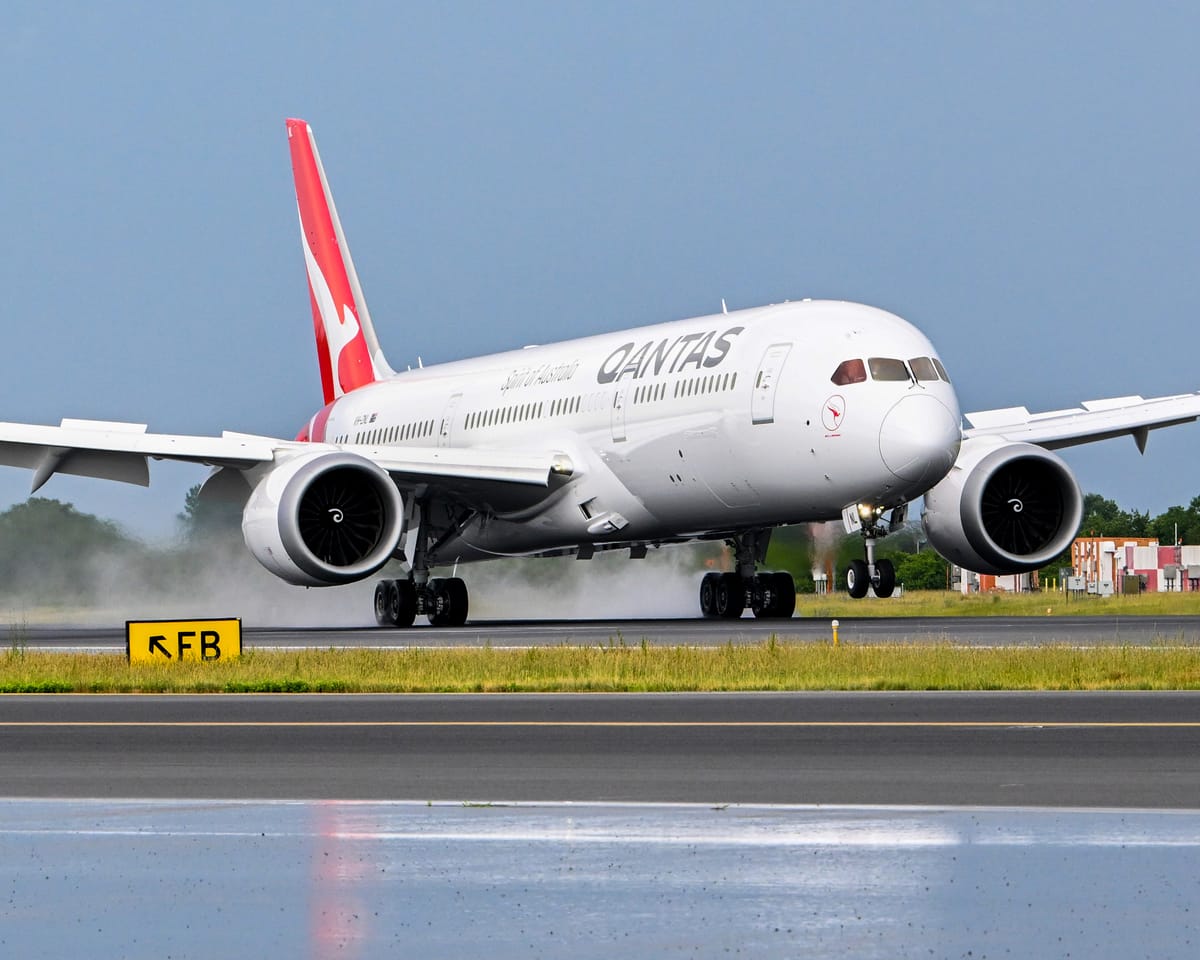
Qantas had to ground a plane in Rome after discovering bedbugs on the aircraft, which was en route from Perth. The insects were found in the front of the economy section of a Boeing 787 Dreamliner, as it traveled for the QF5 flight on October 9th, according to an informed source.
Bedbugs are small insects that feed on mammalian blood, including humans, and are notoriously difficult to eliminate. Following their discovery, as initially reported by a local news outlet, the aircraft was taken out of service for a thorough cleaning upon its arrival in Rome. This resulted in the cancellation of the Qantas Rome to Perth service on October 10th.
A spokesperson for Qantas explained that the flight cancellation was necessary to allow engineers and maintenance teams to conduct a deep clean after identifying an issue with a small number of economy seats. The airline issued a sincere apology to affected customers for the inconvenience caused.
Those impacted by the cancellation were provided with accommodations and rebooked on alternative flights within 48 hours of their initial departure, as stated by Qantas. The airline emphasized that its aircraft cabins are cleaned regularly to a very high standard and undergo disinfection every 50 days as a preventive measure.
Prof Michelle Power, a parasitologist at Macquarie University, suggested that the bedbugs were likely brought onto the plane via a passenger's luggage or clothing, subsequently escaping into the cabin. She noted that bedbugs are often associated with travel, as they can infest hotel rooms and move into luggage due to their attraction to the smell of human clothes. Although bedbugs are flightless insects, they can hitch rides on planes.
Power pointed out that while bedbugs are not dangerous, their bites can be itchy and irritating. They are difficult to eradicate and can hide in crevices for extended periods without feeding. She highlighted the socioeconomic aspects of bedbug infestations, noting that wealthier travelers might inadvertently spread them, while those experiencing health inequities may struggle to afford the necessary treatments to eliminate them.
Read next

IMF: Global Economy at Risk of Straining Resilience Limits Soon
The International Monetary Fund (IMF) has issued a warning that the global economy may soon approach its resilience limits due to dwindling emergency oil reserves and strained government budgets. In its biannual World Economic Outlook, the IMF noted that global growth has endured the Middle East conflict better than anticipated

Chip Stocks Fall After Broadcom CEO Compares AI Investment to 'Casino'
Shares in semiconductor companies declined on Tuesday following comments from Broadcom's CEO, who likened many AI investors to "casino" gamblers. Additionally, Chinese memory chip manufacturer CXMT announced advancements in new chip architecture.
South Korea's Kospi index dropped 6.25% as investors sold off chip

AI-Driven Market Turmoil Threatens Global Financial Stability, Warns IMF
The International Monetary Fund (IMF) has expressed concerns about potential instability in global financial markets due to the threat of an AI-related stock price decline. According to its latest Global Financial Stability Report, the IMF cites high valuations and increasing debt levels among AI companies as contributing factors to