
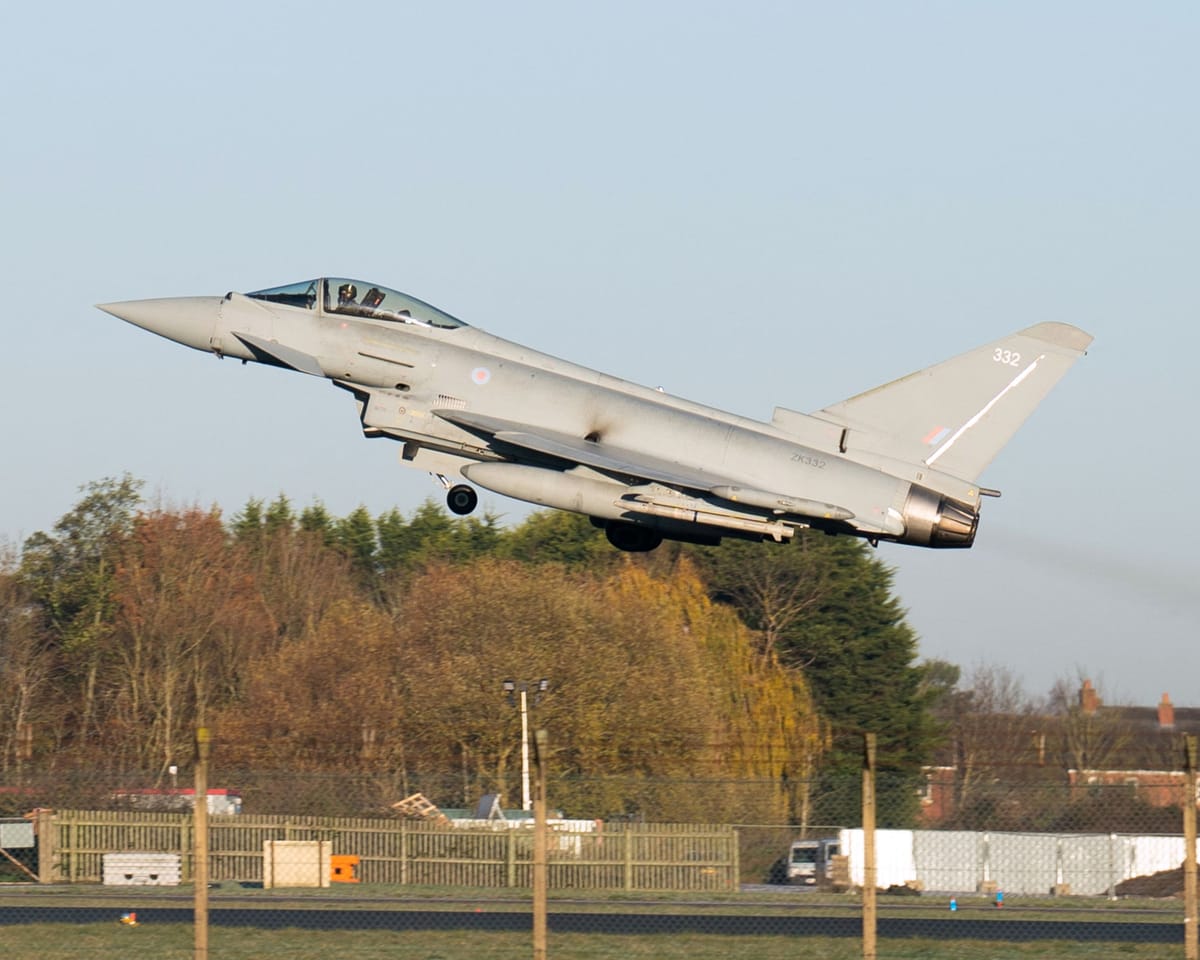
Rolls‑Royce’s chief executive said he would greet German participation in the development of Britain’s next‑generation fighter aircraft, contending it would generate additional work for the programme.
The aircraft, intended to succeed the Eurofighter Typhoon, is being developed jointly by the United Kingdom, Italy and Japan. Rolls‑Royce is supplying the powerplant, and the project has drawn renewed focus as the alternative Franco‑German fighter programme appears to falter.
Tufan Erginbilgiç, who has led the engineering firm since 2023, told CuriosityNews he would “definitely be open” to Germany entering the Global Combat Aircraft Programme (GCAP), also called Tempest.
“We already cooperate with Germany … we have a substantial presence in Dahlewitz, our plant near Berlin. In civil aerospace we supply business‑jet engines there,” he said. “The advantage of GCAP goes further. Each additional partner is likely to become a customer, since a participant cannot remain a partner without purchasing.
“The final call rests with governments, not with me or any private firm. Depending on geopolitical developments, German involvement remains a possibility.”
Speculation has grown about German entry into GCAP after tensions with France over their own joint fighter effort.
The Franco‑German Future Combat Air System (FCAS) has stalled amid a dispute between the two principal contractors: Dassault, France’s state‑backed fighter manufacturer, and Airbus’s defence division based in Germany.
In February, German chancellor Friedrich Merz indicated that the proposed aircraft did not match Germany’s requirements. He noted that the German armed forces do not require a nuclear‑capable fighter, whereas France does, stressing that the disagreement was “technical rather than political”.
Britain has indicated willingness to accept additional partners for GCAP, though analysts warn this could delay the fighter, slated to enter service in 2035. Ministers have already postponed signing a three‑nation contract for the programme, a delay linked to the pending release of a long‑overdue defence‑budget plan.
European governments are accelerating defence outlays in response to Russian threats, and former U.S. president Donald Trump has urged the continent to fund its own security.
Erginbilgiç noted that although the UK enjoys a “competitive edge” in certain military technologies, expanding spending and production capacity is vital for national security and for supporting commercial exports.
“The UK currently exports Eurofighters,” he said. “Without that capability, we could not sell Eurofighters. It is that straightforward. A defence programme should also be seen as a catalyst for economic growth and for advancing technology that can be applied to civil aerospace.”
Erginbilgiç made the remarks after Rolls‑Royce announced that its profit had risen 40 % in the previous year as its recovery gained momentum.
Read next
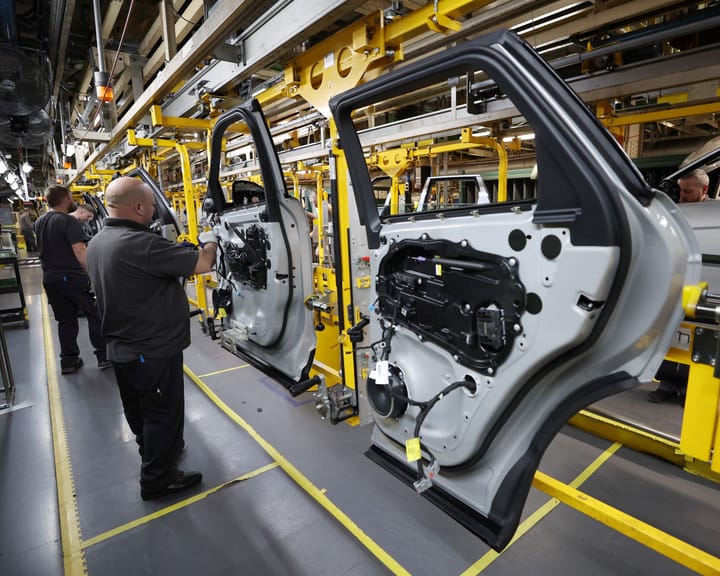
Jaguar Land Rover suppliers voice ‘everything is against us’ amid cutbacks
David Roberts, chair of Coventry-based Evtec, says the outlook for Britain’s automotive sector is grim, with “everything against us.” Evtec is a tier 1 supplier to Jaguar Land Rover, which this week announced 4,000 job cuts over two years despite chancellor John Healey’s attempt to talk
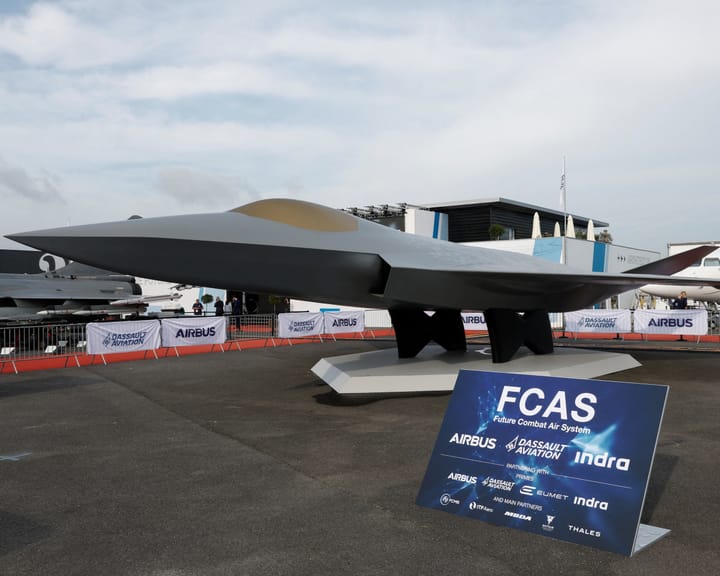
Europe’s fighter jet plans in disarray: what comes next?
When former ECB president and Italian PM Mario Draghi urged Europe to catch up economically with the US and China, defence collaboration was prescribed. No more should each nation build independent boats, tanks or jets; allies should share costs and technologies.
Europe stumbled at the first hurdle. German Chancellor Friedrich
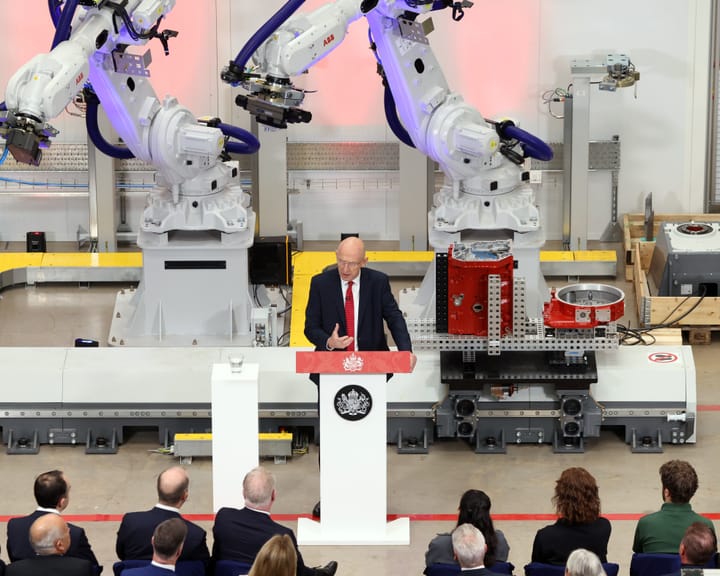
John Healey supports growth but insists Labour must be truthful about spending
John Healey has stated that his primary goal as chancellor will be to boost economic growth, while acknowledging that Labour must be straightforward about controlling public spending at next month's budget.
In his first major address since assuming the role in July, Healey said the leading focus of