
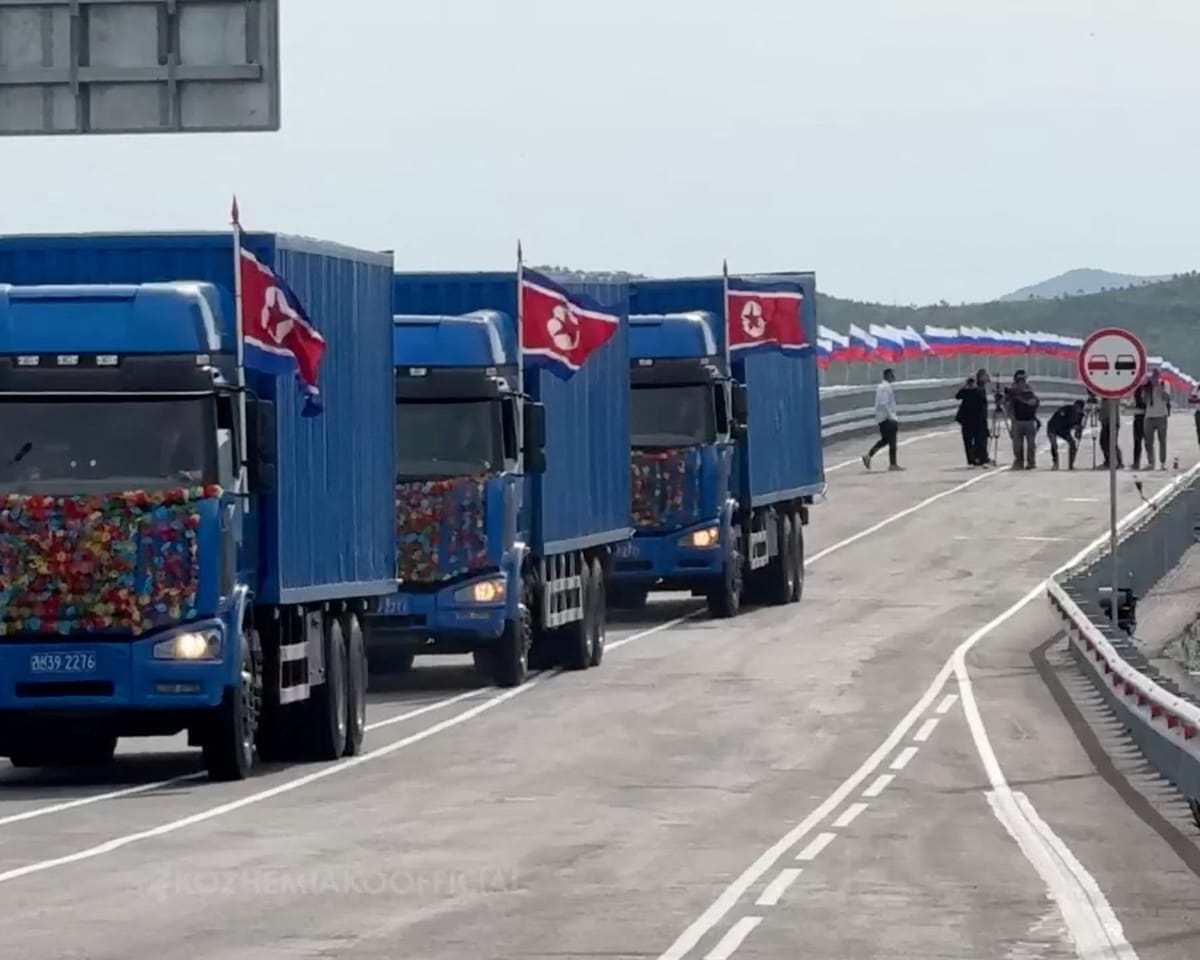
Russia and North Korea have opened the first road bridge across their shared border, in the latest sign of the rapidly deepening ties between the two countries since the start of the war in Ukraine.
The one-kilometre bridge spans the Tumen River between Khasan in Russia’s far east and Tumangang in North Korea, along a remote and sparsely populated stretch of the countries’ shared border just a few miles from the coast.
Speaking by video link during the bridge’s opening ceremony on Monday, Russia’s prime minister, Mikhail Mishustin, said the new crossing would spur development in a range of areas, including tourism, while creating new jobs.
“I am convinced that the expansion of cross-border transport infrastructure will provide a powerful impetus for the further development of trade, economic, scientific, technological and cultural cooperation,” Mishustin said.
The road bridge is named after the Soviet officer Yakov Novichenko, who is credited with saving North Korea’s founding leader, Kim Il-sung, from an assassination attempt by a pro-South Korean group.
After the opening ceremony, convoys of vehicles crossed the bridge from both sides.
Russia and North Korea are already connected by a railway bridge across the Tumen, as well as regular flights between Vladivostok and Pyongyang.
Ukrainian human rights groups have warned that the bridge may be intended to provide a discreet military logistics corridor between the two countries.
Truth Hounds, a Ukrainian human rights organisation, has described it as a likely future corridor for moving North Korean troops, construction brigades and military officials into Russia, while allowing Russian technology and resources to travel in the opposite direction with less risk of detection.
Ties between Moscow and Pyongyang have strengthened dramatically since Russia launched its full-scale invasion of Ukraine in 2022. North Korea has sent thousands of troops to Russia’s Kursk region to help Moscow repel a Ukrainian incursion launched there in 2024.
In return, Russia is believed to have provided North Korea with air-defence missiles, electronic warfare equipment, drones and spy-satellite technology, according to South Korean intelligence.
Russian and North Korean officials have also promoted North Korea as a holiday destination since the country reopened to Russian tourists in 2024, with thousands of Russians visiting its newly opened beach resorts and ski slopes since then.
Russia’s increasingly close embrace of North Korea has raised eyebrows even in Moscow.
During an interview with the Russian broadcaster RBC last month, a reporter asked Sergei Lavrov, Russia’s longtime foreign minister, how the country had “ended up” with just “two allies – North Korea and Iran”.
Lavrov pushed back against the premise, saying there was “nothing wrong” with such company.
At the same time, some of Russia’s traditional partners have shown growing frustration with Moscow’s continuing war in Ukraine and the fallout it has caused across the region.
During a meeting in July, Kazakhstan’s president, Kassym-Jomart Tokayev, a longtime ally of Moscow, told the Russian president, Vladimir Putin, that he was hearing from leaders of many countries who questioned why Russia was still waging the war.
“The nature of the conflict isn’t entirely clear for many, including us,” Tokayev told Putin.
Read next
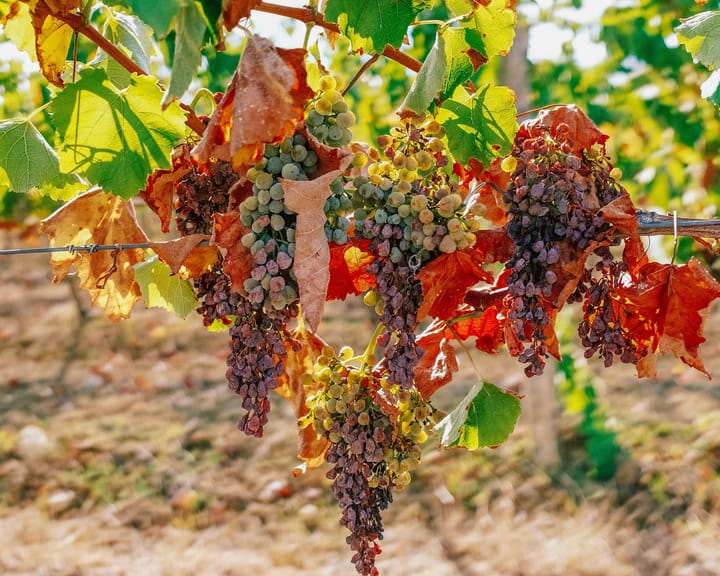
French Wine Harvest Set to Hit 30-Year Low Amid Severe Drought and Heat
French vineyards hit by severe drought and heatwaves are expected to report a 30-year low in wine production after the country's hottest ever recorded summer, according to the agriculture ministry.
Initial estimates suggest winemakers will produce just under 34m hectolitres from this year's harvest: a
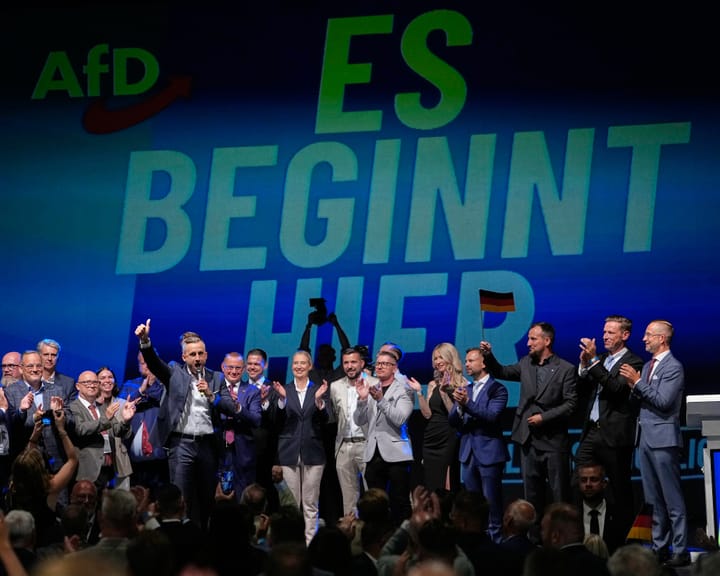
Europe's centrist powers alarmed as Germany's far-right AfD secures state victory, raising fears of rising nationalism
AfD Doubles Its Vote Share in Saxony-Anhalt as the German Centre Collapses
Alternative für Deutschland (AfD), a party that has used Nazi symbolism, distinguishes between “biological” and “passport” Germans, and has been rejected as too extreme by France’s far-right leader Marine Le Pen, nearly doubled its result
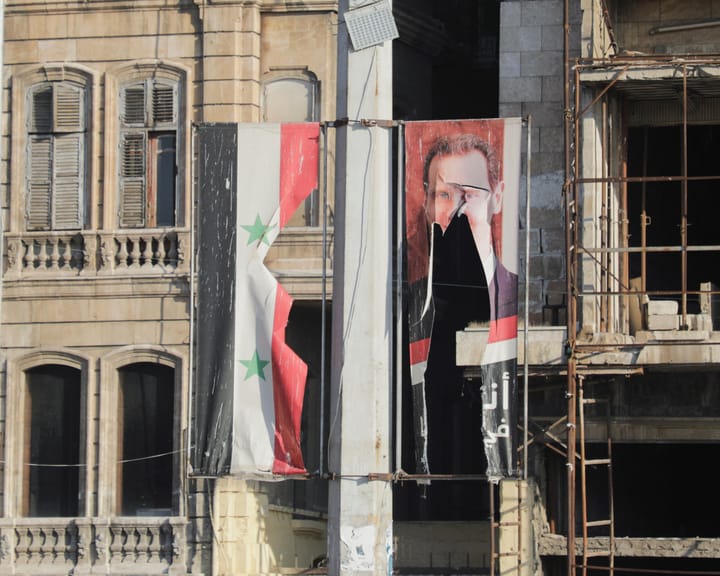
UN: Syrian reactor could have produced nuclear weapons if finished
A nearly complete nuclear reactor constructed covertly during the tenure of the ousted Syrian leader Bashar al-Assad would have had the capacity to produce fissile material potentially usable in nuclear weapons, the head of the UN nuclear watchdog disclosed.
Inspectors from the International Atomic Energy Agency (IAEA) visited two