
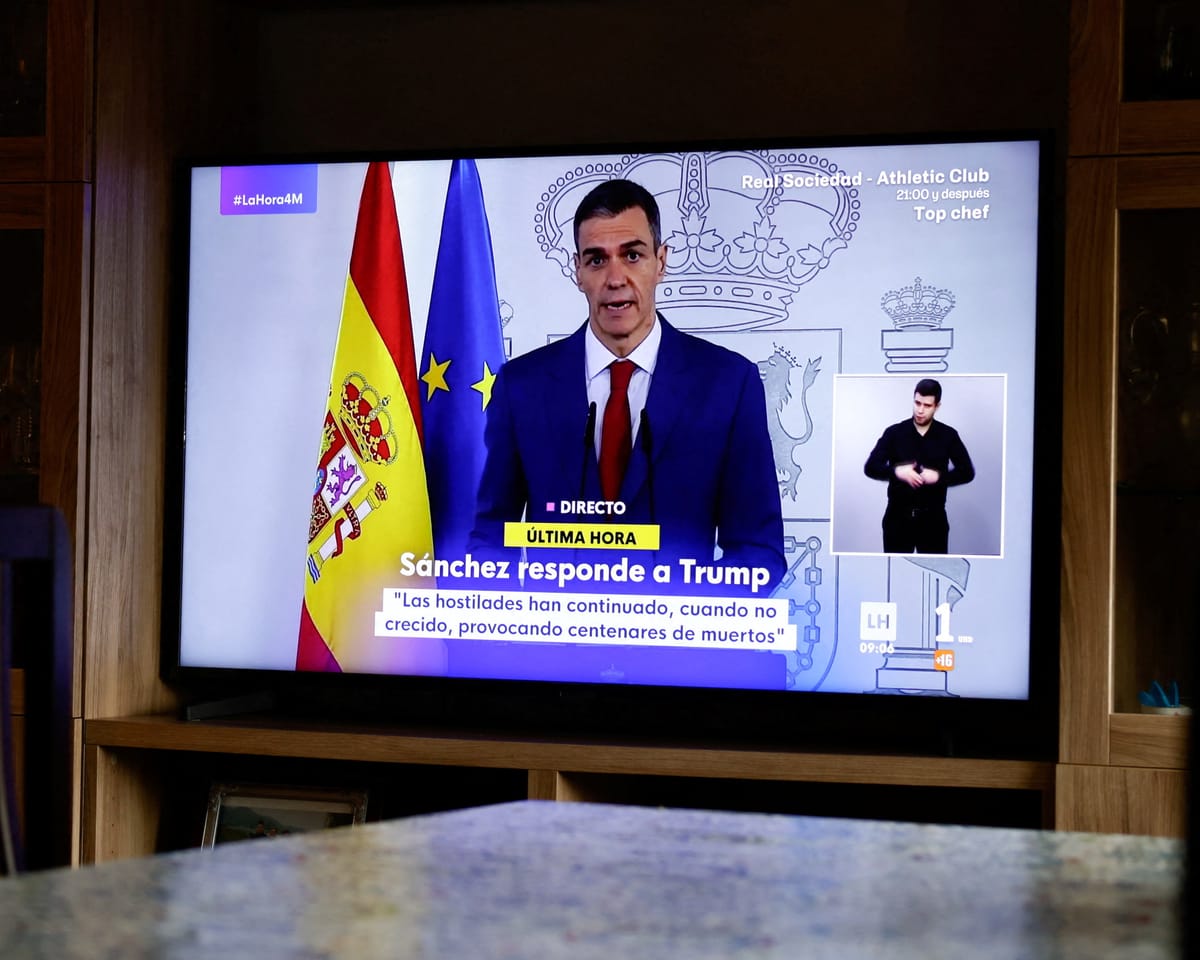
The Spanish prime minister, Pedro Sánchez, answered Donald Trump’s stark warning to halt all trade with Spain after his government declined to support the United States’ ongoing strikes against Iran, likening the escalating Middle‑East tension to a game of “Russian roulette with the fate of millions”.
Sánchez, a vocal European critic of Israel’s actions in Gaza, summed up his administration’s stance on the growing instability in three words: “No to war”.
In a passage of his address that seemed aimed at Trump’s threat to end Spanish trade, the premier declared that Spain would “not become complicit in something detrimental to the world – and contrary to our values and interests – merely out of fear of retaliation from any party”.
On Tuesday, Trump rebuked Madrid for denying the United States permission to use jointly operated bases in southern Spain for further attacks on Iran. “Spain has been terrible,” Trump said in a meeting with German chancellor Friedrich Merz, adding that he had instructed Treasury secretary Scott Bessent to “cut off all dealings” with the European nation.
In his Wednesday speech, Sánchez urged the United States, Israel and Iran to halt their hostilities before it is too late, stating: “You cannot answer one illegality with another, for that is how humanity’s greatest catastrophes begin.”
He continued: “You cannot play Russian roulette with the destiny of millions … No one can predict exactly what will happen now. Even the aims of those who launched the first strike are unclear. Yet we must be ready, as some warn, for the prospect of a prolonged war, heavy casualties and, consequently, serious worldwide economic repercussions.”
He invoked the 2003 invasion of Iraq—backed then by his conservative predecessor José María Aznar—as a cautionary example. Sánchez noted that while that conflict was presented as a mission “to eliminate Saddam Hussein’s weapons of mass destruction, to spread democracy and to ensure global security”, it instead “unleashed the greatest wave of insecurity our continent has known since the fall of the Berlin Wall”.
Sánchez asserted that a government’s foremost duty is to safeguard and improve the lives of its citizens, not to exploit geopolitics for cynical ends or profit from war. “It is utterly unacceptable that leaders who fail to meet this duty hide behind the smokescreen of war, masking their shortcomings while enriching a select few—the same ones who benefit when the world diverts resources from hospitals to missiles,” he said.
During his discussion with Merz, Trump again criticized Spain for rejecting NATO’s proposal that member states raise defence spending to 5 % of GDP.
Read next
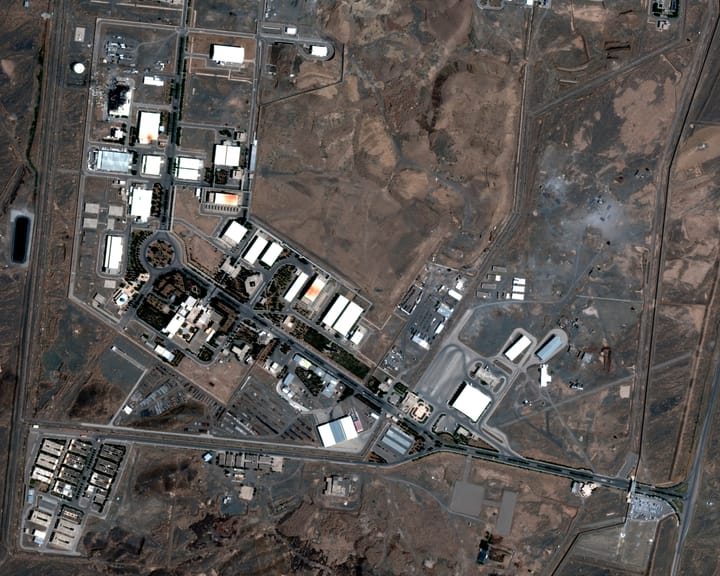
Experts warn that efforts to dismantle Iran’s nuclear program could backfire, nudging the regime toward a bomb.
The U.S.–Israeli offensive against Iran aims to settle a 24‑year dispute over Tehran’s nuclear effort, yet experts on proliferation caution it could backfire and push the regime toward a covert bomb.
Tehran has repeatedly asserted that its nuclear work is peaceful and that it has no
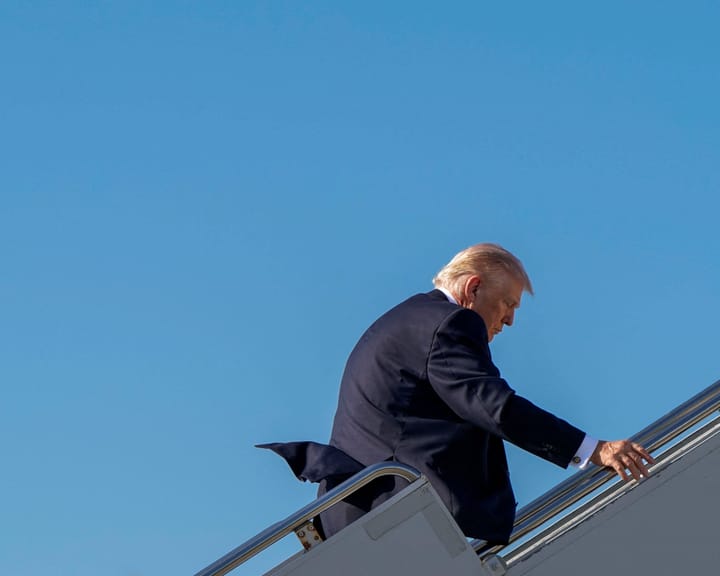
Trump administration still hasn't clarified its reasons for waging war on Iran
It required months for the false statements of the Bush administration concerning weapons of mass destruction in Iraq to surface, after an invasion, a regime change, a probe, and finally the revelation. By contrast, the Trump administration’s alerts about an imminent Iranian danger emerged within a single afternoon.
On
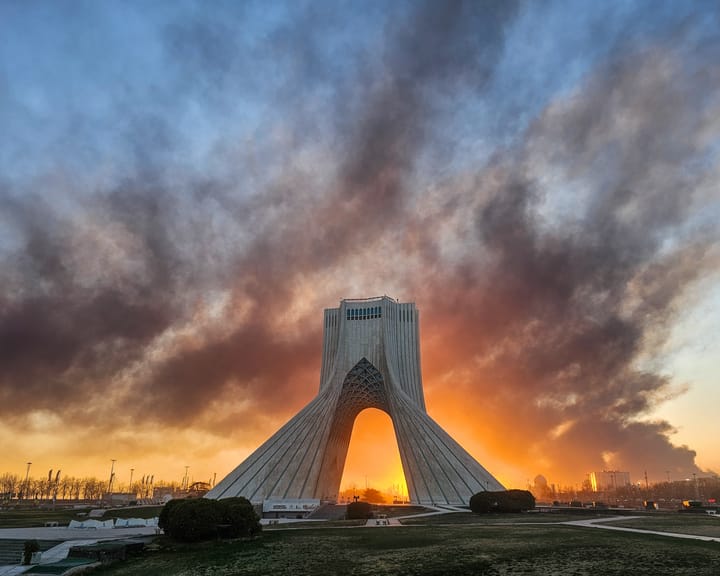
Iran's chaos reveals its struggle to function as war becomes a fight for survival
Iran faced a day of unusual military and diplomatic strain on Tuesday as US airstrikes raised the death count in the country beyond 800 and the headquarters of the Assembly of Experts, the group tasked with choosing a successor to the slain supreme leader Ali Khamenei, were bombed.
It would