
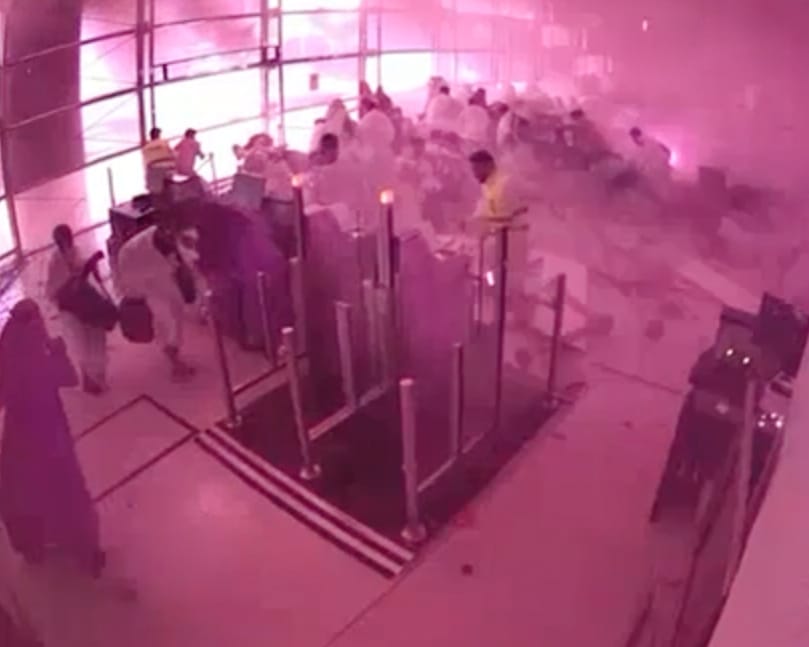
Saudi Arabia extended the suspension of all flights to and from King Khalid International Airport in Riyadh following additional Houthi missile strikes, which caused further damage and resulted in one fatality. The Gulf nation cited attacks that killed 13 people and injured over 300 as the reason for the closure. Footage broadcast by Saudi state TV depicted smoke and falling debris at the terminal during a missile strike.
The airport remains closed for safety verification, as announced by the Saudi aviation authority. Further missile and drone threats have been detected, according to the country's military spokesperson. Meanwhile, Saudi Arabia hosted the 25th WPC Energy Conference in Riyadh, aiming to project stability amid ongoing tensions.
During the conference, Saudi Energy Minister Abdulaziz bin Salman emphasized the kingdom’s resilience and its people's determination in facing challenges, asserting that fear does not define Saudi Arabia. The government is reviewing its air defense strategies due to repeated Houthi missile penetrations. Local authorities advised schoolchildren and some office workers to stay home. The Houthi group has also targeted Khamis Mushait and King Fahd International Airport in Dammam.
The Houthis have vowed to continue their attacks on Saudi airports, having already damaged several aircraft at Riyadh airport and its facilities. Meanwhile, Crown Prince Mohammed bin Salman has remained out of public view since last week, reflecting the ongoing pressures of a conflict that has intermittently affected his leadership since 2014.
Inside Yemen, clashes continued in Taiz, with Saudi airstrikes targeting Houthi forces. The governor of Taiz issued an urgent call for lifting the siege due to a critical shortage of medical supplies. The Houthis claim Saudi forces conducted 124 raids as of Sunday. Saudi Arabia is attempting to locate Houthi leader Abdul-Malik al-Houthi, although precise intelligence is lacking.
On the diplomatic front, Iranian Foreign Minister Abbas Araghchi engaged with Saudi Foreign Minister Faisal bin Farhan to explore potential mediation between the Saudis and the Houthis, a group supported by Iran. Upcoming UN Security Council discussions are expected to address designating the Houthis as a foreign terrorist organization.
Aidarous al-Zubaidi, leader of the Southern Transitional Council, called for southern forces to engage on all fronts, a stance likely supported by Saudi Arabia in line with the UN-recognized government's efforts to expel the Houthis from Yemen entirely. The STC envisions an independent South Yemen, reflecting historical divisions. However, Abd al-Rahman al-Mahrami, leader of the Southern Giants Brigades, challenges the STC's authority.
Despite diplomatic outreach, Mohsen Rezaei of Iran’s supreme national security council stated that Iran was targeting small vessels in the Strait of Hormuz, which he claimed were used by the Emirati military to circumvent an oil blockade aimed at influencing global oil prices and challenging U.S. policies.
Read next
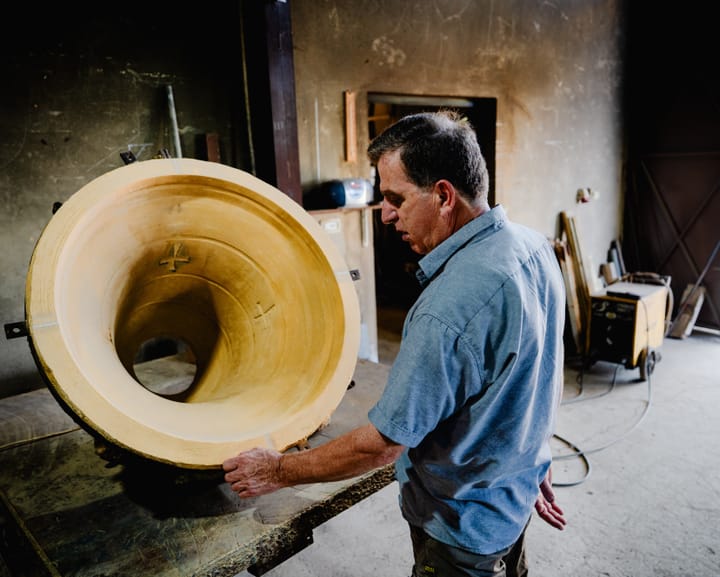
Preserving 300-Year-Old Church-Bell Tradition: Lebanon's Sole Family Artisan
The story of Lebanon's sole remaining church-bell maker traces its origins to an unexpected encounter. In the 18th century, Youssef Gabriel, a local metalworker, was involved in covertly crafting and supplying rifles to Arab revolutionaries fighting against the Ottoman rule over Lebanon. One day, a Russian engineer
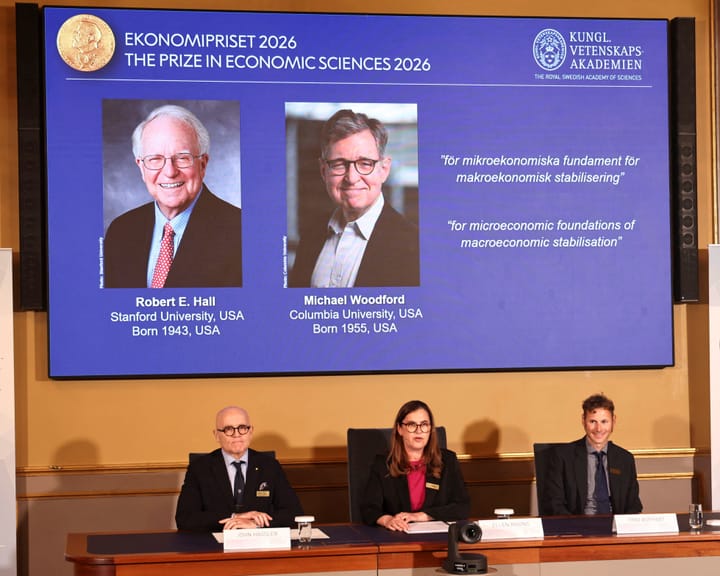
Nobel Prize in Economics Honors Hall and Woodford for Crisis 'Smoothing' Research
Two US economists, Robert Hall of Stanford University and Michael Woodford of Columbia University, have been awarded the 2026 Nobel Prize in Economics for their contributions to economic modeling. Their work has provided central banks and finance ministers with tools to stabilize economies, helping to prevent prolonged recessions and uncontrolled
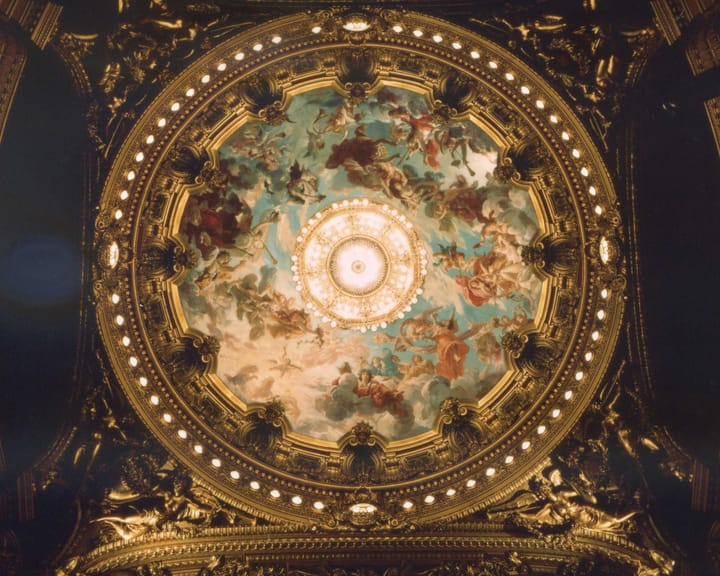
Legal Dispute Erupts Over Authorship of Paris Opera House Dome: Chagall or Lenepveu?
In 1962, French Culture Minister André Malraux, reportedly uninterested in a ballet performance at Paris’s opera house, was inspired by the classical ceiling and decided it needed renovation. Seated next to him was his friend, artist Marc Chagall. Believing Chagall was the ideal choice, Malraux commissioned him to design