
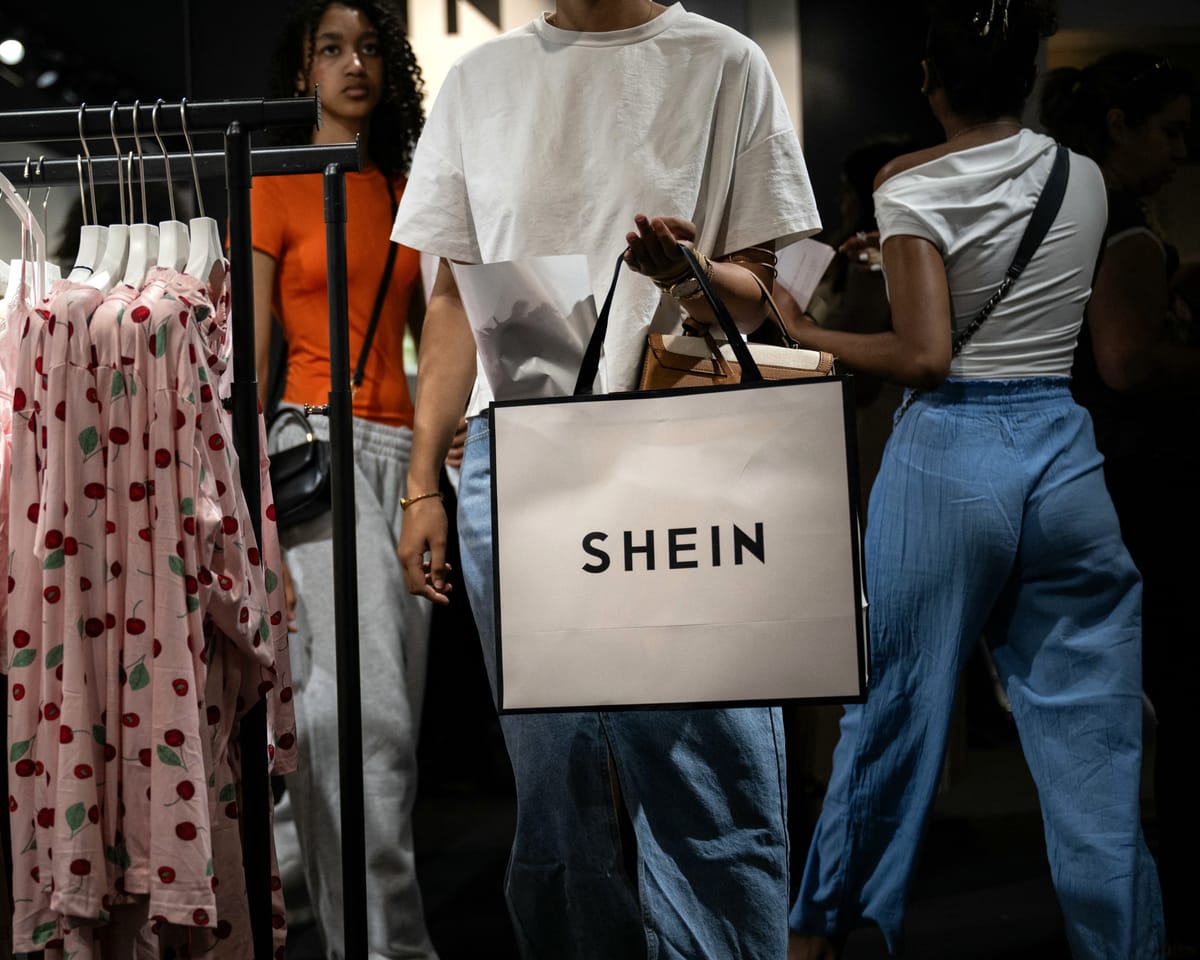
Shein’s UK division has been accused of shifting the "majority of its earnings" to its parent company in Singapore to reduce its tax obligations in Britain.
The firm, which had reportedly considered a £50bn listing on the London Stock Exchange but is now anticipated to go public in Hong Kong, paid only £9.6m in corporation tax despite generating £2bn in sales last year.
The sum represents 25% of the £38.2m in pre-tax profits recorded in the UK for 2024, according to Companies House filings, aligning with the standard UK corporate tax rate.
However, critics argue the tax payment appears low relative to Shein’s £2bn revenue because roughly 84%, or £1.72bn, was transferred to its parent group, Roadget Business Pte Ltd in Singapore, classified as a "purchasing cost."
“Very little profit remains in the UK to be taxed,” said Paul Monaghan, head of the Fair Tax Foundation.
Drawing parallels with past controversies involving Amazon, Apple, and Microsoft, which faced backlash for moving profits to low-tax jurisdictions, Monaghan stated: “This appears to be a new era of aggressive tax strategies. The fast-fashion sector is now mirroring the most extreme tax avoidance tactics previously seen in big tech.”
He added: “It’s essential to assess how much of the financial value Shein Distribution UK Ltd generates from its British sales is actually declared as profit in the UK and taxed accordingly—versus how much is recorded in Singapore, a known tax haven.”
“The UK accounts show significant transactions with its Singapore-based parent, rerouting most income as ‘purchasing costs,’ leaving little taxable surplus in Britain.
“Singapore not only has a lower corporate tax rate—17% compared to the UK’s 25%—but also provides incentives that can reduce effective rates to as little as 5%. Previous disclosures confirm Roadget Business Pte Ltd benefits from these.”
Filings indicate Shein’s Singapore operations paid an average corporate tax rate of 9.4% from 2021 to 2023, according to the Fair Tax Foundation.
A Shein spokesperson dismissed the claims as “entirely false and unsupported by basic analysis.”
“Our UK business acquires products for resale from our parent company at market-aligned prices, adhering to standard global trade principles, just as any independent entity would,” the spokesperson said.
“This ensures fair and reasonable transactions consistent with international norms. These are fundamental practices in global commerce, which these critics should be well aware of.”
“The nature of our industry—low margins, high volume—is widely recognized by anyone with minimal insight.”
Read next
Jaguar Land Rover suppliers voice ‘everything is against us’ amid cutbacks
David Roberts, chair of Coventry-based Evtec, says the outlook for Britain’s automotive sector is grim, with “everything against us.” Evtec is a tier 1 supplier to Jaguar Land Rover, which this week announced 4,000 job cuts over two years despite chancellor John Healey’s attempt to talk

Europe’s fighter jet plans in disarray: what comes next?
When former ECB president and Italian PM Mario Draghi urged Europe to catch up economically with the US and China, defence collaboration was prescribed. No more should each nation build independent boats, tanks or jets; allies should share costs and technologies.
Europe stumbled at the first hurdle. German Chancellor Friedrich
John Healey supports growth but insists Labour must be truthful about spending
John Healey has stated that his primary goal as chancellor will be to boost economic growth, while acknowledging that Labour must be straightforward about controlling public spending at next month's budget.
In his first major address since assuming the role in July, Healey said the leading focus of